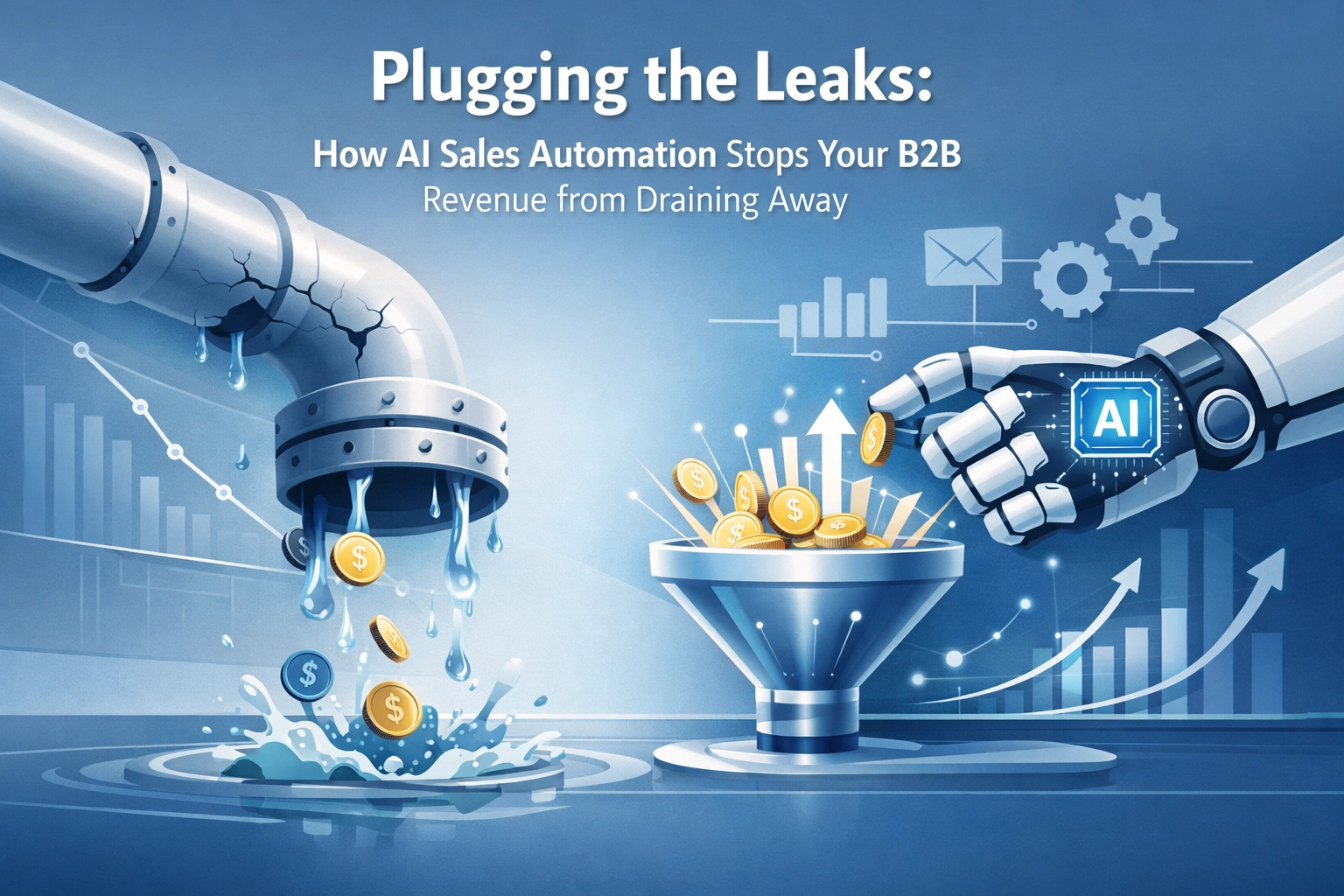
As an AI Agent Consultant, I've watched countless B2B service businesses hit the £1M to £3M revenue mark only to stall. The recurring problem? They're not struggling to generate leads: they're struggling to stop revenue from leaking out of holes in their sales process. Every delayed response, every unqualified lead chased for weeks, every manual task that pulls your sales team away from actual selling: these aren't minor inefficiencies. They're haemorrhaging revenue.
The "leaking bucket" concept isn't new in sales, but most businesses don't realise just how much money they're losing until they see the numbers. That's where AI sales automation becomes the game-changer, transforming your sales operation from a sieve into a sealed, revenue-generating machine.
Key Takeaways
- Manual sales processes create multiple revenue leaks that cost B2B service businesses thousands of pounds monthly
- Slow lead response times reduce conversion rates by up to 40%, with competitors capturing prospects you should be closing
- AI marketing automation and autonomous AI agents for B2B eliminate administrative waste and human error
- Companies implementing AI-powered sales automation see 25% increases in conversion rates and 29% improvements in productivity
- Predictive sales intelligence transforms reactive sales teams into proactive revenue engines
- Two-thirds of B2B revenue leaders achieve ROI within the first year of AI adoption
The Five Revenue Leaks Draining Your B2B Business
1. The Speed Leak: Slow Lead Response Times
When a qualified prospect fills out your contact form or requests a demo, every minute matters. Traditional sales processes involve manual notification, CRM updates, qualification checks, and assignment to the right team member. By the time your sales rep makes contact, it's often 24 to 48 hours later.

Here's the brutal truth: your competitors are responding in minutes, not days. AI-powered response systems deliver near-instantaneous replies to enquiries, reducing response times by up to 40%. More importantly, they qualify leads whilst they're still hot, scheduling qualified prospects directly into your calendar and filtering out tyre-kickers before they waste your team's time.
This isn't just about being faster: it's about capturing revenue that would otherwise walk out the door. A prospect who requests information on Monday morning and doesn't hear from you until Wednesday has likely already spoken to three of your competitors and formed opinions about their professionalism.
2. The Qualification Leak: Wasted Time on Dead-End Prospects
How many hours does your sales team spend on discovery calls with prospects who can't afford your services, aren't decision-makers, or aren't ready to buy for another year? If you're relying on manual lead scoring, the answer is probably "far too many."
Human-driven lead evaluation introduces bias, inconsistency, and guesswork. One sales rep might pursue a prospect based on company size, whilst another focuses on budget signals. Meanwhile, genuinely qualified leads: those with high buying intent, budget authority, and immediate need: sit in your pipeline without priority attention.
AI lead generation for service businesses analyses multiple data signals simultaneously: website behaviour, email engagement, company data, previous interactions, and buying patterns. It predicts customer behaviour with greater accuracy than any human could achieve, enabling your team to focus exclusively on high-potential leads rather than chasing ghosts.
The financial impact is staggering. By eliminating unqualified leads early, businesses see conversion rates increase by 25% simply because sales teams are having conversations with the right people at the right time.
3. The Administrative Leak: Sales Talent Buried in Busywork
Your sales team didn't join your company to update CRM records, send follow-up emails, or manually log call notes. Yet in most B2B service businesses, sales reps spend 35% to 40% of their time on administrative tasks rather than selling.
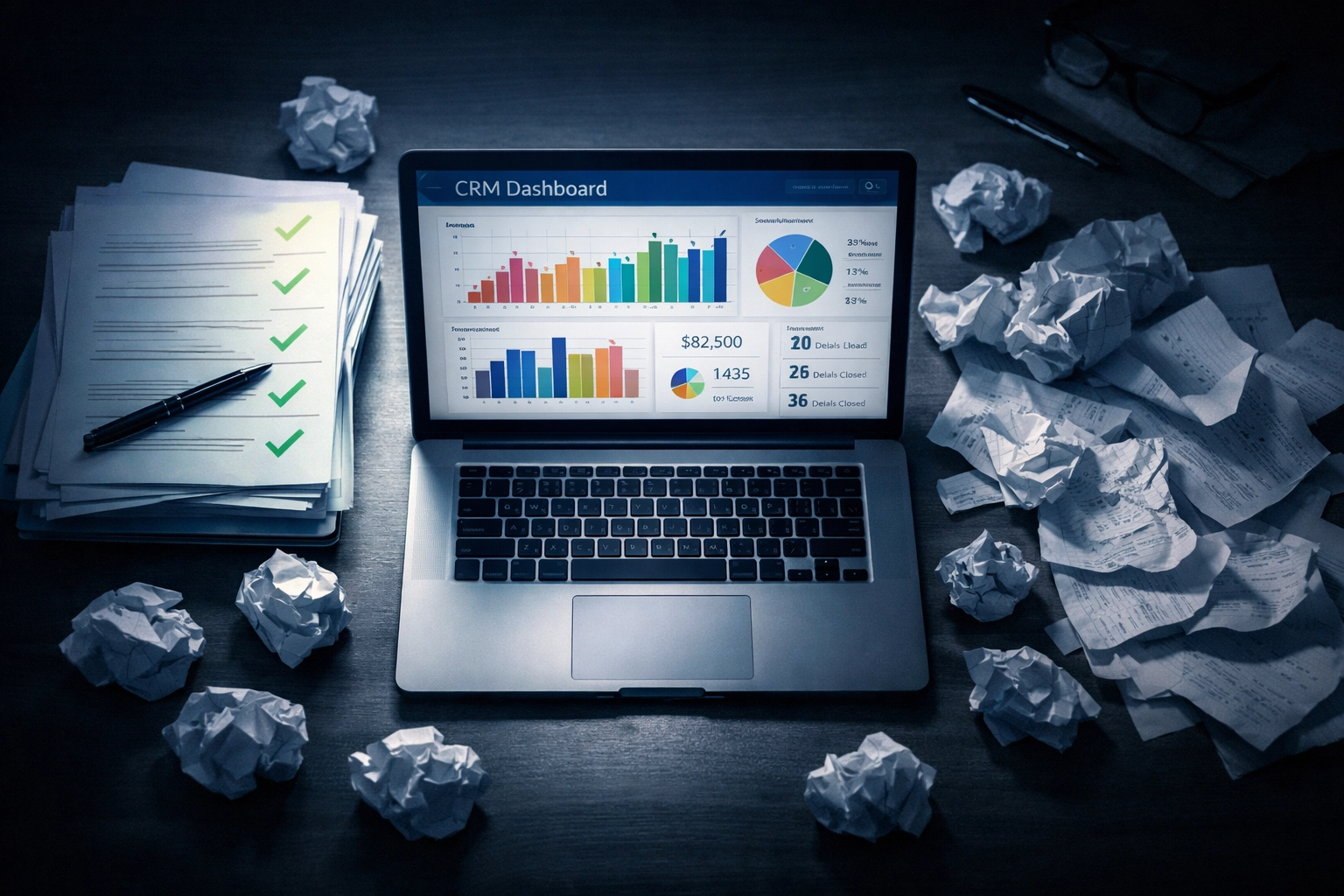
This is revenue haemorrhaging in slow motion. Every hour your top performer spends on data entry is an hour they're not building relationships, negotiating deals, or closing contracts. When you're scaling from £1M to £5M, you simply cannot afford this level of waste.
Autonomous AI agents for B2B handle these repetitive tasks automatically. They update your CRM in real-time, send personalised follow-up sequences based on prospect behaviour, schedule meetings, and even transcribe and summarise sales calls. This means your sales talent spends their time on high-value activities that directly drive revenue: exactly what you're paying them to do.
Companies implementing AI automation report 29% improvements in sales productivity. That's the equivalent of adding nearly a third more capacity to your sales team without hiring a single additional person.
4. The Forecasting Leak: Flying Blind Without Predictive Intelligence
In traditional sales operations, forecasting is part art, part guesswork, and entirely reactive. Sales leaders review pipeline reports, ask reps for their gut feelings, and make decisions based on incomplete information. By the time they realise they're off track, it's too late to course-correct.
Without real-time insights, you're constantly responding to problems rather than preventing them. A deal stalls, and you don't know why. A promising prospect goes cold, and you can't identify the pattern. Your close rate drops, but you can't pinpoint which stage of your funnel is breaking.
Predictive sales intelligence transforms this reactive approach into a proactive revenue engine. AI analyses historical data, current pipeline health, prospect engagement patterns, and external market signals to forecast future sales trends with remarkable accuracy. More importantly, it identifies risks before they become problems and opportunities before your competitors spot them.
This means you can adjust strategies proactively, allocate resources to the highest-potential deals, and prepare for various scenarios before they materialise. The result? A 21% increase in revenue growth for businesses that implement AI-driven forecasting versus those still relying on spreadsheets and gut instinct.
5. The Personalisation Leak: Generic Outreach That Falls Flat
How many of your sales emails get deleted without being read? How many of your cold calls go straight to voicemail? In a world where buyers are bombarded with hundreds of marketing messages daily, generic outreach is worse than ineffective: it's actively damaging your brand.

Traditional sales processes can't deliver true personalisation at scale. A sales rep might customise the first paragraph of an email, but they're not analysing LinkedIn activity, website visits, content downloads, and buying signals to craft genuinely relevant messages. They simply don't have time.
AI analyses customer data to deliver tailored messages and personalised recommendations that resonate with prospects. It knows when a prospect visited your pricing page three times in two days, which case studies they downloaded, and which services they lingered on. This intelligence powers outreach that feels genuinely relevant rather than obviously templated.
The impact on engagement and conversion rates is immediate. Personalised outreach sees 3x higher response rates and 2x higher conversion rates compared to generic messaging. When you're competing for contracts worth tens or hundreds of thousands of pounds, that difference matters enormously.
The ROI Reality: What Happens When You Plug the Leaks
The financial impact of AI sales automation isn't theoretical: it's measurable and substantial. Research shows that nearly two-thirds of B2B revenue leaders achieve return on investment within the first year of AI adoption. For service businesses scaling from £1M to £5M, this typically translates to:
- 25% increase in conversion rates by focusing on qualified leads and responding at optimal times
- 29% improvement in sales productivity by eliminating administrative waste
- 21% increase in revenue growth through better forecasting and strategic resource allocation
- 40% reduction in lead response times, capturing prospects before competitors
- 35% decrease in customer acquisition costs by improving efficiency across the entire sales funnel
These aren't marginal gains: they're transformational improvements that accelerate growth and increase profitability simultaneously.
Making the Shift: From Leaking Bucket to Revenue Engine
The shift to AI marketing automation doesn't require ripping out your existing systems or replacing your sales team. The most successful implementations integrate AI capabilities into current workflows, augmenting human talent rather than replacing it.
Start by identifying your biggest leak. Is it slow response times? Poor lead qualification? Administrative burden? Focus your initial AI implementation on the area causing the most revenue loss, measure the impact, then expand to other areas.
The businesses that thrive in the next five years won't be those with the largest sales teams: they'll be those that leverage AI to make every team member more effective, every process more efficient, and every decision more intelligent.
Frequently Asked Questions
Does AI sales automation require technical expertise to implement?
Modern AI sales platforms are designed for business users, not developers. Most implementations integrate with existing CRM systems and can be configured without coding. The key is choosing solutions built specifically for B2B service businesses rather than generic marketing tools.
Will AI automation replace our sales team?
No. AI handles repetitive tasks and provides intelligence that makes your sales team more effective. It eliminates the busywork so your people can focus on relationship-building, strategic thinking, and complex negotiations: the distinctly human skills that close high-value deals.
How quickly can we expect to see results?
Most businesses see measurable improvements in response times and lead qualification within the first month. Conversion rate and revenue impact typically becomes significant within 90 days, with full ROI achieved within 12 months.
What's the investment required for AI sales automation?
Investment varies based on business size and complexity, but for service businesses in the £1M to £5M range, expect monthly costs comparable to hiring one junior sales role: whilst gaining productivity equivalent to adding multiple team members.
Sealing the Bucket: Your Next Steps
Your sales process is leaking revenue right now. Every hour you delay implementing AI automation is another hour of lost opportunities, wasted sales capacity, and competitors gaining ground. The question isn't whether AI sales automation delivers results: the data proves it does. The question is whether you'll act before your competitors do.
The B2B service businesses that scale past £5M aren't the ones working harder: they're the ones working smarter, leveraging AI marketing automation to transform their sales operations from leaking buckets into precision revenue engines. The technology exists. The results are proven. The only variable is your willingness to evolve.