Running a small hospitality business in the United Kingdom often means juggling bookings, guest queries, and daily operations with limited staff. Customer expectations continue to rise, yet time and resources feel increasingly stretched. Embracing solutions like AI-powered virtual receptionists can provide a vital edge, offering efficient support around the clock without sacrificing the personal touch that defines independent hospitality. Discover how these intelligent tools can simplify tasks, strengthen guest relationships, and create space for staff to focus on what matters most.
Table of Contents
- Defining AI in Small Business Hospitality
- Types of AI Solutions for Hospitality Firms
- How Virtual Receptionists Transform Guest Experience
- Adoption Requirements and Integration Best Practice
- Cost, Compliance, and Data Protection Considerations
- Common Pitfalls and Ensuring the Human Touch
Key Takeaways
| Point | Details |
|---|---|
| AI Enhances Customer Service | AI technologies allow small hospitality businesses to improve customer service through automation and personalised experiences. |
| Operational Efficiency | Implementing AI solutions can streamline management processes, reducing costs and administrative burdens. |
| Gradual Integration Strategy | Start with focused AI applications to avoid overwhelming existing workflows while gradually improving operational capabilities. |
| Human-Centric Approach | Emphasise that AI should enhance, not replace, human interactions to maintain emotional intelligence and customer connection. |
Defining AI in Small Business Hospitality
Artificial Intelligence (AI) represents a transformative technological frontier for small hospitality businesses, offering unprecedented opportunities to revolutionise customer service and operational efficiency. Emerging research in hospitality technology demonstrates how AI is fundamentally reshaping traditional service models, enabling smaller establishments to compete more effectively with larger enterprises.
At its core, AI in hospitality represents sophisticated software systems capable of performing intelligent tasks traditionally managed by human workers. These systems leverage machine learning algorithms and natural language processing to understand, predict, and respond to customer needs with remarkable precision. Key AI applications in small business hospitality include:
- Automated customer communication
- Intelligent booking and reservation management
- Personalised customer experience design
- Real-time performance analytics
- 24/7 virtual customer support
Small hospitality businesses can deploy AI technologies to address critical operational challenges. By integrating intelligent systems, proprietors can streamline administrative tasks, reduce labour costs, and deliver more consistent customer experiences. Intelligent AI agents can handle multiple simultaneous interactions, provide instant responses, and maintain a professional demeanour regardless of time or complexity of inquiry.
Pro tip: Start with a focused AI solution like an intelligent virtual receptionist to gradually introduce technology without overwhelming your existing workflow.
Types of AI Solutions for Hospitality Firms
The hospitality sector is experiencing a remarkable transformation through advanced AI technologies, offering innovative solutions that address complex operational challenges. Modern hospitality firms can leverage a diverse range of AI applications designed to enhance customer experience, streamline management, and optimise business performance.
Key AI solutions for hospitality businesses include several sophisticated technological interventions:
- Intelligent Chatbots: Providing 24/7 customer support and instant query resolution
- Predictive Analytics: Forecasting customer preferences and booking trends
- Dynamic Pricing Systems: Automatically adjusting room rates based on demand
- Virtual Assistants: Managing reservations and personalised guest interactions
- Automated Marketing Tools: Creating targeted promotional campaigns
Operational AI solutions are particularly transformative for small hospitality businesses. These technologies enable proprietors to automate repetitive tasks, reduce administrative overhead, and allocate human resources more strategically. For instance, machine learning algorithms can analyse historical booking data to predict future occupancy rates, helping managers make informed decisions about staffing and inventory management.
Pro tip: Begin implementing AI solutions by selecting a single, focused technology that directly addresses your most pressing operational challenge, allowing for gradual and manageable technological integration.
How Virtual Receptionists Transform Guest Experience
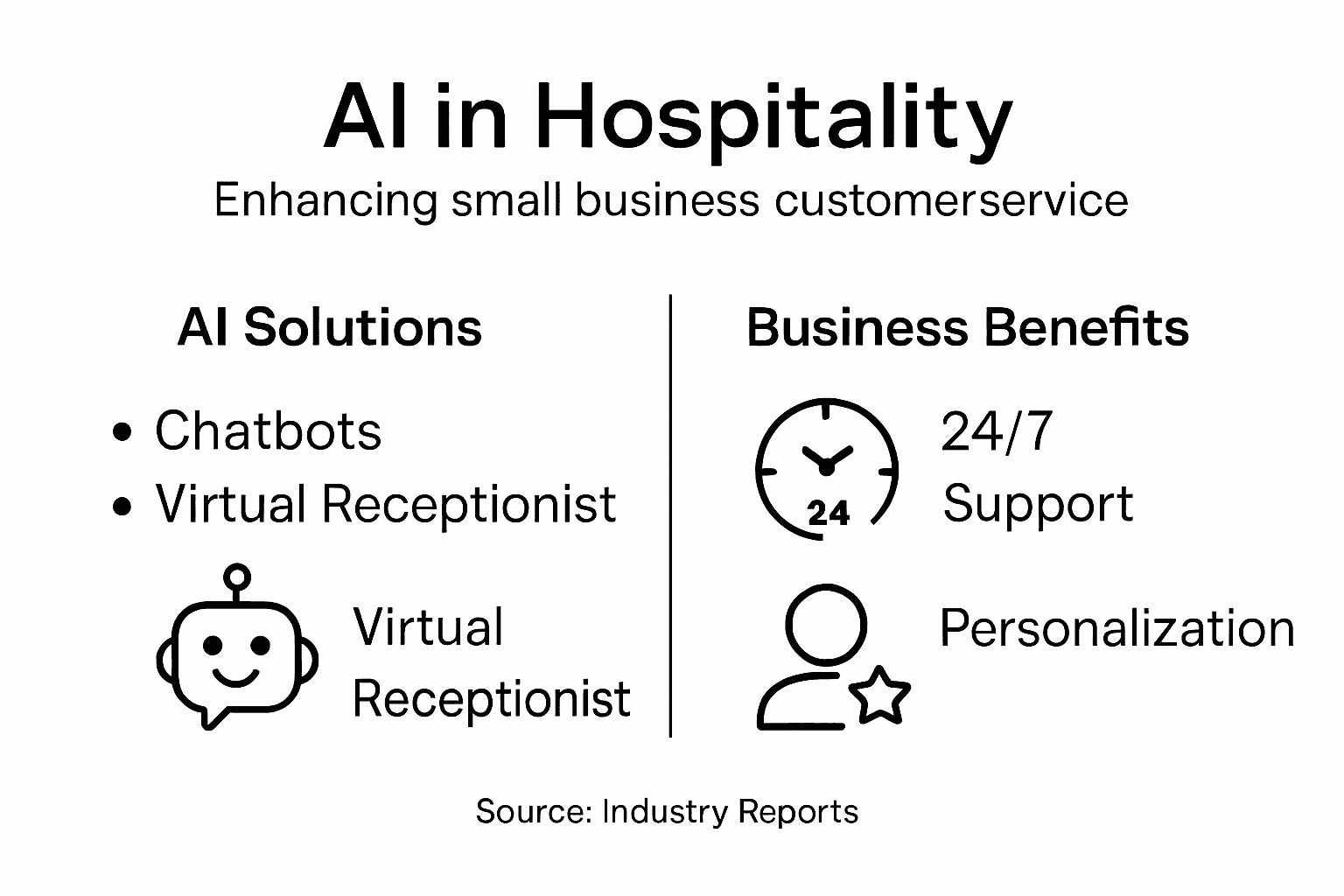
Virtual receptionists are revolutionising customer service in the hospitality sector, offering transformative guest communication solutions that seamlessly blend technological efficiency with personalised interactions. These intelligent systems represent a quantum leap in guest experience management, enabling small hospitality businesses to deliver consistently high-quality service regardless of time or staffing constraints.
The key capabilities of virtual receptionists that fundamentally transform guest interactions include:
- 24/7 Availability: Providing continuous customer support
- Multilingual Communication: Breaking down language barriers
- Instant Response Handling: Resolving queries in real-time
- Personalised Guest Engagement: Tailoring interactions based on individual preferences
- Seamless Booking Management: Streamlining reservation processes
Operational intelligence distinguishes these AI-powered systems from traditional reception services. By leveraging advanced natural language processing, virtual receptionists can understand context, interpret complex requests, and respond with remarkable human-like precision. Small hospitality businesses can now offer enterprise-level customer service experiences without substantial infrastructure investments, democratising high-quality guest interactions across the sector.

Here’s a summary of AI receptionist features and their impact on guest experience:
| Capability | Business Benefit | Guest Advantage |
|---|---|---|
| 24/7 availability | Reduced staffing needs | Support at any hour |
| Multilingual interaction | Expanded customer base | Seamless, inclusive service |
| Instant response | Faster issue resolution | No waiting time |
| Personalised engagement | Increased guest loyalty | Tailored communication |
| Booking automation | Fewer errors, streamlined workflow | Effortless reservation process |
Pro tip: Start by integrating a virtual receptionist solution during your least staffed hours to gradually build confidence in the technology and observe its immediate impact on guest satisfaction.
Adoption Requirements and Integration Best Practice
Successful AI implementation in hospitality demands a strategic approach that addresses comprehensive technological transformation challenges. Small businesses must navigate complex integration processes that go beyond mere technological installation, requiring holistic organisational adaptation and careful planning.
Key adoption requirements for implementing AI solutions include:
- Technical Compatibility: Ensuring seamless integration with existing systems
- Staff Training: Developing comprehensive skill development programmes
- Change Management: Creating supportive organisational culture
- Data Privacy Protocols: Establishing robust security frameworks
- Phased Implementation: Adopting gradual, measurable technological transitions
Organisational readiness represents a critical factor in successful AI integration. Small hospitality businesses must develop a nuanced strategy that addresses potential resistance, provides clear communication about technological benefits, and creates supportive environments for digital transformation. This involves not just technological investment, but cultivating a culture of innovation and continuous learning among team members.
Reviewing integration requirements, here’s how each best practice supports successful adoption:
| Requirement | Implementation Support | Benefit for Small Business |
|---|---|---|
| Technical compatibility | Minimises disruption | Smooth transition, less downtime |
| Staff training | Builds confidence and proficiency | Optimal system use, fewer mistakes |
| Change management | Reduces resistance | Staff embrace technology |
| Privacy protocols | Safeguards business reputation | Compliance, customer trust |
| Phased rollout | Easy progress tracking | Lower risk, manageable adjustments |
Pro tip: Conduct a comprehensive technology audit before AI implementation to identify potential integration challenges and create a tailored roadmap for seamless adoption.
Cost, Compliance, and Data Protection Considerations
Navigating the complex landscape of AI implementation requires a comprehensive understanding of data governance and regulatory compliance in the hospitality sector. Small businesses must develop robust strategies that address financial investments, legal requirements, and data protection protocols to ensure responsible and secure AI adoption.
Key compliance and cost considerations include:
- Regulatory Frameworks: Understanding GDPR, CCPA, and sector-specific regulations
- Data Encryption: Implementing advanced security measures
- Privacy Protocols: Developing transparent data handling processes
- Financial Planning: Budgeting for technology and ongoing compliance
- Regular Compliance Audits: Maintaining continuous regulatory alignment
Financial implications extend beyond initial technology investments. Small hospitality businesses must factor in ongoing costs related to data security, staff training, system maintenance, and potential regulatory updates. This comprehensive approach ensures not just technological compliance, but also builds customer trust through demonstrable commitment to data protection and privacy standards.
Pro tip: Engage a specialised data protection consultant to conduct a comprehensive audit and develop a tailored compliance strategy specific to your hospitality business’s unique technological ecosystem.
Common Pitfalls and Ensuring the Human Touch
Navigating the delicate balance between technological efficiency and genuine human connection requires careful strategic planning, as highlighted by hospitality innovation research. Small businesses must recognise that AI implementation is not about replacing human interaction, but enhancing and augmenting the customer experience through intelligent support systems.
Common pitfalls in AI adoption for hospitality businesses include:
- Technological Overreliance: Replacing empathy with automation
- Staff Resistance: Inadequate change management and training
- Impersonal Interactions: Losing emotional intelligence
- Cost Management: Unexpected implementation expenses
- Technical Complexity: Integration challenges with existing systems
Strategic human-centric approaches are crucial for successful AI integration. This means positioning AI as a supportive tool that empowers staff rather than a replacement. Effective implementation involves comprehensive staff training, creating clear communication channels about technological changes, and emphasising how AI can reduce administrative burden, allowing employees to focus on delivering exceptional personalised guest experiences.
Pro tip: Conduct regular team workshops that demonstrate how AI tools can complement human skills, transforming technological adoption from a potential threat to an exciting opportunity for professional growth.
Transform Your Small Business Customer Service with Intelligent AI Solutions
Small hospitality businesses often struggle with the challenge of delivering personalised, consistent customer service 24 hours a day while managing limited staffing resources. This article highlights how AI receptionists that speak naturally, handle FAQs instantly, and book qualified sales appointments can dramatically ease these pain points by providing operational intelligence and seamless guest interaction. If you aim to enhance customer experience, reduce labour costs and eliminate administrative burdens with an AI agent designed specifically for your business needs explore how our expert team at AI Marketing – AI Management Agency creates custom AI solutions that do exactly that.
Take control of your customer service by integrating a virtual receptionist that never sleeps and always sounds human. Visit AI Management Agency now to discover real-world successes in our case study – AI Management Agency section and start transforming your customer interactions today.
Frequently Asked Questions
What is AI in small business customer service?
AI in small business customer service refers to the use of advanced software systems that perform tasks traditionally managed by human staff, such as automated communication, personalised customer interactions, and real-time support, helping to enhance operational efficiency.
How can AI improve customer experience in hospitality?
AI can improve customer experience in hospitality by providing 24/7 customer support through virtual receptionists, personalising engagements based on customer preferences, and streamlining booking processes for a more efficient service.
What types of AI solutions are available for small businesses?
Small businesses can utilise various AI solutions, including intelligent chatbots for customer support, predictive analytics to forecast booking trends, dynamic pricing systems to adjust rates, and automated marketing tools for targeted promotions.
What are the key considerations for implementing AI in a small hospitality business?
Key considerations for implementing AI include ensuring technical compatibility with existing systems, providing staff training, establishing data privacy protocols, managing change effectively within the organisation, and conducting phased rollouts for smooth integration.
Recommended
- Landscaping Firm’s Revenue Triples with AI: Aimagency Case Study (2026)
- Autonomous AI Agents vs Traditional Sales Teams: Which Delivers 4x Higher Conversion Rates for Service Businesses? – AI Management Agency
- AI Voice Agents – AI Management Agency
- AIM Agency: AI Transforms Sales for Engineering Firms in 2026