TL;DR:
- AI-driven scheduling tools are helping UK hotels automate bookings, reminders, and guest queries, saving time.
- Implementing AI enhances staff capacity for personalized service and guest experience, not replacing them.
- Choosing PMS-compatible, GDPR-compliant platforms with after-hours automation is key to successful AI adoption.
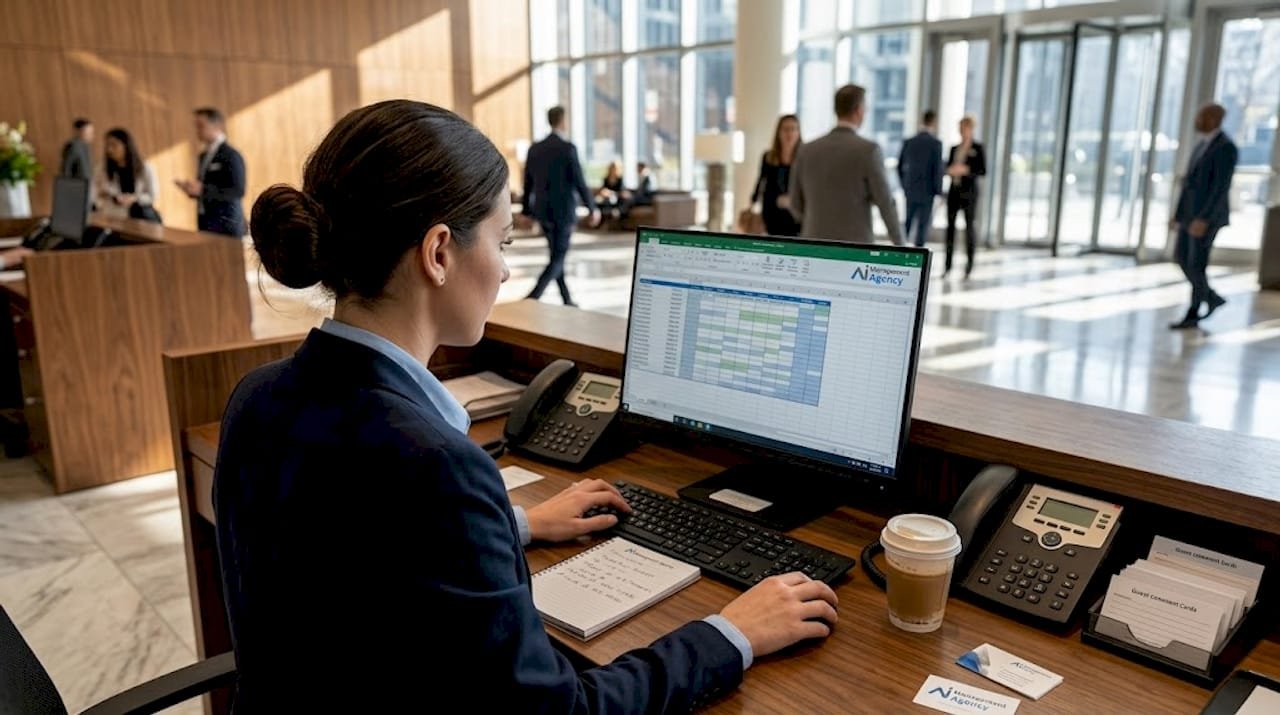
UK hotels are haemorrhaging time. The average front desk team spends hours each week fielding the same questions, chasing booking confirmations, and managing appointment requests that arrive long after staff have gone home. Most owners vastly underestimate the cost of this invisible drain, particularly when 40 to 50% of bookings come in outside standard working hours. The good news is that AI-driven scheduling tools are already solving this for UK hotel operators, quietly and effectively. This guide walks you through exactly how to implement them.
Table of Contents
- Why AI is revolutionising hotel appointment scheduling
- Choosing the right AI tools for UK hotels
- Integrating AI solutions: overcoming technical and operational hurdles
- Best practices for maximising ROI from AI-driven appointment management
- Our perspective: what most guides miss about AI for hotel appointments
- Ready to transform your hotel’s appointment management?
- Frequently asked questions
Key Takeaways
| Point | Details |
|---|---|
| AI slashes manual workload | AI platforms can reduce booking-related admin time by up to 90%, freeing your staff for more impactful work. |
| Choose PMS-integrated solutions | Selecting AI tools that integrate with your property management system ensures smoother adoption and maximum ROI. |
| Success relies on staff buy-in | Staff resistance is common, so make training and involvement central to your AI rollout plan. |
| Blend automation with human service | Use AI for repetitive bookings and queries, but let people handle complex or high-value guest interactions. |
Why AI is revolutionising hotel appointment scheduling
Traditional appointment handling was built for a slower era. Phone calls, email chains, and manual diary entries simply cannot keep pace with the expectations of modern guests, who want instant confirmation at midnight on a Sunday as readily as they expect it at noon on a Tuesday. The gap between what guests expect and what manual processes can deliver is widening every year.
AI platforms now close that gap by handling bookings, sending reminders, and answering guest queries around the clock, every day of the year. This is not a vague promise. The AI in hospitality research from BCG confirms that AI-first hotels are measurably leaner and faster than their competitors. For UK operators specifically, the evidence is compelling:
- Snoozebox (London): Runnr.ai reduced inbound emails and calls by 90%, while breakfast bookings via Mews integration generated an additional £2,000 per month.
- De Vere Hotels: Implementing Fourth AI scheduling cut rota management time by 50%, freeing managers to focus on guest experience.
- Moneypenny AI: Deployed specifically for hotel bookings and reservations, handling calls with natural language at scale.
“AI is not about replacing your team. It is about giving them the headroom to do what they do best, creating exceptional guest moments that no algorithm can replicate.”
This is the most important myth to address early. Many hotel owners resist AI because they fear it signals redundancy for their staff. In reality, the opposite is true. When routine scheduling and repetitive queries are automated, your people are free to focus on personalised service, upselling, and the kind of warm hospitality that builds loyalty. Explore our AI scheduling guide for a step-by-step breakdown of how this works in practice, and review AI guest experience strategies to understand how scheduling fits within a broader guest journey.
Choosing the right AI tools for UK hotels
Understanding the impact is one thing, but selecting the right tools is critical. Here is how UK hotels can make a smart choice.
Not all AI scheduling platforms are equal. For the UK market, the most effective solutions share a set of non-negotiable features:
- PMS integration: Your AI tool must connect seamlessly with your property management system. Without this, you create data silos that cause more problems than they solve.
- After-hours automation: The platform should handle bookings, queries, and cancellations without any human input outside business hours.
- Multilingual support: Particularly important for city-centre and tourist-facing properties where international guests are common.
- GDPR-compliant data handling: Non-negotiable for UK and EU operations.
For UK hotel operators, PMS-integrated platforms such as Duve, Fourth, and Runnr.ai have delivered measurable wins in scheduling efficiency and direct revenue. Here is how the leading providers compare:
| Platform | PMS integration | After-hours automation | Multilingual | Best suited for |
|---|---|---|---|---|
| Fourth | Strong (UK-focused) | Yes | Limited | Mid to large hotel groups |
| Runnr.ai | Mews-native | Yes | Yes | Boutique and independent hotels |
| Duve | Broad API support | Yes | Yes | Duve’s UK launch targets boutique properties |
When it comes to cost, setup fees vary widely. Some platforms offer subscription-based pricing starting from a few hundred pounds per month, whilst others charge based on booking volume. Review using AI for hotel bookings to understand cost structures in more detail, and see a real AI booking case study showing the revenue impact. For smaller properties, our guide on how to boost sales with AI outlines budget-friendly entry points.
Pro Tip: Always pilot any new AI tool with real guest flows for two to four weeks before a full rollout. This reveals integration gaps and lets your team build confidence before the system goes live at scale.
Integrating AI solutions: overcoming technical and operational hurdles
Once you have chosen your AI platform, implementing it successfully will make the difference between short-term frustration and long-term transformation.

The barriers to adoption are real, but they are entirely manageable when you know what to expect. BCG research highlights that integration and privacy hurdles are among the most cited challenges for hotels adopting AI, with specific data points that every UK operator should understand:
| Challenge | Impact rate |
|---|---|
| Integration failures with legacy PMS | 50% of adopters |
| High setup costs cited as barrier | 74% of operators |
| Staff resistance to new workflows | 35% of properties |
| After-hours bookings as share of total | 40 to 50% |
These numbers are not reasons to delay. They are a roadmap for where to focus your preparation. Here is a practical implementation sequence:
- Appoint an internal champion. Choose a tech-savvy manager who owns the rollout and acts as the point of contact between your team and the AI provider.
- Audit your current PMS. Confirm compatibility with your shortlisted platforms before signing any contract. Legacy systems sometimes require middleware to bridge the connection.
- Run staff training before go-live. Resistance drops sharply when staff understand how the tool makes their day easier, not harder. Frame it as a support tool, not a surveillance one.
- Phase the rollout. Start with one function, such as after-hours booking confirmation, then expand to FAQ handling and appointment reminders once the team is comfortable.
- Review GDPR obligations. Ensure your chosen provider processes guest data within UK/EU-compliant frameworks and provides a clear data processing agreement.
For a deeper look at how AI fits within customer service in hospitality, or to understand the financial case through AI automation cost savings, both resources are worth reviewing before your first implementation meeting.
“The hotels that struggle with AI adoption almost always skipped the staff buy-in stage. The technology is straightforward. The cultural shift takes intentional leadership.”
Best practices for maximising ROI from AI-driven appointment management
A successful rollout is just the start. Now let us make sure your AI investment pays off fast.
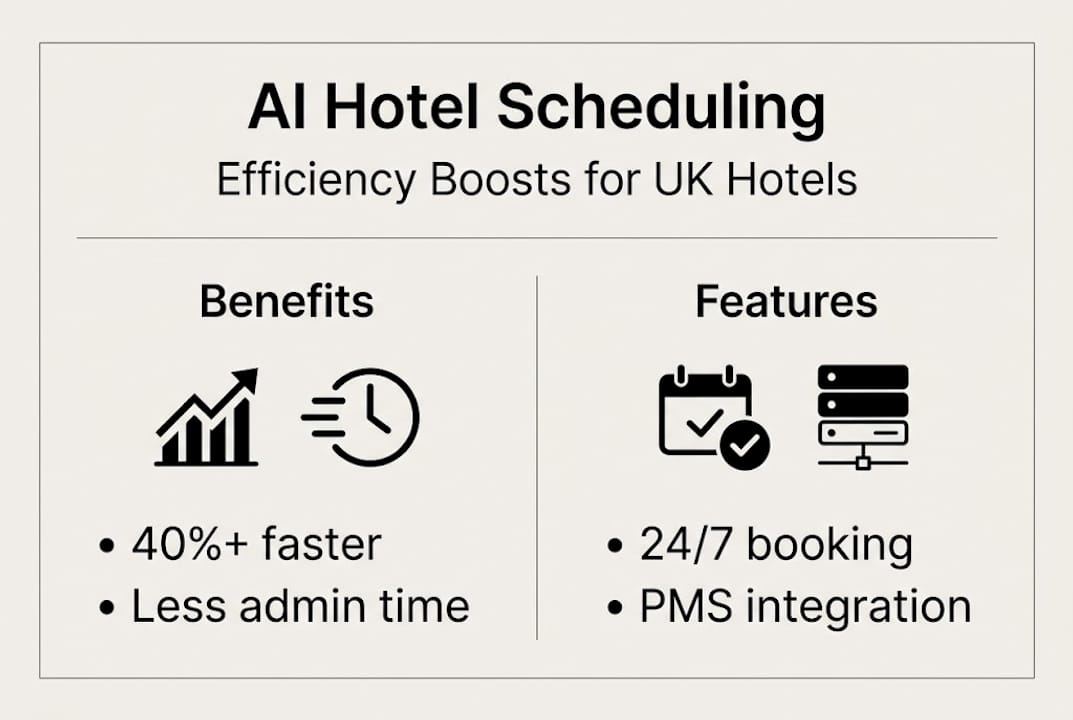
The return on investment from AI scheduling is not automatic. It scales with how deliberately you manage the system after launch. The most effective operators treat AI as a live workflow, not a set-and-forget installation. According to the AI Buyers Guide from ThinkReservations, AI enhances personalisation and revenue but requires ongoing attention to integration and data quality to deliver consistent results.
Here are the practices that consistently separate high-ROI deployments from underperforming ones:
- Track the right KPIs from day one. Booking conversion rate, time saved per staff member per week, no-show rate, and guest satisfaction scores are your core metrics. If you are not measuring them, you cannot improve them.
- Use platform analytics to refine workflows. Most AI scheduling tools produce usage reports. Review these monthly to identify where guests are dropping out of the booking flow and adjust accordingly.
- Blend automation with human touchpoints. AI handles the routine: confirmations, reminders, FAQ responses, cancellations. Your staff handle the moments that matter: complaints, special requests, VIP arrivals. This division of labour is where the real value lives.
- Optimise for after-hours performance. Since nearly half of all bookings arrive outside business hours, your AI configuration for this window deserves as much attention as your daytime setup.
- Iterate monthly. Set specific targets, for example, reducing no-shows by 20% in 60 days, and review progress at the end of each month. Adjust messaging, timing of reminders, and booking flow based on what the data tells you.
Pro Tip: Set one clear, measurable goal for your first 30 days post-launch. A single focused metric is far more actionable than a broad aspiration to “improve efficiency.”
For a full breakdown of what to expect from AI-driven call and query handling, our AI answering services overview covers the landscape in detail.
Our perspective: what most guides miss about AI for hotel appointments
You have seen the data and strategies. Here is our honest view on what really matters for UK hoteliers embracing this technology.
Most articles about AI in hospitality focus almost entirely on the technology itself. The platforms, the integrations, the feature lists. What they consistently underestimate is the cultural change required to make any of it work. In our experience, the technology is rarely the hard part. The harder work is convincing a long-standing front desk team that an AI tool is there to support them, not audit them.
The biggest wins we have seen come not from cost-cutting but from reinvestment. Hotels that redirect the time saved by AI back into staff development and guest personalisation see compounding returns. The AI handles the admin. The team delivers the moments guests actually write reviews about.
AI is most effective when it makes life easier for both staff and guests simultaneously. If your implementation creates friction for either group, something needs to change. Focus on customer service automation that genuinely removes burden from your team, and the guest experience improvement will follow naturally.
Ready to transform your hotel’s appointment management?
With an actionable plan in place, the right partner can accelerate your results significantly. At AI Management Agency, we build AI agents that speak naturally, handle calls around the clock, answer guest FAQs instantly, and book qualified appointments without your team lifting a finger.
Our high-performing AI voice agent is designed specifically for hospitality environments where tone, accuracy, and reliability matter. Whether you want to explore how AI agents drive more bookings or need a scalable solution for AI call handling across your property, we are ready to help. Get in touch today for a tailored consultation and see what the right AI solution looks like for your hotel.
Frequently asked questions
Can AI handle last-minute and after-hours hotel bookings?
Yes, modern AI platforms take and confirm bookings outside typical staff hours, covering what can represent up to 50% of total appointments for many UK hotels.
Is AI appointment management GDPR-compliant for UK hotels?
Yes, leading AI providers offer solutions built around GDPR for UK/EU requirements, including secure data processing and clear data agreements for hospitality operators.
What are the main integration challenges with AI for hotels?
Legacy PMS compatibility and high setup costs are the two biggest barriers, with integration failures affecting 50% of hotels attempting to adopt AI scheduling solutions.
Will implementing AI scheduling reduce the need for front desk staff?
No. AI frees staff for high-touch service by removing routine admin, meaning your team can spend more time on guest experience rather than less time on the floor.
Recommended
- AI sales appointment automation for hotels: a step-by-step guide – AI Management Agency
- How to Use AI for Bookings to Streamline Hotel Tasks – AI Management Agency
- Boutique Hotel Cuts Admin by 60% with AI Booking & Email Nurture – AI Management Agency
- How to book sales appointments with AI: UK small business – AI Management Agency