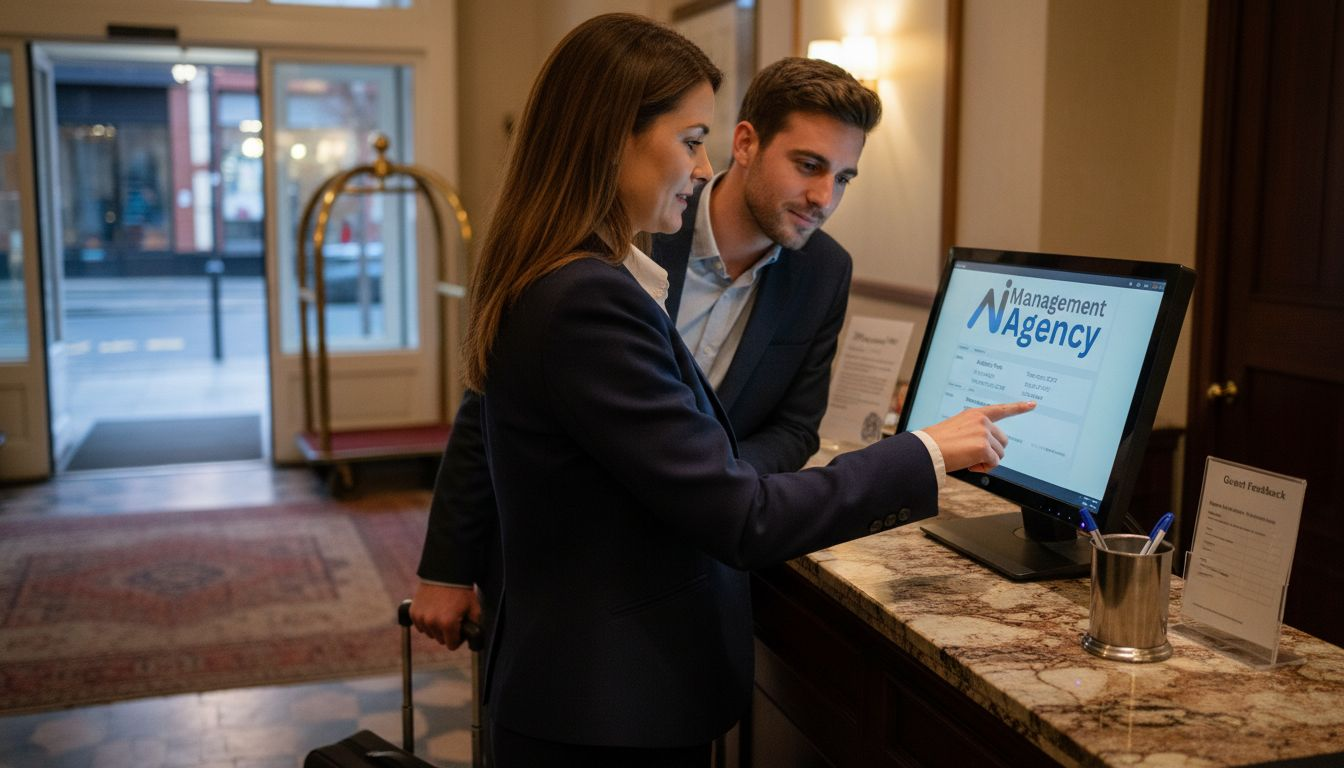
Answering every guest enquiry swiftly can feel impossible when your British hotel runs with a small team. Missing a Friday evening booking request often means losing out to faster competitors, yet operational demands pull staff in multiple directions. Artificial intelligence solutions deliver immediate, personalised responses, qualify prospects, and optimise pricing, directly addressing these core frustrations. Discover how practical AI tools help you capture more sales opportunities and create loyal guests without increasing your workload.
Table of Contents
- Understanding AI in Hotel Sales Conversion
- Why This Matters for Your Hotel
- How AI Works in Your Sales Process
- The Personalization Advantage
- Key AI Tools Used by Small Hotels
- What Each Tool Does
- Why These Tools Matter for Your Hotel
- Implementation Strategy
- Personalisation and Guest Engagement Strategies
- How AI Learns Your Guests
- Balancing Personalisation with Privacy
- Real Engagement, Not Automation Theater
- Implementation Steps
- Financial, Legal, and Operational Implications
- The Financial Reality
- Legal Obligations You Can’t Ignore
- Operational Shifts
- Common AI Adoption Challenges and Solutions
- Challenge 1: Staff Resistance
- Challenge 2: Integration and Training
- Challenge 3: Proving ROI
- Implementation Framework
Key Takeaways
| Point | Details |
|---|---|
| AI Enhances Guest Communication | AI automates initial guest responses 24/7, improving conversion rates by ensuring timely engagement. |
| Lead Qualification Optimisation | AI effectively filters and prioritises high-value guests based on behaviour and booking patterns, enabling focused follow-up. |
| Personalisation Drives Satisfaction | AI leverages past booking data to offer tailored experiences and recommendations, fostering loyalty and increasing revenue. |
| Strategic Implementation is Key | Start with a single AI tool to tackle your most pressing challenges and scale gradually based on results and team confidence. |
Understanding AI in Hotel Sales Conversion
Artificial intelligence is fundamentally changing how hotels convert guest enquiries into bookings. Rather than relying solely on manual processes, hotels now leverage AI to capture, qualify, and convert leads with precision.
AI transforms three core areas of your sales operation:
- Guest communication: Automating responses to initial enquiries 24/7, ensuring no prospect goes unanswered
- Lead qualification: Filtering and prioritising high-value guests based on their behaviour and booking patterns
- Revenue optimisation: Adjusting prices and offers in real time based on demand forecasting and competitor analysis
The mechanics are simpler than you might imagine. When a guest enquires about a room, AI-powered automation handles the initial response instantly. Rather than waiting hours for your team to reply, the prospect receives immediate confirmation and personalised recommendations.
Why This Matters for Your Hotel
Small hotels with limited staff face a real challenge: answering phones and emails constantly pulls attention away from strategic work. You answer a call about availability, check your booking system, reply via email, handle payment questions, reschedule a booking—meanwhile, someone else waits on hold.
AI eliminates this friction.
Converting more guests isn’t about working harder—it’s about responding faster and more consistently.
Consider the numbers. A guest enquiring about your hotel on a Friday evening at 7 PM expects a response within minutes, not tomorrow morning. If your small team is unavailable, that enquiry may go to a competitor who replies instantly. AI answers that call in seconds, books the appointment, and captures their details.
How AI Works in Your Sales Process
AI-driven sales conversion operates through three connected stages:
- Capture: Guest contacts you via call, email, or chat. AI recognises the enquiry type and responds appropriately.
- Qualify: The AI assesses booking intent, dates, guest preferences, and budget to identify genuine prospects.
- Convert: Qualified leads are scheduled for follow-up calls with your team, or conversion happens automatically if the guest is ready to book.
Your team then focuses exclusively on closing sales and managing relationships rather than fielding routine questions.
The Personalization Advantage
Modern guests expect personalised experiences. AI analyses booking history, seasonal preferences, and guest behaviour to tailor recommendations. A returning guest who booked a sea-view room in summer automatically receives offers matching their past choices.

This personalisation directly impacts conversion rates. Relevant offers feel less like spam and more like genuine value.
Pro tip: Start by automating your most common enquiry type—whether that’s availability checks, group bookings, or corporate packages—then expand to other functions as your team adapts.
Key AI Tools Used by Small Hotels
Small hotels don’t need expensive enterprise software to compete with larger chains. The most practical AI tools available today are designed with independents in mind, focusing on direct impact rather than complexity.
Three core categories of AI tools deliver measurable results for your sales operation:
- Demand forecasting: Predicts booking patterns and peak periods based on historical data
- Sentiment analysis: Monitors guest feedback across reviews and messages to identify satisfaction trends
- Service bots: Automates guest interactions via phone, email, and chat
These aren’t theoretical concepts. Machine learning for demand forecasting directly impacts your pricing and inventory decisions. Rather than guessing which weeks will be busy, AI analyses years of booking data to reveal patterns you’d miss manually.
Here’s a summary of how core AI tools impact hotel sales operations:
| AI Tool | Primary Function | Business Impact | Example Benefit |
|---|---|---|---|
| Demand Forecasting | Analyses booking data | Maximises revenue with dynamic pricing | Increases profitability during peak times |
| Sentiment Analysis | Explores guest feedback | Improves service by identifying trends | Enhances guest satisfaction and loyalty |
| Service Bots | Automates guest interactions | Frees staff for value-added tasks | 156 extra qualified leads annually |
What Each Tool Does
Demand forecasting tells you exactly how many guests will book next month. You adjust pricing upwards when demand peaks and offer discounts during slower periods. This optimisation happens automatically, capturing revenue you’d otherwise lose.
Sentiment analysis reads through your guest reviews and feedback automatically. Instead of manually reviewing dozens of comments, AI identifies common complaints, praise, and improvement opportunities. A trend emerges: guests mention “slow Wi-Fi” repeatedly. You fix it, knowing it directly impacts future bookings.
Service bots are the workhorses. These handle routine enquiries, book appointments, answer FAQs, and qualify leads around the clock. They free your team to focus on relationship-building and closing sales rather than repeating information.
Why These Tools Matter for Your Hotel
Small hotels adopting AI tools are competing more effectively with larger chains than ever before.
The democratisation of AI means you’re no longer at a disadvantage. A five-person hotel can deploy the same forecasting and automation capabilities that large chains use, levelling the competitive field.
Consider booking volume. If a service bot qualifies just three additional genuine prospects per week—prospects your team would have missed because you were too busy answering routine calls—that’s 156 extra qualified leads annually. Even a 10% conversion rate on those adds significant revenue.
Implementation Strategy
Start small. Choose one tool addressing your biggest pain point. For most small hotels, that’s service bots handling initial guest enquiries and optimising responses to customer interactions.
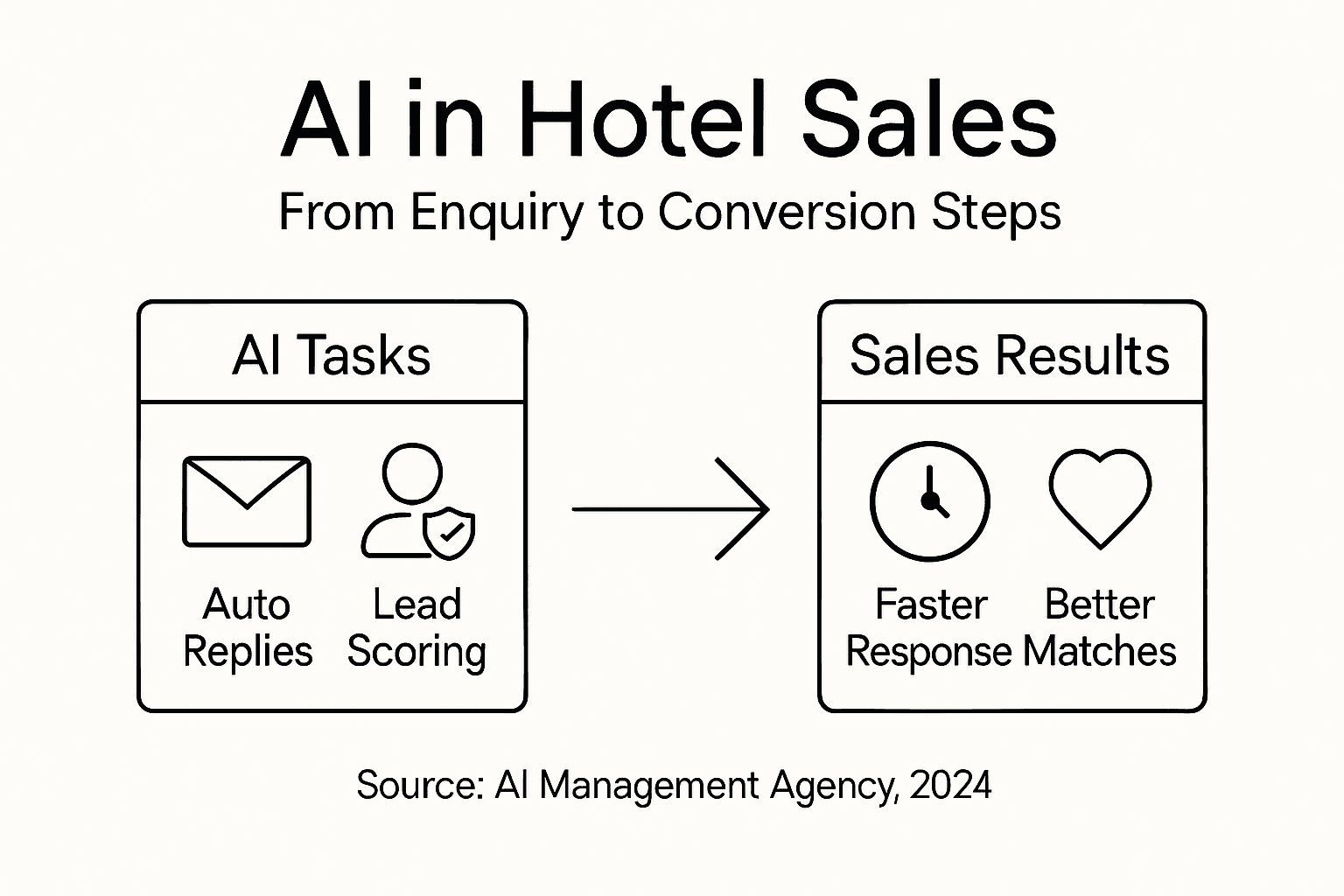
Then layer in demand forecasting once your team is comfortable with automation. Finally, add sentiment analysis to continuously improve guest experience based on real feedback.
This staged approach prevents overwhelm and allows your team to adapt gradually.
Pro tip: Begin by recording your top 20 frequently asked questions—this becomes your service bot’s foundation, saving significant training time and ensuring consistent, accurate responses from day one.
Personalisation and Guest Engagement Strategies
Personalisation is no longer a luxury—it’s what guests expect. When a returning guest books, they want the hotel to remember their preferences without asking again. AI makes this standard practice achievable for small hotels.
Effective personalisation works at multiple touchpoints:
- Pre-arrival communication: Send tailored offers based on past booking behaviour
- Room preferences: Automatically adjust temperature, lighting, and amenities to match previous stays
- Service requests: Anticipate needs (extra pillows, late checkout, dining recommendations) based on guest history
- Targeted marketing: Promote specific packages to guests most likely to book them
AI-enabled personalisation increases guest satisfaction and loyalty whilst driving revenue growth. But here’s what matters most: guests feel valued, not surveilled.
How AI Learns Your Guests
AI analyses guest data to build detailed preference profiles. A guest books a sea-view room every summer. AI flags this pattern. Next spring, before they even enquire, you send them an exclusive offer for your best sea-view rooms at a discounted rate.
Another guest consistently requests late checkout. When they book, AI automatically flags their reservation for your team to offer this upgrade proactively.
This isn’t magic. It’s pattern recognition applied to data you already collect.
Balancing Personalisation with Privacy
Guests trust personalisation only when they understand how their data improves their experience.
Transparency matters enormously. When guests see recommendations or offers aligned with their preferences, they appreciate it. But if personalisation feels invasive, you lose trust immediately.
The solution is clear communication. Explain in your booking confirmation: “We use your preferences to customise your stay. You can adjust these anytime.” This single sentence transforms personalisation from creepy into considerate.
Real Engagement, Not Automation Theater
Personalisation fails when it’s obviously automated. A generic email saying “Hi John, here’s a special offer just for you” (sent to thousands) feels dishonest.
Effective personalisation is specific. Instead: “Based on your previous stay in our sea-view suites, we’ve reserved our premium ocean-facing room for your dates at a 15% discount.”
The difference is genuine relevance. Conversational AI interactions maintain authentic hospitality whilst delivering scale—your team can personalise at volume without burning out.
Implementation Steps
Start by collecting the right data:
- Room preferences: Views, floor level, bed type, temperature preference
- Dietary requirements: Allergies, vegan, gluten-free, religious restrictions
- Service history: Late checkout requests, special occasions, complaints resolved
- Communication preferences: Email frequency, contact method, language
AI then uses this information to inform every future interaction, ensuring consistency and relevance across all guest touchpoints.
Pro tip: During checkout, ask three quick questions about their stay (“Did you enjoy the room temperature?” “Any service we missed?”) to capture preference data that makes next visit personalisation instantly accurate.
Financial, Legal, and Operational Implications
AI adoption isn’t just a technology decision—it reshapes your finances, legal responsibilities, and how your team works. Understanding these implications upfront prevents costly surprises later.
Three areas demand your attention:
- Financial impact: Initial investment, ongoing costs, and revenue generation
- Legal compliance: Data protection, guest privacy, and regulatory requirements
- Operational change: Staff roles shifting, training needs, and workflow disruption
Let’s address each directly. AI-powered systems support predictive analytics and fraud detection, which reduces operational costs significantly. But this benefit only materialises if you implement properly and manage compliance.
The Financial Reality
AI implementation requires upfront investment. You’re paying for software, integration, and staff training. For a small hotel, expect setup costs between £2,000–£8,000 depending on complexity. Monthly subscriptions typically range from £200–£800.
The payoff comes from efficiency. If AI reduces routine phone calls by 40%, your receptionist gains 15 hours weekly. That’s capacity for higher-value work: relationship-building, upselling, problem-solving.
Revenue impact matters more than cost-cutting. If AI-qualified leads increase your conversion rate by just 8%, that translates directly to additional bookings and turnover.
Legal Obligations You Can’t Ignore
Data privacy isn’t optional—it’s a legal requirement that directly affects guest trust.
Guest data is now your responsibility. Under the Data Protection Act 2018 and UK GDPR, you must:
- Obtain explicit consent before collecting data
- Store information securely with encryption
- Allow guests to access, modify, or delete their data
- Respond to data requests within 30 days
- Report any breaches to the Information Commissioner’s Office
AI integration requires careful attention to data privacy and regulatory compliance. Failing to comply costs far more than prevention. Fines reach £20 million or 4% of annual turnover—whichever is higher.
Don’t cut corners here. Document how AI uses guest data, where it’s stored, and how long you retain it. This documentation becomes your legal shield.
Operational Shifts
Your team will change. AI handles routine tasks, but staff now need different skills. Your receptionist becomes a relationship manager. Your manager becomes a data analyst reviewing AI recommendations.
This requires training. Budget time and money for staff to understand AI systems, recognise when AI makes mistakes, and intervene appropriately.
The critical insight: AI doesn’t replace your team. It amplifies what they do best.
Compare the operational shifts AI brings to hotel staff roles:
| Traditional Role | With AI Integration | Required Skills |
|---|---|---|
| Receptionist | Relationship manager | Guest communication, empathy |
| Sales manager | Data analyst | Pattern recognition, strategic decision-making |
| Front desk | Troubleshooter | Problem-solving, AI system monitoring |
Pro tip: Before deploying AI, document your current processes, measure baseline performance (call response time, conversion rates, guest satisfaction), and establish what success looks like so you can quantify actual impact against your investment.
Common AI Adoption Challenges and Solutions
AI isn’t plug-and-play. Most small hotels encounter predictable obstacles during implementation. Knowing what to expect—and how to overcome it—makes the difference between successful adoption and expensive failure.
The main challenges fall into three categories:
- Staff resistance: Your team fears AI will replace them or complicate their work
- Technical barriers: Integration with existing systems, data quality issues, or poor training
- Cost concerns: Budget constraints or unclear return on investment
None of these are fatal. They’re solvable with the right approach. Employee resistance and lack of understanding represent key barriers to successful AI integration that require proactive communication and training strategies.
Challenge 1: Staff Resistance
Your team’s first instinct is often fear. “Will this replace me? Will it make my job harder? Why should I trust a machine to handle guest interactions?”
This reaction is human and predictable. Address it directly. Explain that AI handles repetitive tasks so staff can focus on what matters: building relationships, solving problems, and delivering exceptional service.
Show them concretely. Have your receptionist use the AI system for a week on routine calls. When they see it saves them two hours daily without creating extra work, scepticism transforms into enthusiasm.
Challenge 2: Integration and Training
Your hotel likely uses a booking system, payment processor, and email platform. AI needs to connect with all of them. Incompatibility creates frustration.
Solution: Choose AI systems built for hotels specifically. They’re designed to integrate with standard platforms. During implementation, invest in proper training. Your team needs hands-on time, not just documentation. Budget one week of learning before going live.
Challenge 3: Proving ROI
Your owner asks, “We’re spending £500 monthly on this AI system. What’s the actual return?” That’s fair. Strategic planning and continuous training are essential for overcoming AI adoption barriers and demonstrating tangible value.
Start small, measure everything, scale what works.
Measure baseline metrics before deployment: call response time, conversion rate, average booking value. After three months, compare. If AI reduces response time from 4 hours to 30 minutes and increases conversions by 12%, that’s quantifiable business impact.
Implementation Framework
Follow this sequence:
- Communicate clearly: Tell staff what’s happening, why, and how it benefits them
- Train thoroughly: Provide hands-on practice, not just video tutorials
- Start small: Deploy on one function (e.g., initial enquiry handling) first
- Measure results: Track call volume, response time, conversion rate, guest satisfaction
- Iterate: Adjust AI responses based on what works and what doesn’t
- Expand gradually: Once staff are confident, add new functions
This approach prevents overwhelm and builds confidence across your team.
Pro tip: Assign one team member as the “AI champion”—the person responsible for troubleshooting, adjusting responses, and identifying where AI can improve—so the system continuously evolves based on real guest interactions.
Transform Your Hotel Sales Conversion with AI Driven Solutions
The article highlights the critical challenge small hotels face in responding quickly and consistently to guest enquiries to boost sales conversion. Key pain points include limited staff availability, slow response times leading to lost bookings, and the need for personalised guest engagement that feels genuinely valuable rather than intrusive. Concepts such as AI powered automation for capturing and qualifying leads, service bots answering calls 24/7, and dynamic personalisation are game changers for hotels aiming to increase revenue without overburdening their teams.
At AI Management Agency, we specialise in delivering bespoke AI agents that solve exactly these problems. Our natural tone AI receptionists handle calls round the clock, respond to FAQs instantly, and book only qualified sales appointments. These solutions free your team to focus on relationship building and closing sales rather than routine enquiries. Curious how other hotels have successfully implemented these transformative tools? Explore our detailed AI Management Agency Case Studies: See AI Solutions in Action (2026) to discover proven strategies.
Unlock the full potential of AI in your hotel sales process today by visiting AI Marketing in 2026: Strategies, Case Studies & Solutions by Aimagency. Don’t let a slow response cost you valuable bookings. Take the first step now at https://aimagency.co.uk and experience how intelligent automation drives measurable growth and guest satisfaction.
Frequently Asked Questions
How does AI improve guest communication in hotels?
AI improves guest communication by automating responses to initial enquiries 24/7. This ensures that potential guests receive immediate confirmation and personalised recommendations, eliminating the risk of unanswered queries.
What are the main benefits of using AI for lead qualification in hotel sales?
AI enhances lead qualification by filtering and prioritising high-value guests based on their behaviour and booking patterns. This allows hotels to focus their efforts on prospects most likely to convert into bookings, maximising efficiency.
How can small hotels implement AI tools effectively?
Small hotels can implement AI tools effectively by starting with one function that addresses their biggest pain point, such as automating common guest enquiries. They should then gradually introduce additional tools like demand forecasting and sentiment analysis as their team becomes comfortable with the technology.
What role does personalisation play in AI-driven hotel marketing?
Personalisation is crucial in AI-driven hotel marketing as it tailors recommendations based on guests’ previous stays, preferences, and behaviours. This not only increases guest satisfaction but also enhances conversion rates by making offers feel relevant and valuable.