As an AI Agent Consultant, I’ve seen some of the most sophisticated B2B service companies fall into the same expensive trap: they treat their CRM like a digital filing cabinet rather than a high-performance engine. They spend thousands on HubSpot or Salesforce, only to let the data sit there, gathering digital dust and slowly losing its value.
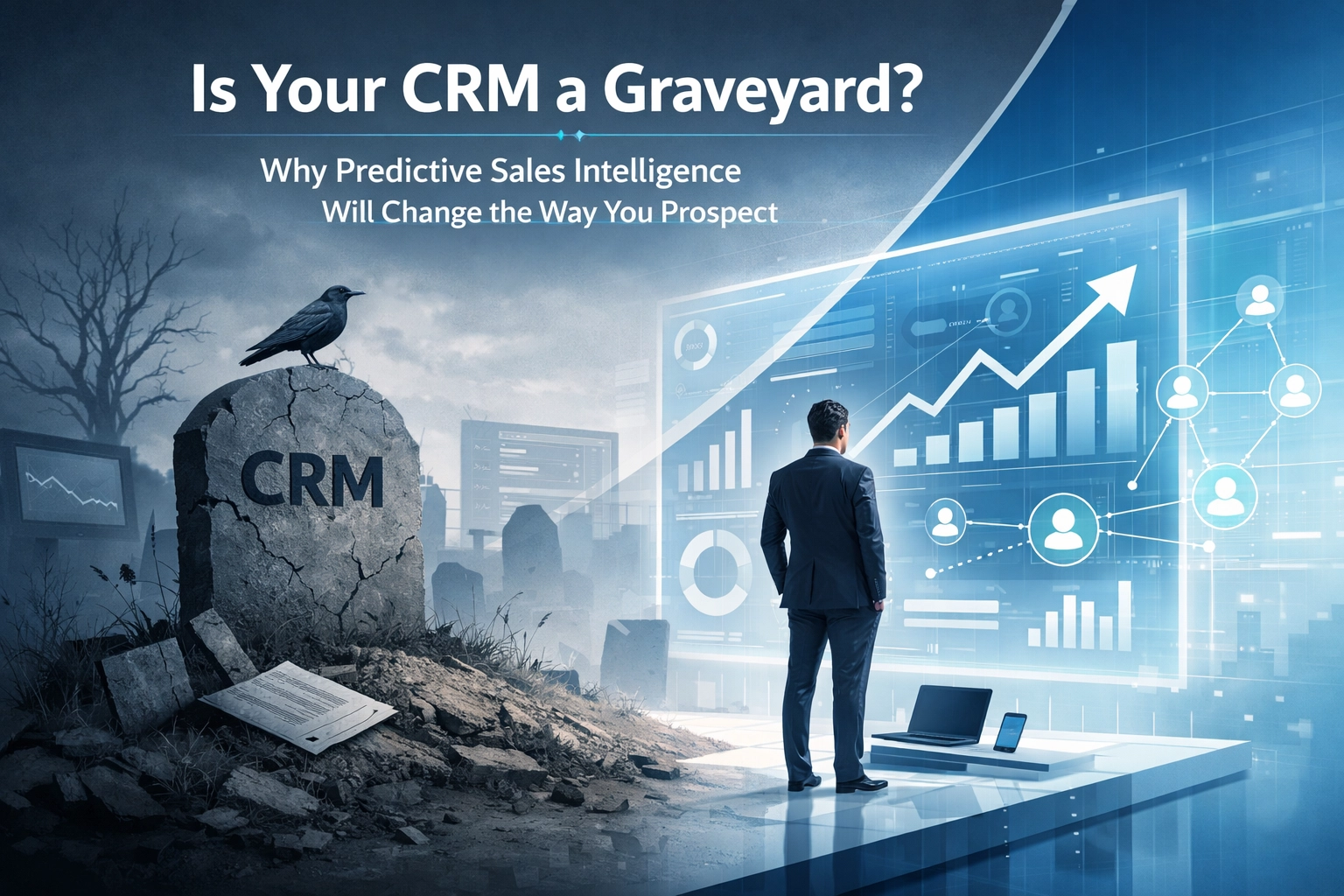
In most cases, these platforms aren't helping sales teams close deals; they are simply documenting why deals aren't happening. We call this the CRM Graveyard. It is where promising leads go to die in fields that no one looks at, and where contact information decays faster than a banana in the sun.
But the game is changing. In 2026, the difference between a high-growth firm and a stagnant one is the move from reactive record-keeping to Predictive Sales Intelligence. By leveraging AI Sales Automation, we are now able to turn those dormant records into active revenue streams.
Key Takeaways
- Data Decay is Lethal: B2B contact data decays at a rate of 22.5% per year. If you aren't updating your CRM constantly, a quarter of your database is already useless.
- The Time Drain: Sales reps waste over 500 hours a year (roughly 27% of their time) chasing invalid or outdated leads.
- Predictive Power: Enriched, AI-driven CRM data can increase revenue by up to 66% by identifying high-intent prospects before they even reach out.
- The Revenue Precision Engine: Moving from "static" to "predictive" requires a strategic framework that automates data enrichment and lead scoring.
1. The Hidden Cost of a Stagnant CRM
Let’s be honest: your sales team probably hates the CRM. They see it as an administrative burden, a place where they have to log calls and notes just to keep management happy. This sentiment stems from a fundamental problem: the data inside is often wrong.
Research shows that nearly 71% of business contacts change roles, companies, or responsibilities every single year. This means your "gold mine" of leads from 12 months ago is likely a "minefield" of dead email addresses and disconnected phone numbers. When your team spends their morning calling people who no longer work at a company, you aren't just losing time; you are destroying morale.
Traditional CRMs are static. They rely on a human being manually entering data. But humans are busy, forgetful, and, frankly, bored by data entry. This is where AI Sales Automation steps in to act as the "janitor" and the "scout" simultaneously.

2. From Record-Keeping to Revenue Generation
The shift toward Predictive Sales Intelligence represents a move away from looking at what happened to predicting what will happen. Instead of looking at a list of 1,000 leads and wondering who to call first, predictive intelligence tells you exactly who is most likely to buy today.
This is achieved through real-time data enrichment. When an AI agent is integrated into your workflow, it doesn't just wait for you to type in a lead's new title. It actively scans the web, LinkedIn, and industry news to update your records automatically. If a key prospect at a target account gets promoted or moves to a new firm, your CRM reflects that instantly.
At AI Management Agency, we specialise in building these autonomous loops. By connecting your CRM to external intelligence signals, we transform it from a graveyard into a living, breathing map of your market.
3. Introducing the Revenue Precision Engine
To solve the "Graveyard" problem, we developed the Revenue Precision Engine. This isn't just a piece of software; it’s a strategic framework for B2B service companies to automate their entire prospecting lifecycle.
The engine works in three distinct phases:
- Continuous Enrichment: It automatically replaces decayed data (invalid emails, old job titles) with verified, fresh information.
- Intent Mapping: It identifies "buying signals", such as a company raising capital, hiring for a specific role, or engaging with specific content online.
- Automated Prioritisation: It scores leads based on these signals, placing the highest-probability opportunities at the top of your sales team's daily task list.
This ensures that your sales team is always "hunting" in the right woods. They stop being data entry clerks and start being high-value closers.

4. Comparing Traditional Prospecting vs. Predictive Intelligence
To understand the impact, let's look at how these two approaches stack up against each other:
| Feature | Traditional CRM Prospecting | Predictive Sales Intelligence |
|---|---|---|
| Data Quality | Manual entry; decays 22% per year. | Automated enrichment; real-time updates. |
| Lead Prioritisation | Based on "gut feel" or date added. | Based on intent signals and AI scoring. |
| Sales Rep Effort | 27%+ time spent on bad data. | Minimal time wasted; focused on active leads. |
| Response Time | Reactive (responding to enquiries). | Proactive (reaching out during buying windows). |
| Revenue Impact | Stagnant or linear growth. | Up to 66% increase in revenue potential. |
5. Why B2B Service Companies Need This Now
If you are running a B2B service business, whether it’s a consultancy, a marketing agency, or a technical service provider, your expertise is your product. However, your expertise is only valuable if you can get it in front of the right person at the right time.
The "right time" is the most difficult variable to master. Traditional prospecting is like throwing darts in the dark. You might hit the target, but you’ll waste a lot of darts. Predictive Sales Intelligence turns the lights on. It allows you to see which companies are experiencing the specific pain points that your services solve.
For example, if you offer AI implementation services, your "Revenue Precision Engine" might flag a company that just hired a new Chief Digital Officer. That is a prime buying signal. Reaching out then, with a tailored message, is infinitely more effective than a cold blast to a stale list of CEOs.
6. How to Get Started: Reviving Your CRM
You don't need to scrap your current system and start over. Most of the time, the solution involves layering AI intelligence over your existing infrastructure.
- Audit the Decay: Start by running a data health check. How many of your emails bounce? How many of your "Top 100" prospects are still in the same role?
- Integrate Enrichment Tools: Use AI-powered tools that sync directly with your CRM to verify data in real-time.
- Define Your Buying Signals: What events actually precede a sale in your business? Is it a new round of funding? A product launch? Define these so the AI knows what to look for.
- Automate the First Touch: Use AI Marketing Automation to nurture leads that aren't quite ready for a call, keeping your brand top-of-mind without manual effort.

Frequently Asked Questions
Q: Is this only for large enterprises?
A: Not at all. In fact, mid-sized B2B service companies often see the biggest ROI because they have smaller sales teams that cannot afford to waste 30% of their time on bad data.
Q: Will AI replace my sales team?
A: No. It replaces the "grunt work." It allows your sales team to focus on building relationships and closing deals: the things humans are actually good at: while the AI handles the data management and research.
Q: How long does it take to see results?
A: Once the Revenue Precision Engine is implemented, companies typically see an improvement in lead quality within 30 days. Close rates often start to climb within the first quarter as the sales team begins to trust the data.
Conclusion: The Future of Prospecting is Personalised and Predictive
The days of "spray and pray" prospecting are over. In a world where everyone’s inbox is flooded with generic AI-generated spam, the only way to stand out is through extreme relevance. Relevance requires intelligence.
By turning your CRM from a graveyard into a predictive powerhouse, you aren't just cleaning up your database; you are building a sustainable competitive advantage. You will reach the right people, with the right message, at the exact moment they need your help.
Is your CRM working for you, or are you working for your CRM? It’s time to stop the data decay and start the revenue growth.
If you’re ready to see how AI Sales Automation can transform your pipeline, let’s talk about building your own Revenue Precision Engine. The future of your B2B sales is already in your data: you just need the intelligence to find it.
Explore more about our case studies and results to see how we’ve helped other firms bring their data back to life.