
TL;DR:
- AI enhances hotel operations and guest experiences by enabling personalized services and efficient management. Successful implementation depends on mapping processes, unifying data, and choosing the right AI architecture. Proper foundation building leads to significant revenue increases and measurable productivity gains.
AI is transforming hotels by reshaping how properties manage operations, personalise guest experiences, and generate revenue at every stage of the booking journey. Booking conversion rates from AI-driven engines reach 44.7%, compared to 25.9% from traditional search. That gap represents a fundamental shift in commercial performance, not a marginal improvement. For hotel operators and decision-makers, understanding why AI in hotel management is producing these results, and how to replicate them, is now a competitive necessity. This guide covers the operational, architectural, and revenue dimensions of AI adoption in hospitality, drawing on 2026 industry data and expert implementation insights.
Why AI is transforming hotels: operational efficiency first
AI does not automatically improve hotel operations. Adding new tools onto old, non-AI workflows produces marginal gains and creates friction. This is the most common mistake operators make, and it explains why many early AI projects in hospitality underdelivered.
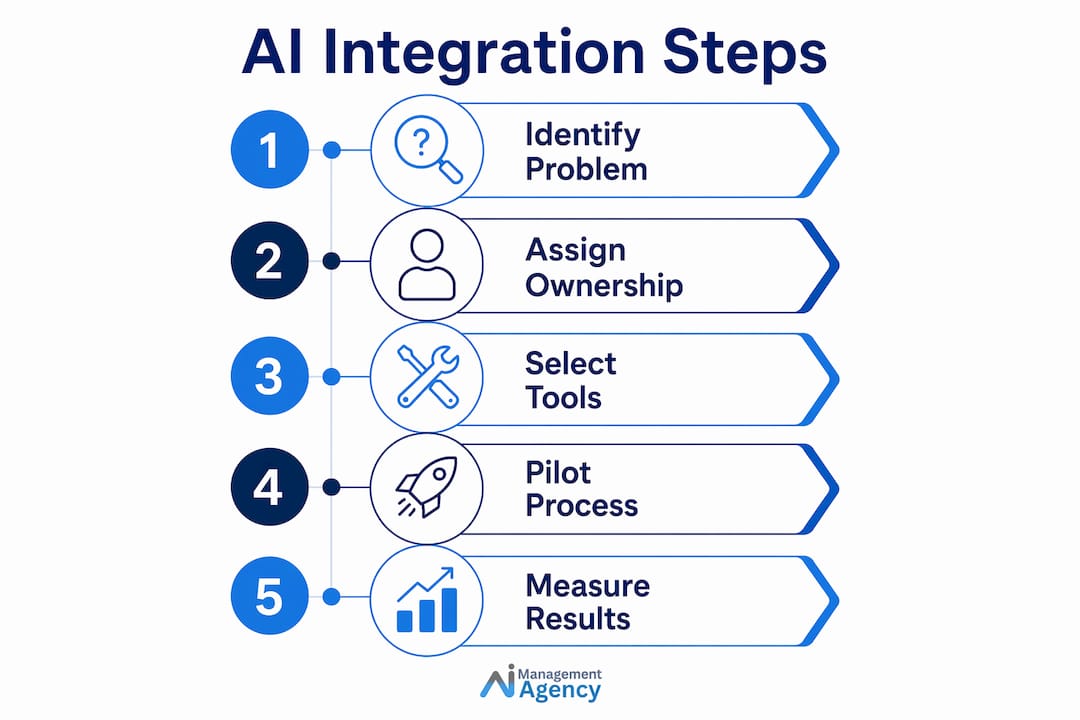
The correct sequence is to define the operational problem first, then assign accountability, then select the tool. Rafael del Castillo, a recognised voice in hotel AI implementation, is direct on this point: identify the specific problem and the person responsible for it today before any technology is chosen. Without that clarity, AI tools sit unused or misused.
When hotels follow this sequence, the results are measurable. Hyatt rebuilt its digital infrastructure with a data and AI layer first approach before deploying chat-based interfaces for staff. The outcome was a productivity increase of approximately 20%, alongside higher conversion rates and revenue. That is not a coincidence. It is the direct result of building the foundation before the interface.
AI in hotel management covers a wide range of tasks once the foundation is in place:
- Dynamic pricing: AI engines adjust room rates in real time based on demand signals, competitor data, and booking pace.
- Staffing allocation: AI forecasts occupancy and recommends shift patterns, reducing both overstaffing and service gaps.
- Guest interaction automation: AI voice agents and chatbots handle routine enquiries, freeing staff for higher-value interactions.
- Maintenance scheduling: Predictive models flag equipment issues before they affect guests.
Pro Tip: Map every manual process your team performs daily before evaluating any AI tool. The map reveals where automation adds genuine value and where it would create confusion.
How does AI improve the guest experience at a granular level?
AI improves the guest experience by personalising every touchpoint, from pre-arrival offers to in-room preferences, using unified data from across hotel systems. The critical word is “unified.” Fragmented hotel data silos limit AI’s ability to generate revenue and deliver personalisation. Connecting PMS, CRM, revenue management, and distribution data at room-level granularity is what makes personalised AI commercially effective.

Richard Valtr, a prominent figure in hotel technology thinking, has noted that most hotels hold rich guest data but store it in disconnected systems. AI cannot personalise what it cannot see. A guest who prefers a high floor, orders the same breakfast daily, and books spa treatments on arrival represents a clear upsell profile. Without unified data, that profile is invisible to the AI.
When data is connected, the guest experience changes materially:
- Personalised pricing: AI presents tailored rate offers based on a guest’s booking history and stated preferences.
- Pre-arrival communication: Automated, personalised messages confirm preferences and offer relevant upgrades before check-in.
- Smart room integration: AI assistants adjust lighting, temperature, and entertainment based on guest profiles or real-time requests.
- Frictionless check-in: AI-driven identity verification and mobile key issuance remove queues at the front desk.
The AI agents in hospitality space has matured significantly in 2026. Purpose-built agents now handle guest FAQs, room service requests, and concierge queries in natural language, 24 hours a day. Guests receive consistent, accurate responses without waiting for a staff member to become available.
What distinguishes effective AI architectures for hotels?
The architectural choice between probabilistic and deterministic AI is the decision that most hotel CEOs are getting wrong in 2026. Probabilistic AI systems answer questions well but are unsuitable for critical operational tasks. Deterministic AI executes actions with certainty, such as processing a refund, adjusting a reservation, or triggering a pricing change.
Hotels that invest only in probabilistic platforms risk obsolescence by 2029. The analogy is apt: choosing a probabilistic-only AI architecture today is comparable to investing heavily in fax infrastructure in the mid-1990s. The technology works, but the trajectory is wrong.
| Architecture type | Best use case | Operational risk |
|---|---|---|
| Probabilistic AI | Guest Q&A, content generation, search | High risk for transactional tasks |
| Deterministic AI | Pricing, reservations, refunds, scheduling | Low risk, reliable execution |
| Layered (both) | Full hotel operations | Lowest risk, highest capability |
Hyatt’s approach illustrates the layered model well. The company built a data and AI foundation, then deployed natural language querying tools that allow staff to interrogate hotel databases using plain English questions. Technologies such as Vanna AI translate those questions into SQL queries without requiring technical training. Staff adoption increases because the interface feels familiar.
Pro Tip: Before signing any AI contract, ask the vendor directly: “Is this system probabilistic or deterministic?” If they cannot answer clearly, that tells you something important about the product.
How is AI creating new revenue opportunities beyond cost reduction?
Most hotels approach AI as a cost-cutting tool. That framing misses the larger commercial opportunity. Agentic commerce models enable AI to orchestrate pricing, inventory, upsells, and personalisation automatically. Amadeus’s 2026 AI commerce solutions demonstrate how hotels can maintain control over merchandising and pricing even as AI handles the execution.
The revenue opportunity sits in the integration of multi-source data. A hotel that connects its PMS, CRM, and distribution channels gives its AI engine the inputs needed to identify upsell moments, loyalty triggers, and demand spikes in real time. A guest booking a standard room who has previously upgraded to a suite twice is a high-probability upsell candidate. AI identifies and acts on that signal instantly, at scale.
Specific revenue applications include:
- AI-powered pricing engines that respond to live demand data, local events, and competitor availability to maximise RevPAR.
- Personalised marketing automation that sends targeted offers to past guests based on their actual behaviour, not demographic segments.
- Ancillary revenue prompts that surface spa, dining, and experience offers at the moment of highest guest receptivity.
- Loyalty programme personalisation that tailors rewards and communications to individual guest value, increasing repeat bookings.
For hotel operators seeking to understand how generative engine optimisation affects booking visibility in AI-driven search environments, the connection between content strategy and direct booking conversion is increasingly direct. Hotels that appear prominently in AI-generated travel recommendations capture demand before it reaches OTA platforms.
What practical steps should decision-makers take to implement AI?
Successful AI adoption in hotels follows a clear sequence. Organisational readiness matters more than technology selection at the outset. Without clearly defined manual processes and accountable individuals, AI implementation will fail regardless of the tool’s capability.
- Map current processes: Document every manual task in operations, revenue management, and guest services. Identify where time is lost and where errors occur most frequently.
- Assign clear ownership: Involve the person responsible for each operational task today. Their buy-in determines whether the AI tool gets used correctly after launch.
- Define success criteria: Set measurable targets before deployment. “Reduce front desk call volume by 30%” is a success criterion. “Improve guest experience” is not.
- Build the data layer first: Follow the approach advocated by Hyatt CEO Mark Hoplamazian. Unify PMS, CRM, and revenue data before deploying AI interfaces. The interface is only as good as the data beneath it.
- Select tools based on defined problems: Use the tips for choosing hotel AI tools framework to match tools to specific, documented operational needs rather than vendor marketing claims.
- Train and manage change: AI adoption requires staff training and ongoing change management. Resistance drops when staff understand that AI handles repetitive tasks, freeing them for work that requires human judgement.
Pro Tip: Run a 30-day pilot on one process before committing to a full deployment. A focused pilot generates the evidence you need to build internal confidence and refine the implementation plan.
Key takeaways
AI in hotel management delivers measurable gains in conversion, productivity, and revenue only when operators build the data foundation first and choose the right AI architecture for each task.
| Point | Details |
|---|---|
| Sequence matters | Define operational problems and assign ownership before selecting any AI tool. |
| Architecture is critical | Deterministic AI executes operational tasks reliably; probabilistic AI alone is insufficient for hotel operations. |
| Data unification drives revenue | Connecting PMS, CRM, and distribution data at room level unlocks personalisation and upsell opportunities. |
| Productivity gains are proven | Hyatt’s layered AI approach produced approximately 20% productivity improvement after rebuilding its data infrastructure. |
| Booking conversion lifts significantly | AI-driven booking engines achieve 44.7% conversion, compared to 25.9% from traditional search, per Amadeus 2026 data. |
The architecture decision nobody talks about honestly
The conversation around AI in hospitality tends to focus on guest-facing features: chatbots, smart rooms, personalised offers. Those are real and valuable. But the decision that will separate high-performing hotels from the rest over the next three years is the one happening in the server room, not the lobby.
I have seen operators invest in impressive-looking AI interfaces built on probabilistic foundations. The demos are compelling. The operational reality is disappointing. When a guest asks the AI to modify a reservation and the system can only suggest calling the front desk, the technology has failed at the moment it mattered most.
The hotels getting this right are the ones that treated data unification as a prerequisite, not an afterthought. They mapped their processes, assigned ownership, and built the infrastructure before they worried about the interface. That sequencing feels slow at first. It produces durable results.
My honest view is that the urgency around AI adoption is justified, but the framing is often wrong. The question is not “which AI tool should we buy?” The question is “what problem are we solving, who owns it, and what does success look like?” Answer those three questions first, and the tool selection becomes straightforward. Skip them, and no tool will save you.
The future of AI in hospitality belongs to operators who treat AI as an infrastructure investment, not a feature purchase. The window to build that foundation correctly is open now. It will not stay open indefinitely.
— Geoff
How Aimagency helps UK hotels put AI to work
Aimagency builds AI agents designed specifically for hospitality operations, from automated call answering that handles guest enquiries 24/7 to AI receptionists that speak in a natural tone, respond to FAQs, and book qualified appointments without staff involvement.
For UK hotel operators ready to move beyond cost-cutting and into AI-driven revenue growth, Aimagency’s AI agents for hospitality are built on the same principles this article outlines: defined problems, clear ownership, and measurable outcomes. Every agent is configured to your specific operational needs, not deployed as a generic product. If your hotel is fielding repetitive calls, losing bookings to slow response times, or struggling to personalise guest communication at scale, this is where the work starts.
FAQ
Why is AI transforming hotels faster than other industries?
Hotels generate high volumes of repetitive, data-rich interactions across bookings, guest services, and revenue management. AI finds its highest-value applications precisely where volume and data density are greatest, which makes hospitality a natural fit for rapid adoption.
What is the difference between probabilistic and deterministic AI in hotels?
Probabilistic AI answers questions and generates content but cannot reliably execute operational tasks. Deterministic AI takes specific actions, such as adjusting a reservation or processing a refund, with certainty. Hotels need both, but operational tasks require deterministic systems.
How does AI improve hotel booking conversion rates?
AI-driven booking engines using generative engine optimisation achieve conversion rates of 44.7%, compared to 25.9% from traditional search, according to Amadeus 2026 pilot data. The improvement comes from personalised, intent-matched responses that guide guests to the right room and rate faster.
What is the biggest mistake hotels make when implementing AI?
The most common mistake is adding AI tools onto existing, non-AI workflows without redefining processes or assigning ownership. This produces friction and marginal gains. Successful implementation starts with mapping current processes and defining clear success criteria before any tool is selected.
How long does it take to see results from AI in hotel management?
Results vary by application. Hyatt reported productivity gains of approximately 20% after rebuilding its data and AI infrastructure, but that followed a deliberate, phased approach. A focused 30-day pilot on a single process, such as call handling or pricing automation, typically produces measurable results within the first month.