TL;DR:
- Choosing hotel AI tools requires clear success metrics, verified data governance, and human oversight testing. Reliable integration, compliance, and operational ownership are essential for effective implementation and long-term value. Proper evaluation, oversight, and post-launch review prevent costly failures and ensure AI enhances guest experiences.
Selecting AI tools for your hotel means choosing between systems that genuinely improve guest experience and those that look impressive in a demo but fail in practice. The best tips for choosing hotel AI tools start with defining clear success metrics, confirming data governance terms, and testing human oversight workflows before you sign anything. UK hotel managers also need to account for GDPR compliance, integration reliability, and operational ownership after go-live. Get these foundations right and the tool almost selects itself. Get them wrong and you will spend months managing a system that creates more work than it saves.
1. What are the foundational criteria for evaluating hotel AI tools?
Integration type is the first filter. Native integrations built and maintained by the vendor carry far less breakage risk than third-party API connections managed by a middleware layer. When a property management system update breaks a third-party API, your AI tool stops working and your vendor may not even know about it. Ask every vendor directly: who owns the integration, and who fixes it when it breaks?

Data governance is the second filter. UK GDPR does not require data to remain in the UK, but international transfer safeguards must be evaluated through a Data Processing Addendum. Ask vendors exactly where prompts, conversation logs, and guest data are processed, and who within their organisation can access them. “Hosted in the cloud” is not an answer. You need a hosting region, a regulatory framework, and written confirmation of a closed AI environment if your property handles sensitive guest data.
The third filter is success metrics. Define KPIs and kill criteria in writing before any pilot begins. Useful metrics include correct-resolution rate, human handoff rate, and a payback threshold tied to a specific number of weeks. If the tool does not hit those numbers, the pilot fails. That is not a failure of ambition. It is good procurement.
Key criteria to confirm before shortlisting any vendor:
- Integration type: native or third-party API, and who maintains it
- Data residency: hosting region, DPA terms, and access controls
- AI environment: closed or open, and whether guest data trains the model
- SLA coverage: vendor SLAs must cover data degradation, integration failures, and liability for AI-generated harm
- Success metrics: correct-resolution rate, handoff rate, and payback threshold defined before go-live
Pro Tip: Ask vendors whether your guest data is used to train their shared model. If it is, that is a commercial and compliance risk. Get a written opt-out clause in the contract.
2. How to verify AI vendor reliability and human oversight processes
Guest-facing AI carries reputational risk that back-office automation does not. A chatbot that gives a guest incorrect pricing, a wrong check-in time, or an offensive response can damage your property’s reputation faster than any operational failure. Human-in-the-loop approval with a named staff member signing off on AI-generated guest messages is the standard you should require.
During vendor demos, do not accept scripted interactions. Chatbot demos almost always show the AI handling clean, predictable questions. Real guests ask ambiguous, multi-part, or emotionally charged questions. Ask the vendor to demonstrate what happens when the AI does not know the answer. Does it escalate gracefully to a human? Does it fail silently? Does it hallucinate a response? The escalation path matters as much as the AI’s capability.
Prompt injection is a less-discussed but real risk. A malicious or confused guest can craft inputs that cause an AI to behave unexpectedly. Ask vendors what protections they have built against this, and whether they log and audit all AI outputs. Audit trails are not just a compliance asset. They are your evidence if a guest dispute arises.
“The question is not whether the AI can handle a normal conversation. The question is what it does when it cannot.” This is the test most hotel managers forget to run during evaluation.
Questions to ask every vendor on human oversight:
- Who approves guest-facing AI messages before they are sent?
- What is the escalation path when the AI cannot resolve a query?
- How are AI errors logged, reviewed, and corrected?
- What protections exist against prompt injection or unexpected AI behaviour?
- Can you demonstrate a failed interaction and the recovery workflow?
3. What operational factors determine AI implementation success?
Post-contract sequencing and operational ownership in the first six weeks after go-live determine whether an AI tool delivers value. The tool choice matters far less than whether your team knows who owns it, how it connects to your workflows, and what to do when it behaves unexpectedly. Hotels that assign no accountable owner to an AI implementation consistently report that dashboards go unchecked and the tool drifts from its original purpose.
Workflow alignment is where most implementations stall. An AI voice agent that answers calls 24/7 only adds value if the calls it handles are the right calls, routed to the right people, with the right information passed downstream. Map your current call and query workflows before you select a tool, not after. If you cannot describe the workflow clearly on paper, the AI cannot replicate it reliably.
Staff training in the first two weeks is not optional. Your team needs to understand what the AI does, what it does not do, and how to override it. Resistance to AI tools in hotels almost always traces back to staff who were not involved in the rollout and do not trust the system. Involve your front-of-house team in testing before go-live.
Steps to prepare your operation before sign-off:
- Write an operational brief describing current workflows the AI will touch
- Assign a named accountable owner for the AI tool, not a committee
- Define the escalation path from AI to human for every use case
- Schedule a two-week post-launch review with the vendor
- Set a 90-day performance review against the KPIs defined before the pilot
Pro Tip: Treat the first 30 days as a supervised pilot even after full contract sign-off. Keep the vendor engaged weekly until the tool is stable and your team is confident.
4. How to compare and select between multiple AI tools for your hotel
Side-by-side comparison works best when you use the same criteria for every vendor. Without a fixed framework, you end up comparing a vendor’s strongest feature against another vendor’s weakest, which produces a misleading picture. The AI tools for hotel operations that perform best in practice share three qualities: reliable integration, clear human override capability, and transparent pricing.
| Criterion | What to assess |
|---|---|
| Integration type | Native vs API; who maintains it post-launch |
| Human oversight | Named approver workflow; escalation path for failures |
| Data governance | Hosting region; DPA terms; model training opt-out |
| Pricing transparency | Fixed vs usage-based; cost at scale |
| Scalability | Can it handle peak occupancy without degrading? |
| Vendor maturity | How long has the product been live in hotels? |
Pricing transparency is frequently underweighted. Usage-based pricing looks affordable at low volume but can become expensive during peak season. Ask vendors for a cost projection at your average monthly query volume and at your peak volume. The gap between those two numbers tells you a great deal about the real cost of the tool.
Run adversarial tests during every demo. Ask the AI a question with no clear answer. Ask it something that contradicts your hotel’s policy. Ask it a question in a regional dialect or with a spelling error. The tools that handle these gracefully are the ones built for real hospitality environments, not controlled lab conditions.
- Request references from hotels of a similar size and type to yours
- Ask vendors for their average implementation timeline, not their best-case timeline
- Confirm whether pricing includes onboarding, training, and ongoing support
- Test the vendor’s own response time during the sales process as a proxy for support quality
5. Recommendations by hotel type and budget
Small independent hotels benefit most from AI tools with a focused scope. A single AI voice agent that answers calls, handles FAQs, and books appointments covers the highest-volume pain points without the complexity of an enterprise platform. AI solutions for hospitality at the smaller end of the market have improved significantly, and out-of-the-box solutions now offer genuine value without requiring a dedicated IT resource to manage them.
Larger properties and hotel groups need enterprise-grade tools with stronger compliance architecture. Multi-property operations must confirm that data governance terms apply across all sites, not just the primary property. Compliance needs around UK GDPR, staff data, and guest profiling are more complex at scale, and the vendor’s legal team should be able to produce a DPA quickly and without negotiation.
One overlooked feature across all property sizes is localised language support. UK hotels serving international guests benefit from AI tools that handle British English naturally, recognise regional phrasing, and do not produce responses that sound translated. Test this specifically during demos by using colloquial British phrasing in your test queries.
- Small hotels: prioritise AI voice agents with call handling, FAQ response, and appointment booking
- Mid-size hotels: add guest communication automation and review response tools
- Large hotels and groups: require enterprise compliance, multi-property data governance, and dedicated account management
- Budget-conscious buyers: out-of-the-box tools with fixed monthly pricing reduce financial risk during early adoption
- Guest experience focus: prioritise human-in-the-loop governance and AI guest communication quality over automation volume
Key takeaways
Choosing the right AI tool for your hotel requires defined success metrics, verified data governance, and tested human oversight before any contract is signed.
| Point | Details |
|---|---|
| Define metrics before pilots | Set correct-resolution rate, handoff rate, and payback thresholds in writing before go-live. |
| Require native integration | Vendor-maintained integrations reduce breakage risk compared to third-party API connections. |
| Confirm data residency terms | Ask for hosting region, DPA terms, and written confirmation of model training opt-out. |
| Test escalation paths in demos | Ask vendors to demonstrate failed interactions, not just scripted successes. |
| Assign operational ownership | Name one accountable owner for the AI tool before sign-off to prevent post-launch drift. |
What I have learned from watching hotel AI selections go wrong
The pattern I see most often is this: a hotel manager attends a vendor demo, the AI performs brilliantly on a scripted walkthrough, and the decision is made on enthusiasm rather than evidence. Six months later, the tool is underused, the integration is fragile, and no one is quite sure whose job it is to fix it.
The single most protective thing you can do before selecting any AI tool is write a clear operational brief. Not a wish list. A document that describes your current workflows, your peak query volumes, your staff structure, and the specific outcomes you need the AI to produce. Vendors who cannot map their product to that brief are telling you something important.
I also think the industry underestimates how much terminology fluency matters in these negotiations. Understanding what “hallucination” means in an AI context, knowing what RAG (Retrieval-Augmented Generation) does, and being able to ask a vendor about their prompt injection protections puts you in a completely different commercial position. You do not need to be a technologist. You need enough vocabulary to ask the right questions and recognise a weak answer.
The hotels that get the most from AI are not the ones with the biggest budgets. They are the ones that treated selection as a procurement exercise, not a technology experiment. They defined what success looked like before the pilot started. They assigned ownership. They stayed engaged with the vendor after go-live. That discipline is available to any property, regardless of size.
— Geoff
How Aimagency helps UK hotels choose and implement AI with confidence
Aimagency works with UK hotel owners and managers to cut through vendor noise and identify AI tools that fit real operational needs. From evaluating integration options to reviewing data governance terms, Aimagency brings procurement fluency and hospitality-specific experience to every engagement.
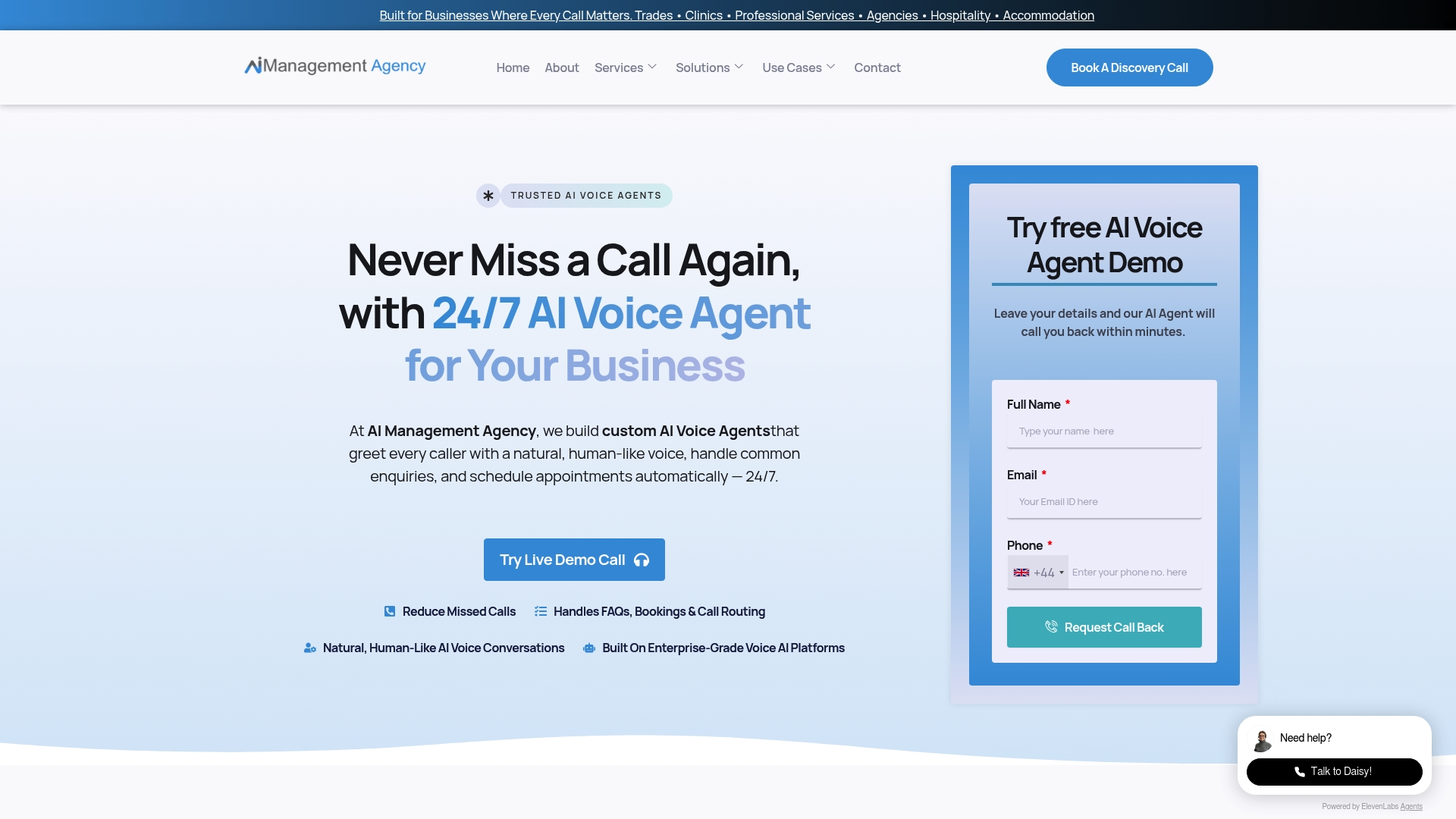
Whether you are a small independent property looking for an AI voice agent for hotels or a larger operation assessing enterprise-grade AI solutions, Aimagency provides structured guidance from shortlisting through to post-launch review. The team understands UK GDPR requirements, native integration standards, and the human oversight frameworks that protect your guests and your reputation. If you are ready to move beyond demos and make a confident, evidence-based decision, contact Aimagency to start the conversation.
FAQ
What is the most important criterion when choosing hotel AI tools?
Defining success metrics and kill criteria before the pilot begins is the single most critical step. Without predetermined KPIs, evaluation becomes subjective and vendor enthusiasm replaces objective measurement.
Does UK GDPR require guest data to stay in the UK?
UK GDPR does not require data to remain in the UK, but international transfer safeguards must be confirmed through a Data Processing Addendum. Always ask vendors for the specific hosting region and access controls.
How do I test an AI chatbot vendor properly?
Run adversarial queries during the demo, including ambiguous questions, policy contradictions, and colloquial phrasing. Ask the vendor to demonstrate the escalation path when the AI fails, not just when it succeeds.
What does human-in-the-loop mean for hotel AI?
Human-in-the-loop means a named staff member reviews and approves AI-generated guest messages before they are sent. This governance model protects your reputation and meets compliance expectations for guest-facing AI outputs.
How soon after go-live should I review AI tool performance?
Schedule a formal review at two weeks and again at 90 days. The first six weeks post-launch are the period where operational sequencing and workflow alignment determine whether the tool delivers its expected value.
Recommended
- Types of hotel AI agents: a UK manager’s guide – AI Management Agency
- AI hotel appointment scheduling: boost efficiency 40%+ – AI Management Agency
- Boost hotel sales with AI: proven strategies for UK managers – AI Management Agency
- AI appointment examples to streamline your UK hotel – AI Management Agency