
TL;DR:
- Hotel CRM AI combines guest data management with automation to enhance personalized guest engagement. It improves revenue, operational efficiency, and guest loyalty through real-time insights and integrated AI capabilities. Continuous human oversight and proper data architecture are key to maximizing its benefits.
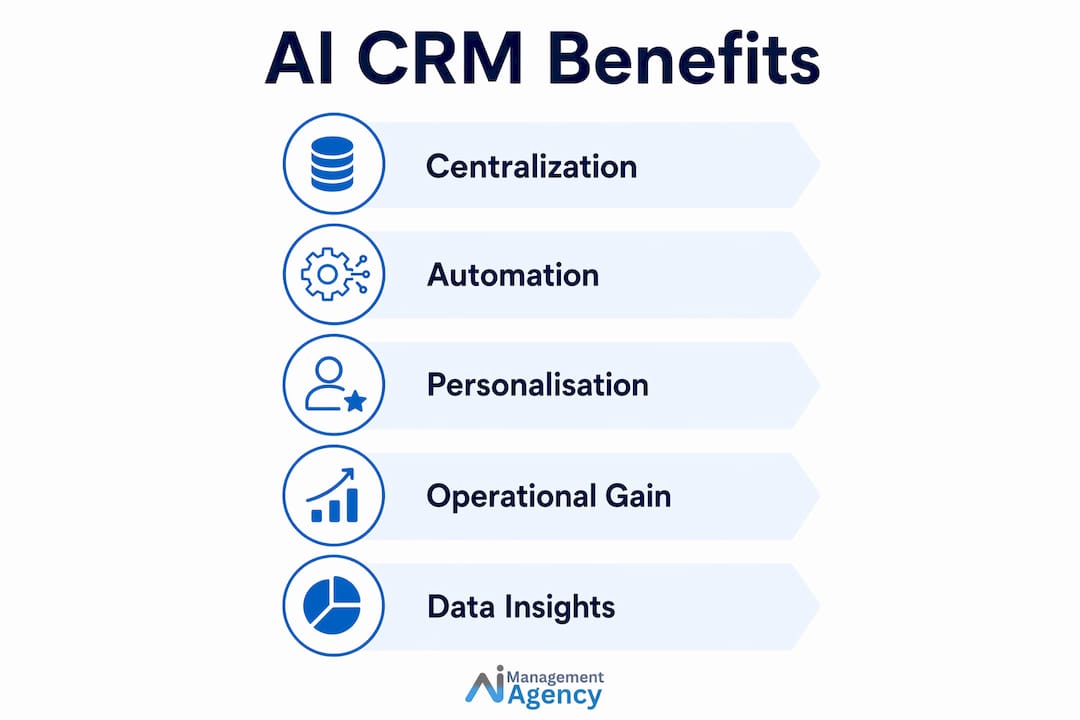
Hotel CRM AI is defined as an integrated software platform that uses artificial intelligence to centralise guest data, automate communications, and drive personalised engagement across every stage of the guest journey. The industry term for this category is “AI-powered guest relationship management,” though hotel managers increasingly use “hotel CRM AI” to describe the same capability. UK hotel managers who adopt this technology gain a direct connection between their property management system (PMS), marketing tools, and revenue workflows. AI-driven CRM integration can deliver up to an 18% revenue lift through 90-day forecasts with 95% accuracy. That figure alone signals why AI CRM has moved from a nice-to-have to a core operational decision for UK hospitality businesses.
What is hotel CRM AI and how does it differ from traditional CRM?
Traditional hotel CRM systems store guest contact details and booking history. AI-powered CRM does far more. It analyses patterns across thousands of guest interactions to predict behaviour, personalise communications, and automate decisions that would otherwise require hours of staff time.

The core difference is intelligence. A standard CRM tells you a guest stayed three times last year. An AI CRM tells you that guest prefers a quiet room on an upper floor, books direct when offered a room upgrade, and is likely to return within 90 days if contacted by email on a Tuesday. That level of insight changes how you market, price, and serve.
Hotel AI technology connects your CRM to your PMS, distribution channels, and revenue management tools. Successful AI CRM requires direct integration with PMS and distribution channels, enabling real-time unified guest data access. Without that connection, the AI operates on incomplete information and its recommendations lose accuracy.
How does AI enhance traditional hotel CRM systems?
AI adds four capabilities that conventional CRM systems cannot replicate:
- Dynamic guest segmentation: AI groups guests by real booking behaviour, not just demographic labels. A leisure traveller who books spa packages in january gets different messaging than a corporate guest who books Monday arrivals.
- Predictive analytics: The system forecasts demand, identifies guests at risk of churning, and flags upsell opportunities before the guest even arrives.
- Automated marketing campaigns: AI generates and sends personalised pre-arrival, in-stay, and post-stay messages matched to individual guest profiles.
- Review response automation: AI CRM automates routine tasks such as negative review responses and marketing segmentation, freeing staff for guest-facing roles. Staff report feeling “better oriented” and “emotionally available” after implementation.
AI also manages channel allocation, adjusting where inventory is distributed based on real-time demand signals. This removes a significant administrative burden from revenue managers and front office teams.
Pro Tip: Choose a CRM platform where AI is built into the core data layer, not bolted on as a separate module. Bolt-on tools create data silos and reduce the accuracy of every AI recommendation the system makes.
What operational benefits can UK hotels expect from AI CRM?
The commercial case for AI CRM in UK hotels is concrete. Early pilots showed 44.7% of AI-driven visitors reached booking engines, compared with 25.9% from traditional traffic. That gap in conversion directly affects direct booking revenue and reduces reliance on OTA commissions.
Beyond conversion, AI CRM delivers measurable operational gains:
- Staff productivity: Automated guest communications, review responses, and segmentation tasks remove hours of manual work each week.
- Guest loyalty: Personalised post-stay follow-ups and tailored offers increase repeat booking rates without additional marketing spend.
- Consistent brand voice: AI handles routine communications at scale, maintaining tone and quality even during peak periods when staff are stretched.
- Real-time preferences management: Guest preferences update automatically across every touchpoint, so a returning guest never has to repeat their requirements.
The emotional dimension matters too. When staff are freed from repetitive administrative tasks, they bring more attention and warmth to face-to-face guest interactions. That shift in staff availability is one of the most underreported benefits of AI CRM adoption in hospitality.
What architectural considerations are essential for AI CRM deployment?
The technology only performs as well as the data feeding it. Hotels that unify PMS, central reservation system (CRS), and CRM data into a consistent guest identity enable real-time insights that power dynamic pricing, marketing automation, and guest experience improvements.
The contrast between connected and fragmented architectures is stark:
| Architecture type | Data access | AI effectiveness | Operational outcome |
|---|---|---|---|
| Connected (PMS + CRS + CRM unified) | Real-time, complete guest profile | High accuracy predictions | Dynamic pricing, personalised marketing |
| Fragmented (standalone tools) | Delayed, partial data | Low accuracy, conflicting signals | Manual reconciliation, missed opportunities |
Legacy systems are the most common barrier UK hotels face. Many properties run PMS platforms that were not designed to share data with modern AI tools. The solution is not always a full system replacement. Middleware integration layers can connect existing systems to a unified data architecture without the cost and disruption of a complete overhaul.
Doug Lange of Choice Hotels states that treating AI as core infrastructure, not an add-on, is critical to avoid tool fatigue and enable scalability. Unified architectures allow data reuse across teams, improving AI effectiveness across every department.
Pro Tip: Before selecting any AI CRM platform, map every data source your hotel currently uses. Identify where guest data lives, how it flows between systems, and where it gets stuck. That audit will reveal your integration priorities and prevent expensive mistakes during deployment.
How do AI-driven CRM platforms reshape guest engagement?
AI CRM transforms marketing from broadcast to conversation. Instead of sending the same promotional email to your entire database, the system generates individual campaigns matched to each guest’s booking history, preferences, and predicted next stay.
Key marketing capabilities include:
- Automated audience segmentation based on real booking behaviour and spend patterns
- Revenue attribution tracking that shows which campaigns drove bookings, not just email opens
- Chatbot and virtual assistant integration for 24/7 guest communication and FAQ handling for hotels
- Sentiment analysis on guest reviews, with automated responses calibrated to the tone and content of each review
- AI commerce integration enabling bookings through AI assistant channels
Amadeus AI Commerce links hotels to AI-assistant booking channels, enabling transactions embedded in natural conversation flows. This represents a significant shift in how guests discover and book hotels, moving from search engine results pages to AI-mediated recommendations.
For UK hotel managers, data privacy is a live consideration. Any AI CRM handling guest data must comply with UK GDPR requirements. Reputable platforms build consent management and data retention controls into their core architecture, so this need not be a barrier to adoption.
What are best practices when adopting AI CRM in hotels?
Implementation quality determines whether AI CRM delivers its promised benefits or creates new operational headaches. Follow these steps to get it right:
- Start with a data audit. Identify every system that holds guest data and map how information currently flows between them.
- Prioritise integration over features. A platform with fewer features but deep PMS integration outperforms a feature-rich tool that cannot access real-time guest data.
- Train staff before go-live. AI CRM changes daily workflows. Front office, marketing, and revenue teams all need to understand what the system does and how to interpret its recommendations.
- Set clear performance metrics. Define what success looks like before launch: direct booking conversion rate, repeat guest rate, review response time, and revenue per available room.
- Assign human oversight. AI CRM should not be treated as a “set-and-forget” plugin. Hotels designate teams to monitor AI outputs like review responses and rate recommendations for ongoing calibration.
The risk of skipping human oversight is real. An AI system left unchecked can drift from your brand voice, recommend rates that conflict with your market positioning, or send communications that feel generic rather than personal.
Pro Tip: Schedule a monthly review of AI-generated content and pricing recommendations. Compare outputs against your brand guidelines and guest feedback. Adjust the system’s parameters whenever you spot drift. This discipline separates hotels that get lasting value from AI CRM from those that abandon it after six months.
Key takeaways
Hotel CRM AI delivers measurable commercial and operational value only when it is built on a unified data architecture that connects PMS, CRS, and marketing tools into a single, real-time guest intelligence layer.
| Point | Details |
|---|---|
| AI CRM definition | An integrated platform using AI to centralise guest data and automate personalised engagement. |
| Revenue impact | Early pilots show AI-driven visitors convert to booking engines at 44.7% versus 25.9% from traditional traffic. |
| Integration is critical | Standalone AI tools limit performance; unified PMS and CRM architectures create the competitive advantage. |
| Human oversight required | Continuous monitoring of AI outputs preserves brand voice and ensures recommendations stay accurate. |
| Staff benefit | Automating routine tasks frees hotel teams to focus on face-to-face guest service and emotional engagement. |
Why I think most UK hotels are still underestimating AI CRM
The conversation I hear most often from UK hotel managers goes like this: “We’ve looked at AI tools, but we’re not sure they’re ready for us yet.” That framing is backwards. The question is not whether AI CRM is ready. The question is whether your data architecture is ready to support it.
Hotel technology is converging into an AI-powered intelligence layer that connects PMS, guest communication, revenue management, and operations. At HITEC 2026, multiple major vendors launched AI-embedded platforms that unify hotel operations and guest experience workflows. That shift is not experimental. It is the new baseline.
What I have observed in practice is that the hotels gaining the most from AI CRM are not the largest or the most technically sophisticated. They are the ones that did the unglamorous work first: cleaning their guest data, connecting their systems, and assigning a person to own the AI outputs. The technology rewards that preparation.
The future direction is clear. Agentic AI commerce means AI systems will manage bookings and services directly on behalf of travellers. Hotels that have not built the underlying data infrastructure will be invisible in that environment. UK hotel managers who act now on integration and data quality will be positioned to compete when that shift arrives at scale.
— Geoff
AI CRM solutions built for UK hotels
UK hotel managers who want to move from understanding AI CRM to implementing it need a partner who knows hospitality workflows, not just software.
Aimagency builds AI agents specifically for UK hospitality businesses. From AI receptionists that answer calls 24/7 in a natural tone, to automated guest communication workflows that handle bookings and FAQs without staff intervention, Aimagency’s solutions connect directly to your existing operations. Explore the full range of AI agents in hospitality to see what is possible for your property. You can also review AI guest communication examples from UK hotels already using these tools in 2026.
FAQ
What is hotel CRM AI in simple terms?
Hotel CRM AI is software that uses artificial intelligence to manage guest relationships automatically. It centralises guest data, personalises communications, and automates tasks like review responses and marketing campaigns.
How does hotel CRM AI improve direct bookings?
AI-driven visitors convert to booking engines at a significantly higher rate than traditional search traffic, as demonstrated by early industry pilots showing 44.7% conversion versus 25.9% from organic search.
Does hotel CRM AI work with existing PMS systems?
Yes, but integration quality varies. The most effective AI CRM platforms connect directly with your PMS and distribution channels to access real-time guest data, which is the foundation of accurate AI recommendations.
Is AI CRM suitable for smaller UK hotels?
AI CRM is well suited to independent and boutique hotels. Smaller properties often see faster gains because their guest data is easier to unify, and the staff time saved from automation has a proportionally larger impact on operations.
How much human oversight does AI CRM require?
AI CRM requires ongoing human management. Hotels should assign a team member to review AI-generated content, pricing suggestions, and review responses monthly to maintain brand consistency and accuracy.