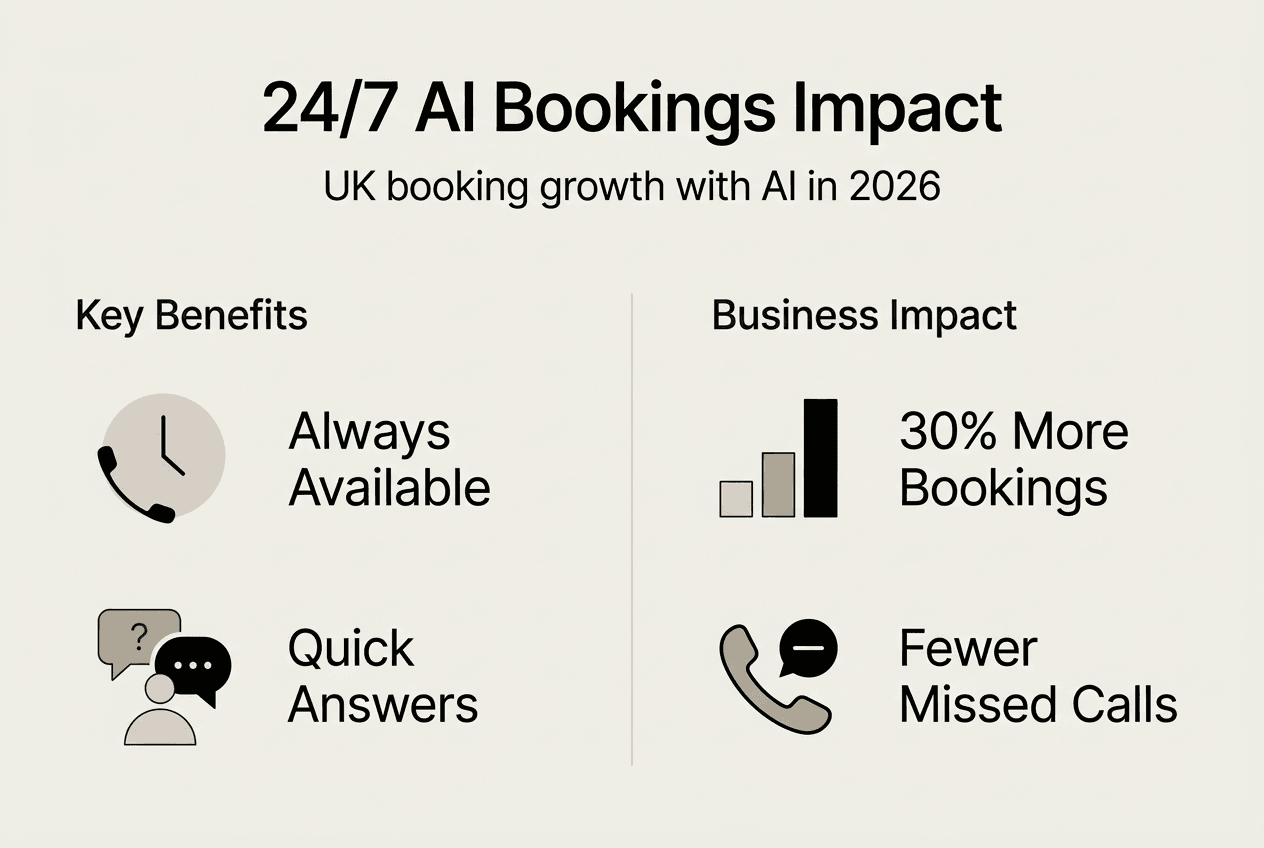
Many UK small businesses and hotels lose revenue every day simply because they cannot answer customer enquiries outside office hours. Studies reveal that 30% more bookings are achievable when AI handles customer service around the clock. In 2026, implementing 24/7 AI customer service is no longer a futuristic concept but a practical solution that enhances customer engagement, streamlines operations, and drives measurable growth. This guide explains how to implement AI customer service effectively for your UK small business or hotel.
Table of Contents
- What Is 24/7 AI Customer Service And How Does It Work?
- Benefits Of 24/7 AI Customer Service For Small Businesses And Hotels In The UK
- Choosing And Integrating The Right 24/7 AI Customer Service Solution
- Common Challenges And How To Overcome Them When Implementing 24/7 AI Customer Service
- Explore AI Customer Service Solutions By AIM Agency
- Frequently Asked Questions
Key takeaways
| Point | Details |
|---|---|
| Continuous AI support | AI agents provide 24/7 availability, boosting customer satisfaction and operational efficiency |
| Revenue growth | UK hospitality businesses can increase bookings by up to 30% with AI customer service |
| Cost savings | Small businesses save time and reduce costs by automating routine enquiries |
| Integration considerations | Successful adoption requires understanding technological compatibility and staff training needs |
What is 24/7 AI customer service and how does it work?
AI customer service uses autonomous AI agents to provide continuous support, handling customer enquiries efficiently at all hours without human intervention. Unlike traditional customer support that requires staff availability, AI agents operate independently, processing multiple queries simultaneously and delivering instant responses.
These systems use natural language processing to understand customer questions, access relevant information from your business database, and provide accurate answers in conversational language. An AI receptionist for a hotel, for example, can check room availability, explain amenities, answer frequently asked questions, and even book qualified appointments whilst your staff sleep.
The technology handles multiple customer interactions at once, eliminating wait times that frustrate potential guests. When a customer contacts your business at 2am with a booking enquiry, the AI responds immediately rather than forcing them to wait until morning when they might have already booked elsewhere.
AI customer service operates across various channels including website chatbots, voice assistants, messaging platforms like WhatsApp, and telephone systems. This omnichannel approach ensures customers receive consistent support regardless of how they choose to contact you.
Key features that make AI customer service effective include:
- Natural language processing that understands British English dialects and colloquialisms
- Self-learning capabilities that improve responses based on past interactions
- Integration with booking systems, calendars, and customer databases
- Personalised responses based on customer history and preferences
- Automatic escalation to human staff for complex queries requiring judgement
- Detailed analytics tracking customer enquiries, satisfaction, and conversion rates
The AI learns from every interaction, continuously refining its understanding and improving response quality. This means your customer service actually gets better over time without additional training costs.
Benefits of 24/7 AI customer service for small businesses and hotels in the UK
Implementing AI customer service delivers measurable advantages that directly impact your bottom line. Research shows that AI-powered systems increase bookings by 30% whilst simultaneously reducing missed calls and administrative workload for UK hospitality businesses.
Enhanced customer engagement creates stronger relationships with your audience. Customers appreciate instant responses regardless of when they enquire, leading to higher satisfaction scores and improved loyalty. When potential guests receive immediate answers to their questions, they are far more likely to complete bookings rather than abandoning your website for a competitor.
Revenue growth occurs through multiple channels. AI captures enquiries that would otherwise be missed outside business hours, converting late-night browsers into paying customers. Faster response times reduce the likelihood of customers seeking alternatives, and personalised interactions increase upsell opportunities by suggesting relevant services based on customer needs.
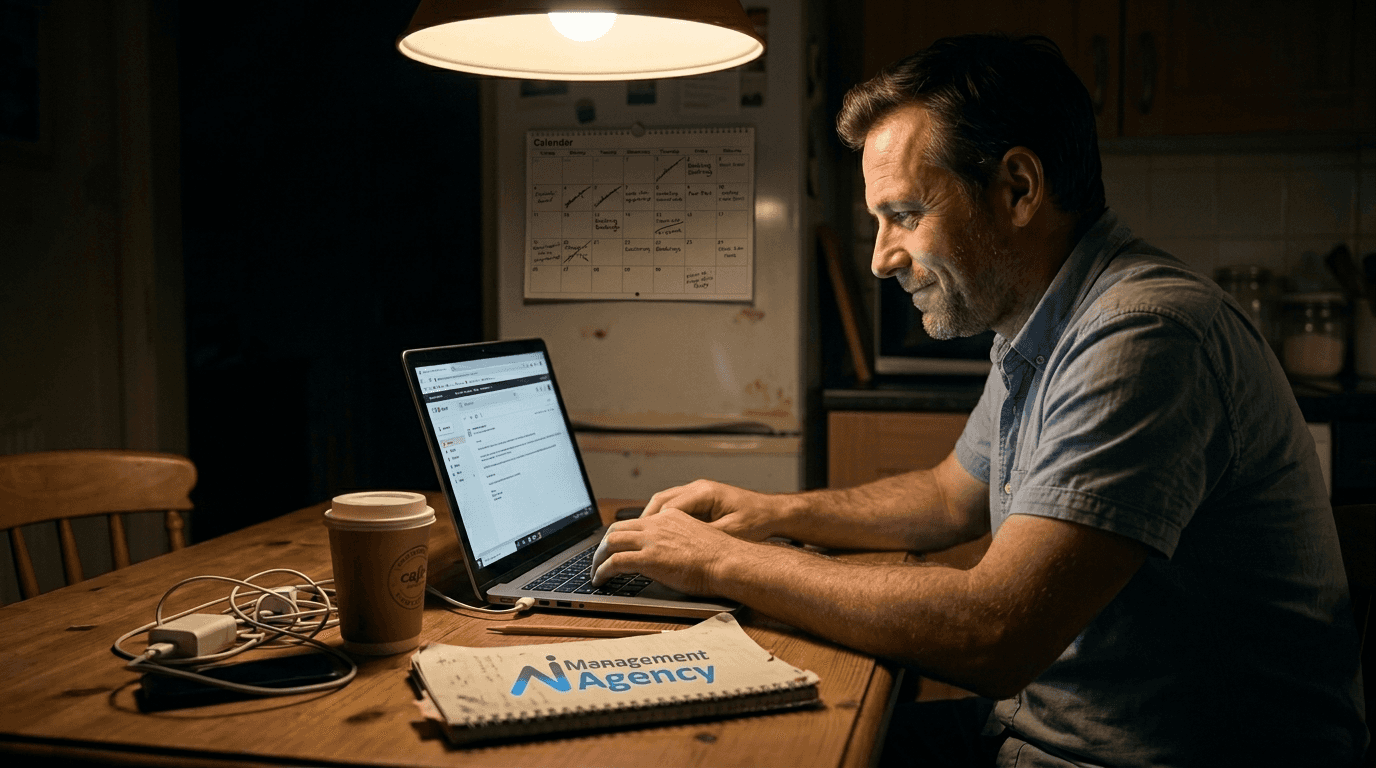
Cost savings become apparent quickly. Automating routine enquiries about opening hours, pricing, availability, and policies frees your staff to focus on complex customer needs and strategic tasks. Small businesses report reducing customer service costs whilst simultaneously improving service quality, a combination previously impossible with human-only teams.
Your brand reputation strengthens when customers consistently receive professional, accurate responses at any hour. Online reviews frequently mention responsiveness, and AI ensures you never disappoint a potential customer simply because they contacted you outside office hours.
“AI customer service transformed our hotel operations, increasing direct bookings by 28% whilst reducing reception workload by 65%. Our guests love the instant responses, and our staff focus on creating memorable experiences rather than answering repetitive questions.”
Pro Tip: Monitor AI interactions weekly during the first month to identify common enquiries your system handles well and areas requiring refinement, ensuring optimal performance and customer satisfaction.
Key benefits summarised:
- Increased revenue through higher conversion rates and captured after-hours enquiries
- Reduced operational costs by automating repetitive customer service tasks
- Improved customer satisfaction with instant, accurate responses
- Enhanced staff productivity by eliminating routine enquiry handling
- Stronger competitive advantage through superior customer experience
- Valuable data insights from analysing customer interaction patterns
Choosing and integrating the right 24/7 AI customer service solution
Selecting the appropriate AI platform requires evaluating several critical factors to ensure the solution matches your business needs. Successful AI agent development depends on platform compatibility, staff training, and ongoing optimisation to deliver maximum value.
Ease of use matters significantly for small businesses without dedicated IT teams. Choose platforms offering intuitive interfaces that allow you to update information, modify responses, and monitor performance without technical expertise. The system should integrate seamlessly with your existing website, booking system, and communication channels.
Scalability ensures your AI solution grows with your business. Start with core functionality like answering frequently asked questions and booking appointments, then expand to handle more complex interactions as you become comfortable with the technology.
Natural language processing accuracy determines how well the AI understands and responds to customer enquiries. Test platforms with realistic queries your business receives to evaluate response quality and relevance before committing.
Integration process steps:
- Assess your current customer service needs and identify repetitive enquiries suitable for automation
- Select a platform offering the features, integrations, and support level your business requires
- Prepare data including frequently asked questions, service descriptions, pricing, and booking policies
- Implement the AI system starting with limited functionality to test performance and gather feedback
- Monitor interactions closely, refining responses and expanding capabilities based on real customer conversations
- Train staff on collaborating with AI, managing escalations, and using analytics to improve service
Pro Tip: Involve frontline staff early in the selection and implementation process to ensure the AI solution addresses real customer needs and gains team support for smooth adoption.
Comparing popular AI platforms helps identify the best fit:
| Feature | Basic Chatbot | Advanced AI Agent | Custom Solution |
| — | — | — |
| Setup complexity | Low | Moderate | High |
| Natural language quality | Basic | Advanced | Excellent |
| Integration options | Limited | Extensive | Fully customised |
| Cost range | £50-200/month | £300-800/month | £1000+ setup |
| Best for | Simple FAQs | Full customer service | Complex requirements |
Consider your budget, technical capabilities, and customer service complexity when evaluating options. Many small businesses find advanced AI agents offer the best balance of functionality and affordability, whilst larger hotels with unique requirements may benefit from custom solutions.
Common challenges and how to overcome them when implementing 24/7 AI customer service
Anticipating obstacles helps ensure smooth AI adoption without disrupting existing operations. Businesses implementing AI often face data privacy concerns, customer resistance, and technical integration issues, but these challenges are manageable with proper planning.
Data privacy and GDPR compliance require careful attention when handling customer information through AI systems. Choose providers offering robust data protection, clear privacy policies, and UK-based data storage. Ensure your AI platform encrypts customer data, limits access appropriately, and provides transparent information about data usage to customers.
Customer concerns about interacting with AI rather than humans can affect adoption rates. Address this by clearly labelling AI interactions, offering easy escalation to human staff when needed, and ensuring AI responses feel natural and helpful. Many customers actually prefer AI for simple enquiries due to instant responses and 24/7 availability.
Technical integration challenges arise when connecting AI systems with legacy booking platforms or older website infrastructure. Work with AI providers offering flexible integration options and technical support. Sometimes a phased approach, starting with standalone chatbots before full system integration, reduces complexity.
Staff training and change management issues occur when team members feel threatened by AI or unclear about their evolving roles. Frame AI as a tool that handles tedious tasks, allowing staff to focus on meaningful customer interactions requiring human judgement and empathy. Provide comprehensive training on working alongside AI and managing escalated enquiries.
Common challenges with solutions:
- Data privacy concerns: Select GDPR-compliant providers with strong security measures and transparent policies
- Customer resistance: Offer easy human escalation and ensure AI provides genuinely helpful responses
- Technical integration: Choose platforms with flexible APIs and dedicated implementation support
- Staff anxiety: Emphasise AI as a productivity tool and provide thorough training on collaboration
- Initial setup complexity: Start with limited functionality and expand gradually as confidence grows
- Response accuracy issues: Monitor interactions closely and refine AI training data regularly
View these challenges as temporary obstacles rather than insurmountable barriers. Most businesses report that initial concerns diminish quickly once they experience the practical benefits of AI customer service.
Explore AI customer service solutions by AIM Agency
Ready to transform your customer service and capture those missed booking opportunities? AIM Agency specialises in creating high-quality AI agents that handle tasks naturally, including AI receptionists that speak conversationally, answer calls 24/7, respond to frequently asked questions, and book qualified sales appointments.
Our AI agent development services focus specifically on UK small businesses and hotels, delivering tailored solutions that integrate seamlessly with your existing systems. We understand the unique challenges you face and design AI customer service that addresses your specific needs whilst maintaining the personal touch your customers expect.
Discover how our proven small business AI setup has helped UK hospitality businesses increase bookings whilst reducing missed calls. Learn more about the role of AI agents in driving measurable growth for businesses like yours. Contact AIM Agency today to start your AI customer service transformation in 2026.
Frequently asked questions
How much does 24/7 AI customer service cost for small businesses?
Costs vary depending on features and scale, but many affordable options exist for small businesses starting from £50-200 monthly for basic chatbots up to £300-800 for advanced AI agents. These costs are often offset by savings from reduced staffing needs and increased bookings captured outside business hours. Custom solutions for larger hotels with complex requirements typically require higher initial investment but deliver proportionally greater returns.
Can AI customer service handle complex hotel guest enquiries effectively?
Modern AI systems handle common enquiries about availability, pricing, amenities, and policies very effectively, resolving 70-80% of customer questions without human intervention. For complex issues requiring judgement, empathy, or unique circumstances, AI seamlessly escalates to human staff with full context from the conversation. This ensures quality customer experience without requiring full human staffing 24/7, combining AI efficiency with human expertise when needed.
How do I ensure my AI customer service complies with UK data protection laws?
Choose GDPR-compliant AI providers offering UK-based data storage, strong encryption, and transparent privacy policies that you can share with customers. Implement clear data retention policies, obtain appropriate consent for data processing, and conduct regular audits of AI interactions and data handling practices. Transparency with customers about AI usage and their data rights helps maintain compliance whilst building trust in your automated systems.
What training do my staff need to work alongside AI customer service systems?
Staff should understand AI capabilities, limitations, and when to intervene for complex situations requiring human judgement. Training focuses on monitoring AI interactions, handling escalated enquiries with full context, using analytics to identify improvement opportunities, and collaborating with AI rather than competing against it. Most businesses find 2-3 hours of initial training plus ongoing coaching during the first month ensures staff confidence and effective collaboration, enhancing overall efficiency rather than replacing human roles.
Recommended
- Role of AI agents explained: 30% more bookings UK 2026 – AI Management Agency
- Boost sales with AI: a 2026 guide for small UK hotels – AI Management Agency
- Role of AI in Call Centres: Transforming UK Hotel Service – AI Management Agency
- 6 Ways to Use AI in Customer Service List for Hotels – AI Management Agency