
Handling every guest call can stretch a small hotel’s resources, leaving owners worried about missed bookings and patchy service. With the rise of AI-powered chatbots and voice agents, United Kingdom hotels now find new ways to provide round-the-clock support without adding to payroll headaches. This guide explains how Artificial Intelligence in call centres reshapes guest communication, helping small establishments stay ahead by ensuring prompt responses, effortless reservations, and reliable information no matter the hour.
Table of Contents
- Defining AI in Call Centres for Hotels
- AI Receptionist Solutions and Capabilities
- How AI Enhances Guest Service and Operations
- Legal, Data, and Regulatory Compliance Issues
- Common Pitfalls and How to Avoid Them
Key Takeaways
| Point | Details |
|---|---|
| AI Enhances Guest Experience | AI enables 24/7 service, allowing hotels to respond to inquiries instantly and improve customer interaction without waiting times. |
| Operational Efficiency | AI reduces staffing costs by automating routine tasks, freeing human staff to focus on complex guest needs and relationship-building. |
| Requires Proper Integration and Training | Successful AI implementation relies on integrating with existing systems and providing staff training to ensure smooth operation and user comfort. |
| Legal Compliance is Essential | Hotels must adhere to GDPR and other regulations when using AI, including obtaining consent for data collection and ensuring data security. |
Defining AI in Call Centres for Hotels
Artificial Intelligence in call centres represents a fundamental shift in how UK hotels handle guest communications. Rather than replacing human staff, AI voice agents automate routine interactions, answer frequently asked questions instantly, and book qualified appointments—working seamlessly alongside your team.
At its core, AI in hospitality operates through natural language processing, which allows systems to understand guest requests in conversational English. This technology moves beyond rigid, scripted responses. Guests hear fluid dialogue that sounds human, not robotic.
AI-powered chatbots and service solutions have become essential tools for hotels seeking to enhance service quality. These systems handle multiple guest inquiries simultaneously—something your small team simply cannot do across all hours.
Here’s what AI actually does in your call centre:
- Answers calls 24/7 without waiting for staff availability
- Responds to common questions about rates, amenities, and policies instantly
- Books confirmed reservations directly into your system
- Transfers complex queries to your team with full context already gathered
- Manages peak call volumes without additional payroll costs
Key distinction: This isn’t chatbot software from a decade ago. Modern AI voice technology for hotels speaks naturally, learns guest preferences, and adapts to regional accents and speech patterns.
Your hotel benefits because guests get immediate responses. A potential booking at 11 PM doesn’t go unanswered until morning. The guest experience improves dramatically—no more “calls queued ahead of you” messages.
Operationally, your team stops handling repetitive questions. They focus on complex requests, special arrangements, and relationship building. This shift transforms how hospitality staff spend their time—moving from administrative answering to genuine guest care.
AI in call centres isn’t about automation replacing service—it’s about making your existing service exponentially better whilst freeing your team to focus on what truly matters.
Small hotel operations benefit most from this technology. You gain capabilities that previously required a full-time receptionist, without the fixed staffing costs. Seasonal peaks no longer create service bottlenecks.
Pro tip: Start by identifying your most frequent guest questions—these become your AI system’s first focus, delivering immediate value whilst your team builds confidence in the technology.
To clarify the difference, here’s how traditional and AI-enabled hotel call centres compare:
| Aspect | Traditional Call Centre | AI-Enabled Call Centre |
|---|---|---|
| Availability | Limited by staff hours | 24/7 continuous service |
| Response Consistency | Varies by agent | Uniform, reliable answers |
| Staffing Costs | High, increases seasonally | Reduced, fixed operating cost |
| Handling Peak Volume | Frequent queues, missed calls | No call queues, instant response |
| Complexity Handling | Human intuition for special cases | Transfers complex calls to trained staff |
AI Receptionist Solutions and Capabilities
AI receptionists transform how UK hotels manage guest communications by automating the entire front desk conversation cycle. These systems handle inquiries, bookings, and check-in questions without human intervention—whilst your staff focuses on genuine hospitality.
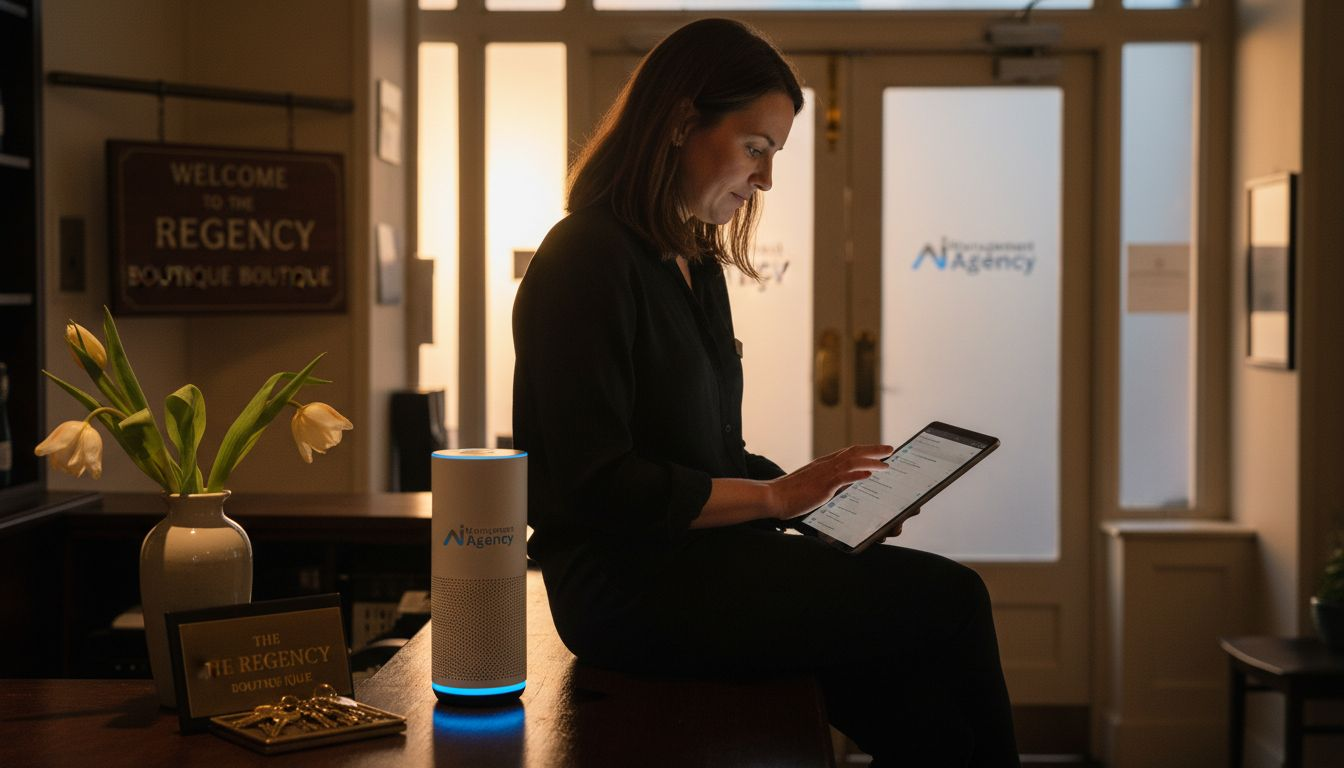
Modern AI receptionists operate through voice-enabled integration with your existing property management systems. They connect directly to your booking software, guest databases, and room availability, ensuring every response reflects real-time information.
Here’s what an AI receptionist actually handles:
- Answers incoming calls in natural English with regional accent recognition
- Processes new booking requests and confirms reservations instantly
- Answers questions about room types, amenities, rates, and policies
- Manages check-in and check-out inquiries with guest verification
- Routes complex requests to your team with full conversation context
- Operates continuously across all time zones and seasonal peaks
AI receptionists automating routine tasks enable staff to redirect energy toward personalised guest experiences. Rather than repeating information, your team builds relationships and handles special requests that require human judgment.
Cost savings come quickly. Research shows staffing cost reductions of 40-60% when AI handles routine front desk volume. For small hotels, this translates directly to profitability without sacrificing service quality.
The system learns your hotel’s specifics—your room configurations, pricing structure, local attractions, policies. This tailored approach means guests receive accurate, hotel-specific responses rather than generic information.
AI receptionists don’t replace your team; they multiply your front desk capacity whilst freeing staff to focus on what guests truly remember.
Multi-channel capability matters too. Your AI receptionist handles calls, website inquiries, and messaging platforms through a single integrated system. Guests reach you through their preferred method, and all conversations feed into one unified context.
Small hotel operations gain enterprise-level capabilities. You operate like a 100-room property whilst maintaining your intimate, personalised service approach. Peak seasons no longer create bottlenecks.
Pro tip: Start your implementation by recording your most common guest questions—these become your AI receptionist’s first knowledge base, delivering immediate value whilst you expand its capabilities over time.
How AI Enhances Guest Service and Operations
AI transforms guest experiences by anticipating needs before guests articulate them. Rather than reacting to requests, your hotel operates proactively, delivering personalised service at scale that previously required extensive manual effort.
On the guest-facing side, AI enables hyper-personalisation across every interaction. The system remembers preferences from previous stays—room temperature, pillow type, breakfast choices—and applies them automatically to new bookings. Guests feel genuinely recognised, not processed.
AI tools help consolidate fragmented hotel data into unified insights. Your booking system, guest feedback, operational records, and communication history exist in one place. This single source of truth eliminates information silos that typically frustrate both guests and staff.
Here’s where operational gains become visible:
- Predictive analytics forecast demand patterns, optimising staffing levels weeks in advance
- Automated inventory management reduces waste by tracking linen, toiletries, and supplies in real time
- Guest feedback analysis identifies service gaps before complaints escalate
- Dynamic pricing adjusts room rates based on demand, seasonality, and local events
- Staff scheduling aligns perfectly with expected occupancy and guest profiles
Your team benefits equally. AI-powered solutions reduce routine task burden, allowing staff to focus on relationship-building moments that differentiate your hotel. A receptionist no longer spends two hours daily checking room availability—they spend it connecting with guests.
Revenue improves through precision. AI identifies which guests value room upgrades, which prefer loyalty points, and which respond to targeted offers. Marketing becomes data-driven rather than speculative.
AI doesn’t replace the human touches that make hospitality memorable; it amplifies them by handling everything else.
Small hotels gain disproportionate advantage. You operate with insights that previously only large chains possessed. Your intimate property becomes more efficient whilst maintaining the personal service that defines your brand.
Real-time operations dashboards show occupancy, pending arrivals, maintenance issues, and staff performance in seconds. Managers make informed decisions instantly rather than discovering problems hours later.
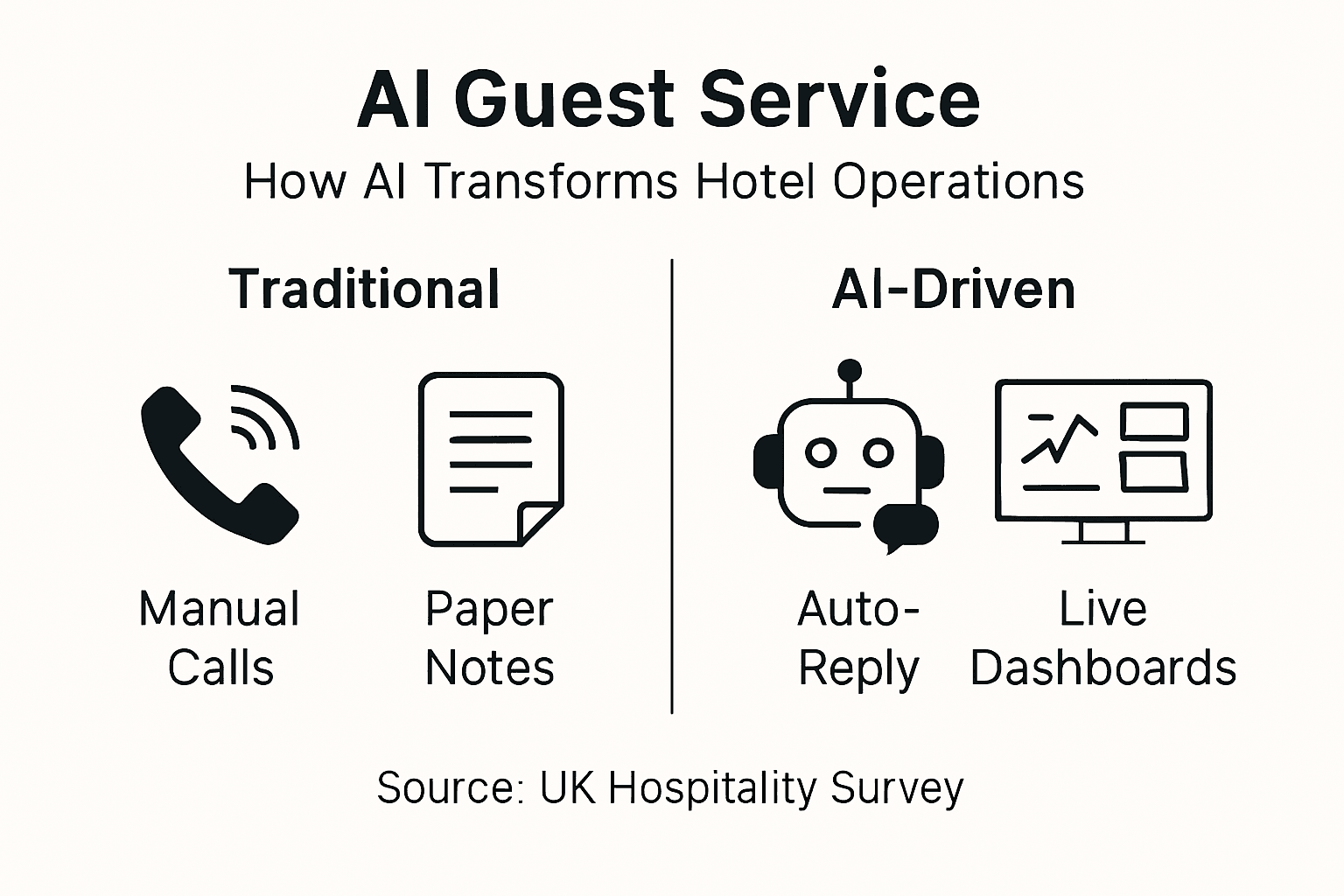
Pro tip: Begin by identifying your three biggest operational pain points—these become your AI implementation priorities, delivering measurable improvements whilst staff adapts to new workflows.
Legal, Data, and Regulatory Compliance Issues
Deploying AI in your hotel creates legal obligations that extend beyond technology implementation. UK and European regulations require you to handle guest data with specific protections, transparency, and accountability—or face substantial penalties.
The General Data Protection Regulation (GDPR) applies to any hotel processing guest information. When your AI system collects booking details, preferences, or communication records, you’re processing personal data. GDPR requires explicit consent, transparent privacy policies, and the right for guests to access or delete their information.
AI deployment in hotel chains presents regulatory risks including compliance with data protection, transparency, and consumer rights obligations. The European Union AI Act adds further requirements for high-risk applications, including audit trails and documentation of how AI makes decisions affecting guests.
Key compliance areas for your AI implementation:
- Guest consent for data collection and AI processing activities
- Privacy notices explaining how AI uses guest information
- Data retention policies specifying how long information stays in your system
- Security measures protecting guest data from unauthorised access
- Audit documentation showing how your AI makes booking or service decisions
- Staff training on handling guest data responsibly
Data processing agreements matter too. Your AI provider must process data only as instructed, maintain confidentiality, and demonstrate compliance with regulations. Ensure your contract specifies these obligations clearly.
Transparency creates trust and protects you legally. Guests should know an AI system handles their call or email. Hidden AI use violates regulations and damages reputation when discovered.
Legal compliance isn’t optional or negotiable—it’s foundational to operating ethically and protecting your hotel from fines reaching thousands of pounds.
Breach scenarios are costly. A data exposure affecting 100 guests triggers notification requirements and potential investigations. GDPR fines reach 4% of annual turnover for serious violations. Prevention costs far less than remediation.
Small hotels often assume regulations apply only to large corporations. That’s false. Your AI systems must comply equally. Your property size doesn’t exempt you from legal obligations.
Regular compliance audits identify gaps before regulators do. Document your data handling practices, consent processes, and security measures. This documentation proves compliance if questions arise.
Pro tip: Before implementing any AI system, request the provider’s Data Processing Agreement and privacy documentation—non-compliance begins with inadequate contracts, not technology failures.
The following table summarises essential compliance actions when deploying AI in UK hotel environments:
| Compliance Area | Importance | Practical Example |
|---|---|---|
| Guest Consent | Ensures legal data use | Explicit opt-in on booking |
| Privacy Notice | Builds guest trust | Clear statements about AI usage |
| Data Security | Prevents data breaches | Encrypted databases, access control |
| Staff Training | Avoids mishandling | Annual GDPR and AI training |
| Audit Documentation | Demonstrates compliance | Records of AI decisions retained |
Common Pitfalls and How to Avoid Them
AI implementation fails when hotels treat it as a technology project rather than a service transformation. The most common mistake is expecting the system to work perfectly without proper integration, staff training, or clear success metrics.
Missed calls plague traditional call centres. Guests ring during peak times and hear queues, eventually hanging up to book elsewhere. Many hotels assume this is unavoidable. It isn’t. AI voice agents must integrate with existing systems rather than operate separately, ensuring every call receives immediate attention.
Over-automation frustrates guests. Hotels sometimes configure AI to handle everything, transferring rarely to human staff. Guests become frustrated when they can’t reach a person for complex requests. The solution? Set clear boundaries—AI handles straightforward inquiries, your team handles everything requiring judgment or personalisation.
Here are the pitfalls that derail AI implementations:
- Insufficient staff training leaves employees uncomfortable with new systems
- Ignoring guest feedback means the AI never improves or adapts
- Failing to define success metrics makes improvement invisible
- Poor system integration creates data silos and incomplete information
- Unrealistic expectations about AI capabilities damage stakeholder confidence
- Inadequate change management causes team resistance
AI voice agents succeed when they complement human staff, not replace them. Your team should see AI as reducing tedious work, not threatening their roles. Frame the implementation as enabling better service, not cutting headcount.
Guest feedback loops matter enormously. Monitor what guests say about your AI system. Are calls being answered? Are responses accurate? Do guests feel heard? Adjust the system based on actual feedback, not assumptions.
Define success clearly before launch. What does better look like? Fewer missed calls? Faster booking times? Higher guest satisfaction scores? Measure these metrics weekly, adjusting configurations when results fall short.
Implementation fails when hotels skip integration work or ignore staff concerns. Success comes from planning thoroughly, training comprehensively, and measuring continuously.
Small hotels often lack IT infrastructure for seamless integration. Plan for this. Work with providers who understand small property limitations and can configure systems to work within your existing setup.
Cost management prevents overspend. Some hotels purchase advanced features they never use. Start simple—handle basic inquiries and bookings first. Expand capabilities as your team gains confidence.
Pro tip: Launch your AI system in phases: week one with your staff only to identify issues, week two with a subset of guests, week three with full deployment—this phased approach catches problems before guests experience them.
Unlock the Power of AI to Revolutionise Your Hotel Call Centre
If you have been struck by the challenges of missed calls, long queues, and inconsistent guest service highlighted in the article, it is time to explore tailored AI solutions that truly transform your operations. With familiar concerns such as limited staff hours, high seasonal costs, and the need for natural conversation flow, adopting an AI receptionist that speaks in a natural tone and handles bookings 24/7 is the game changer your hotel needs.
Discover how our specialised AI agents can immediately answer FAQs, manage peak call volumes without increasing payroll, and seamlessly integrate with your booking systems. These intelligent agents improve guest satisfaction and empower your team to focus on what matters most—providing exceptional personalised service.
See real-life examples of success by exploring AI Management Agency Case Studies: See AI Solutions in Action (2026). Learn the latest strategies in AI Marketing in 2026: Strategies, Case Studies & Solutions by Aimagency or visit our main website AI Management Agency to engage with expert teams ready to customise your AI voice agents and receptionists today. Act now to elevate your hotel’s guest experience and operational efficiency with proven AI technology.
Frequently Asked Questions
What is the role of AI in hotel call centres?
AI in hotel call centres automates routine guest interactions, handles frequently asked questions, and manages bookings, allowing staff to focus on more complex requests and improving overall service quality.
How does AI improve guest service in hotels?
AI enhances guest service by providing immediate responses to inquiries, personalising interactions based on previous stays, and anticipating guest needs, leading to a more satisfactory experience.
What are the benefits of using AI receptionists in hotels?
AI receptionists streamline front desk operations by handling inquiries, bookings, and check-in questions automatically, reducing the burden on staff and allowing them to prioritise personalised guest interactions.
How can hotels ensure compliance when using AI technology?
Hotels must ensure compliance with data protection regulations such as GDPR by obtaining guest consent, providing privacy notices, implementing security measures, and maintaining comprehensive documentation of data handling practices.
Recommended
- AI Management Agency: Discover AI Success with Our Case Studies & Results
- AI Receptionist for Hotels: Improve Bookings & Guest Experience by AIM Agency
- AI Voice Technology: Transforming Small Hotel Service – AI Management Agency
- 6 Ways to Use AI in Customer Service List for Hotels – AI Management Agency
- Fuerza — Hire Pre-Vetted AI & Tech Talent | AI-Powered Staffing
- ISO 42001 for UK FinTech: Building Trust in AI