More than 66% of businesses now adopt AI agents for customer service, yet many small UK business owners remain unclear about what AI agents actually do. Understanding AI agents is crucial for deciding how they can boost your operations. This guide explains what AI agents are, how they work autonomously to handle tasks like customer queries and bookings, and how your small business can benefit from adopting them. You’ll discover practical steps to implement AI agents, manage risks, and transform customer interactions without hiring additional staff.
Table of Contents
- What Is An AI Agent? Defining Autonomous Intelligent Systems
- How AI Agents Work In Practice: Capabilities And Collaboration
- Benefits And Risks Of AI Agents For Small UK Businesses
- Practical Steps To Implement AI Agents In Your Small Business
- Find Out How AI Agents Can Transform Your UK Small Business
- Frequently Asked Questions
Key takeaways
| Point | Details |
|---|---|
| AI agents work autonomously | They perceive environments, make decisions, and complete goal-driven tasks without constant human input |
| Collaboration is key | AI agents work with other agents and humans to handle complex workflows efficiently |
| Adoption reduces friction | Automating routine tasks cuts errors and operational delays in small businesses |
| Implementation requires planning | Assess business needs, select suitable tasks, and monitor performance for best results |
| Oversight ensures safety | Regular audits and governance protect data privacy and maintain ethical AI use |
What is an AI agent? Defining autonomous intelligent systems
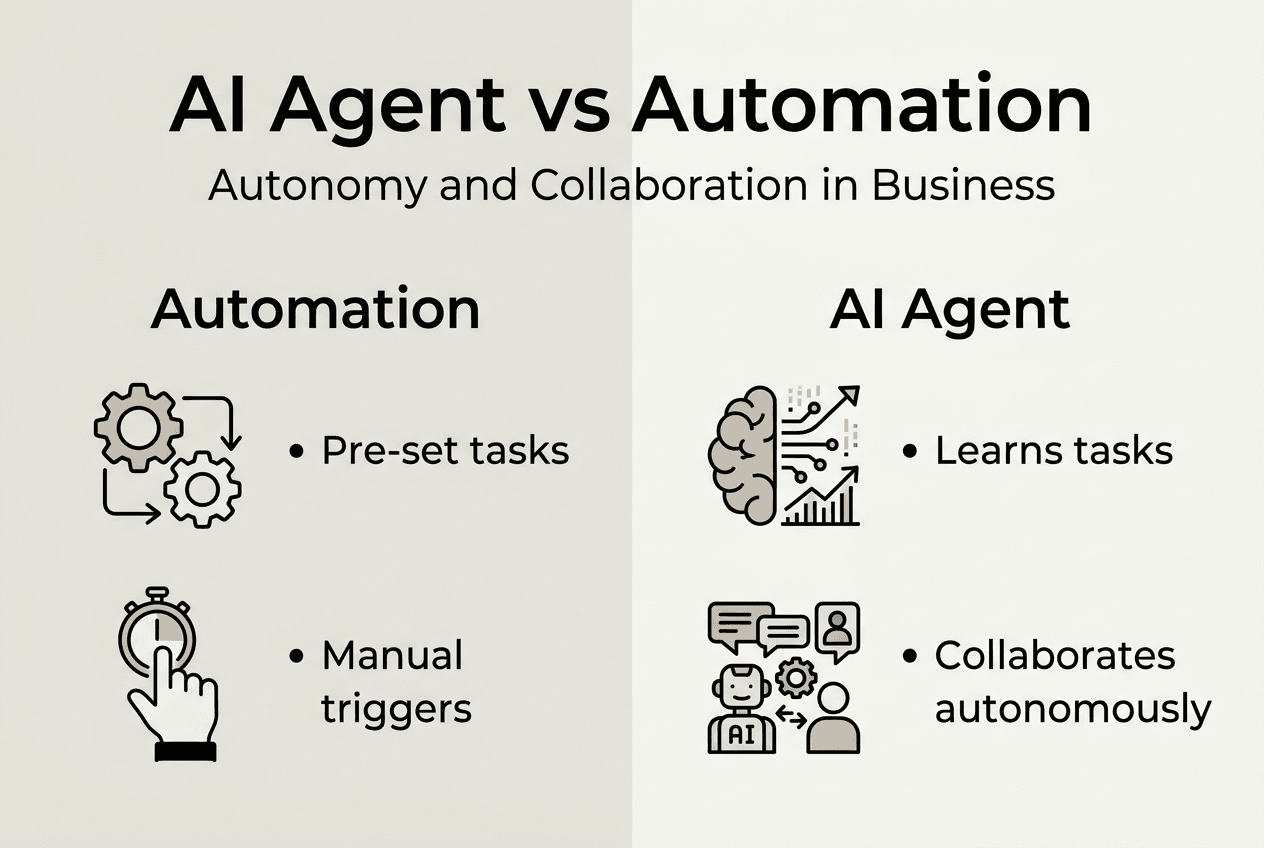
An AI agent autonomously performs tasks based on goals, interacting with its environment to collect data and make decisions. Unlike simple automation that follows rigid scripts, AI agents adapt to changing conditions and learn from outcomes. They perceive their surroundings through sensors or data inputs, process information, and take rational actions to achieve objectives. This makes them fundamentally different from AI assistants, which require constant human prompts.
AI agents are special because they act autonomously, are goal-oriented, have perception capabilities, and are rational entities. For small UK businesses, this means an AI agent can handle customer calls, answer frequently asked questions, and book appointments without you monitoring every interaction. The agent perceives incoming calls as data, understands the caller’s intent, and responds appropriately to achieve the goal of satisfied customers and confirmed bookings.
Key characteristics that define AI agents include:
- Autonomy: They operate independently once configured, making decisions without waiting for human approval
- Goal orientation: Every action serves a specific objective, like reducing missed calls or improving response times
- Perception: They gather information from multiple sources, including voice, text, and system data
- Rationality: They choose actions most likely to achieve goals based on available information
Traditional automation executes pre-programmed sequences, whilst AI assistants respond to user prompts. AI agents go further by proactively monitoring situations and taking initiative. If a customer calls outside business hours, an AI agent doesn’t just record a message. It answers naturally, addresses the query, and schedules a callback or appointment based on your calendar availability. Understanding the role of AI in small business helps you recognise where agents add genuine value beyond basic automation.
Pro Tip: Start by identifying repetitive tasks that consume your time but follow predictable patterns, like appointment confirmations or initial customer enquiries. These are ideal candidates for AI agent automation.
How AI agents work in practice: capabilities and collaboration
AI agents learn, adapt, and make autonomous decisions by processing feedback from their environment. When an AI receptionist handles a call, it analyses the caller’s words, tone, and context to determine intent. Over time, it improves accuracy by learning which responses lead to successful outcomes, like confirmed bookings or satisfied customers. This learning capability distinguishes agents from static systems.
AI agents collaborate with each other to automate complex workflows. In a small business, one agent might handle incoming calls whilst another manages your booking system. They share information seamlessly, so when a customer requests an appointment, the receptionist agent communicates with the scheduling agent to find available slots and confirm the booking. This multi-agent collaboration eliminates manual data transfer and reduces errors.
AI assistants collaborate with users, responding to natural language and prompts, whilst AI agents work independently toward goals. Assistants wait for instructions, but agents monitor situations and act proactively. AI agents process multimodal inputs like text, voice, video, and code simultaneously, enabling them to handle diverse customer interactions across channels.
| Feature | AI Agent | AI Assistant | Traditional Automation |
| — | — | — |
| Autonomy | High, acts independently | Medium, needs prompts | Low, follows scripts |
| Learning | Adapts from feedback | Limited adaptation | No learning |
| Goal orientation | Proactive task completion | Reactive to requests | Executes sequences |
| Collaboration | Works with agents and humans | Works with users | Isolated processes |
Realistic workflow examples show how AI agents transform small business operations:
- Customer query handling: An AI agent receives a call, identifies the question, searches your knowledge base, and provides accurate answers without transferring to staff
- Booking management: The agent checks calendar availability, confirms appointments, sends reminders, and updates your CRM automatically
- Data syncing: Information from customer interactions flows between your phone system, booking platform, and customer records without manual entry
Exploring AI agent development reveals how these systems integrate with existing tools. Understanding agentic AI vs AI automation clarifies when autonomous agents outperform traditional automation for your specific business needs.
Pro Tip: Map your customer journey from first contact to completed sale. Identify handoff points where information currently gets lost or delayed. These gaps are where multi-agent collaboration delivers the biggest efficiency gains.
Benefits and risks of AI agents for small UK businesses
Automating routine tasks with AI agents frees your time for strategic work and customer relationship building. More than 66% of businesses adopt AI agents for customer service because they handle repetitive enquiries consistently and accurately. For small UK businesses with limited staff, this means 24/7 availability without overtime costs or hiring additional employees.
Agentic AI reduces operational friction by automating data transfer, response delays, and human errors. When your AI receptionist answers calls, it eliminates missed opportunities from unanswered phones during busy periods or after hours. It ensures every customer receives immediate attention, improving satisfaction and conversion rates. Error reduction occurs because agents follow consistent processes without fatigue or distraction.
Key benefits for small businesses include:
- Improved customer interaction: Natural, conversational responses create positive first impressions and build trust
- Cost efficiency: One AI agent handles unlimited simultaneous interactions at a fraction of hiring costs
- Scalability: Your business can grow without proportionally increasing support staff
- Data insights: Agents track every interaction, revealing patterns and opportunities for improvement
However, risks of agentic AI include data privacy breaches, costly errors, and potential confusion if unmanaged. An AI agent with access to customer data must comply with GDPR and UK data protection laws. Operational errors, like booking the wrong appointment time or misunderstanding customer requests, can damage reputation if oversight is insufficient. Confusion arises when agents lack clear boundaries or escalation protocols for complex situations.
Managing these risks requires proactive governance:
- Implement strict data access controls and encryption for customer information
- Define clear agent responsibilities and escalation rules for uncertain situations
- Monitor performance regularly through interaction logs and customer feedback
- Maintain human oversight for sensitive decisions and complex customer needs
Learning about uses of AI in SMEs demonstrates how other small businesses balance benefits and risks successfully.
Pro Tip: Start with low-risk tasks like FAQ responses and appointment confirmations. Build confidence and refine your agent’s performance before expanding to more complex customer interactions.
Practical steps to implement AI agents in your small business
Begin by assessing which business processes consume the most time yet follow predictable patterns. Customer enquiries, appointment scheduling, and follow-up communications are ideal starting points. Evaluate your current pain points: missed calls, delayed responses, booking errors, or data entry bottlenecks. Prioritise tasks where AI agents can deliver immediate, measurable improvements.
Selecting the right AI agent solution requires matching capabilities to your specific needs:
- Identify your primary objective, such as reducing missed calls or improving booking efficiency
- Research solutions designed for small businesses with straightforward integration and reasonable costs
- Verify the agent can connect with your existing tools like CRM systems, calendars, and communication platforms
- Test the agent’s natural language capabilities to ensure it matches your brand tone and customer expectations
- Confirm data security features meet GDPR and UK compliance requirements
Training your AI agent involves providing examples of successful customer interactions and desired outcomes. Feed the agent sample conversations, common questions, and appropriate responses. Monitor early interactions closely, correcting mistakes and reinforcing effective behaviours. Training AI agents properly can cut errors significantly within weeks.
The most competitive AI agents complete 30% of tasks autonomously in simulated workplaces. Set realistic expectations by starting with straightforward tasks and gradually expanding scope as the agent proves reliable. Early stages may require frequent adjustments, but performance improves rapidly with consistent feedback.
| Task Type | Autonomy Level | Human Oversight Required |
|---|---|---|
| FAQ responses | High (80-90%) | Periodic review |
| Appointment booking | Medium (60-70%) | Confirmation checks |
| Complex problem solving | Low (20-30%) | Active collaboration |
| Sensitive customer issues | Minimal (10%) | Direct human handling |
Integrating AI agents with existing tools like CRM or booking systems ensures seamless data flow. Most modern AI solutions offer pre-built integrations or APIs for custom connections. Your agent should automatically update customer records, sync calendars, and trigger follow-up workflows without manual intervention. Exploring small business AI setup options reveals practical integration strategies.
Pro Tip: Create a feedback loop where your team reviews agent interactions weekly. Identify patterns in misunderstandings or missed opportunities, then refine the agent’s training data. Continuous improvement ensures your AI agent evolves with your business needs and customer expectations.
Find out how AI agents can transform your UK small business
Small UK businesses are already seeing remarkable results from tailored AI agent solutions. Imagine never missing another customer call, even during your busiest hours or outside normal business times. AI agents designed specifically for small businesses handle enquiries naturally, answer questions accurately, and book qualified appointments whilst you focus on delivering excellent service. Discover how AI agents boosted bookings 30% for UK hospitality businesses facing similar challenges.
Professional AI agent development ensures your solution integrates seamlessly with existing systems and reflects your brand voice. Expert training programmes help you train AI agents to cut errors significantly within weeks, maximising return on investment. AIM Agency specialises in creating high-quality AI agents for small businesses, from AI receptionists to booking systems. Contact us for a free consultation to explore how AI agents can streamline your operations and enhance customer satisfaction.
Frequently asked questions
What is the difference between an AI agent and an AI assistant?
AI agents work autonomously toward goals without constant human input, whilst AI assistants respond to user prompts and requests. An agent proactively monitors situations and takes action, like answering calls and booking appointments independently. An assistant waits for you to ask questions or give instructions before responding. For small businesses, agents reduce workload by handling tasks completely, whilst assistants augment your capabilities when you need support. Understanding agentic AI vs AI automation helps you choose the right approach.
Can AI agents handle multiple tasks at once for my small business?
AI agents complete about 30% of tasks autonomously in workplace simulations, with performance improving as they learn. They can manage multiple straightforward tasks simultaneously, like answering customer calls whilst updating booking systems and sending confirmation emails. For complex situations requiring judgement, agents collaborate with humans or escalate for assistance. Start with clearly defined tasks and expand capabilities as your agent demonstrates reliability. Exploring small business AI setup examples shows realistic multitasking scenarios.
How do I ensure my AI agent respects data privacy and security?
Implement oversight and governance to manage AI agent risks effectively. Agentic AI risks include data privacy breaches and costly operational errors if unmanaged. Ensure your AI solution encrypts customer data, limits access to necessary information only, and complies with GDPR and UK data protection laws. Conduct regular audits of agent interactions and maintain clear logs of AI behaviour for accountability. Choose providers who prioritise security and offer transparent data handling policies. Learning about uses of AI in SMEs reveals best practices for responsible AI adoption.
How long does it take to see results from implementing an AI agent?
Most small businesses notice immediate improvements in call answer rates and customer response times once an AI agent is active. Measurable results like increased bookings or reduced operational errors typically emerge within 4 to 12 weeks as the agent learns and optimises performance. Early stages require monitoring and refinement, but the time investment pays off through sustained efficiency gains. Setting clear metrics before implementation helps you track progress and demonstrate value to stakeholders.
What happens if my AI agent makes a mistake with a customer?
Mistakes are learning opportunities that improve agent performance over time. When errors occur, review the interaction to understand what went wrong, then update the agent’s training data with correct responses. Implement escalation protocols so agents transfer complex or uncertain situations to human staff before mistakes happen. Maintain human oversight for sensitive customer issues and provide clear channels for customers to reach real people when needed. Transparent communication with customers about AI use builds trust and manages expectations effectively.
Recommended
- What is an AI answering service? UK small business guide 2026 – AI Management Agency
- Train AI Agents: Cut Errors 30% in 12 Weeks for UK SMEs – AI Management Agency
- Role of AI agents explained: 30% more bookings UK 2026 – AI Management Agency
- Understand AI voice bots to boost your UK small business – AI Management Agency