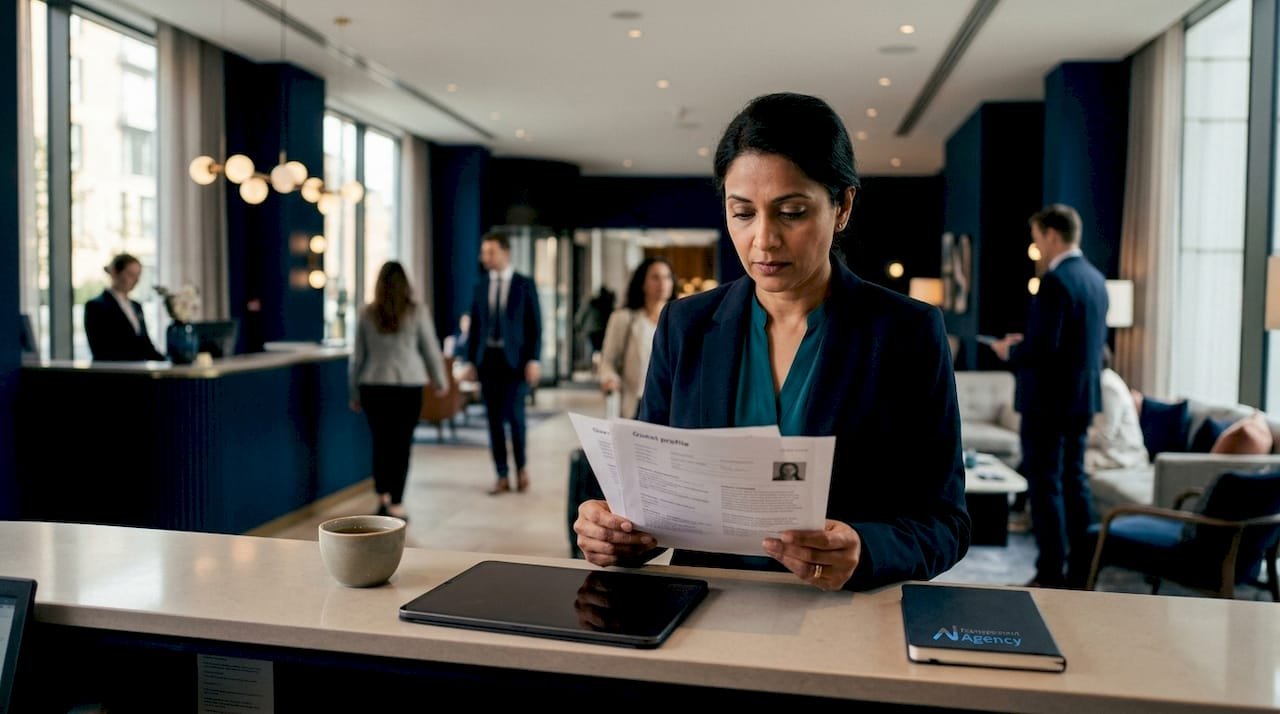
Small UK hotels face a constant challenge: delivering personalised, memorable guest experiences whilst managing tight budgets and limited staff. Guests expect seamless service, instant responses, and tailored recommendations, yet manual processes often create bottlenecks at check-in, miss upselling opportunities, and fail to capture valuable preference data. AI technology offers practical solutions that transform how small hotels interact with guests and manage daily operations. This guide explores proven AI applications that boost satisfaction, increase revenue, and streamline workflows for UK hoteliers in 2026.
Table of Contents
- Preparing Your Hotel For AI Enhancement
- Implementing AI Tools To Personalise Guest Interactions
- Streamlining Operations With AI For Small Hotels
- Maintaining Reliable Smart Infrastructure To Support AI
- Discover AI Solutions Tailored For UK Small Hotels
- Frequently Asked Questions
Key takeaways
| Point | Details |
|---|---|
| AI personalisation drives loyalty | Tailored guest interactions increase rebooking rates and lifetime value significantly |
| Operational automation saves time | AI reduces check-in delays and coordinates housekeeping without manual intervention |
| Smart infrastructure ensures reliability | Robust Wi-Fi and IT support maintain uninterrupted AI-powered guest services |
| Data utilisation unlocks revenue | Converting guest data into personalised offers boosts ancillary income substantially |
Preparing your hotel for AI enhancement
Before implementing AI solutions, you need to assess your current technology landscape and guest data practices. Most small hotels collect substantial information through booking systems, loyalty programmes, and service requests, yet struggle to transform this data into actionable insights. Hotels collect 47 data points per guest across reservations and feedback channels, but only 12% actually use this information to personalise experiences. This gap represents your biggest opportunity.
Start by auditing your existing property management system and customer relationship management tools. Identify which platforms store guest preferences, booking history, and service requests. You’ll need stable internet connectivity capable of supporting real-time data processing and AI applications. Small hotels often underestimate bandwidth requirements for AI chatbots, smart room devices, and automated communication systems. Conduct a network assessment to ensure your infrastructure can handle increased data traffic without degrading guest Wi-Fi performance.
Next, pinpoint specific guest pain points where AI delivers immediate value. Common frustrations include lengthy check-in queues, generic service offerings, and delayed responses to queries. Map these problems against AI capabilities like automated check-in kiosks, personalised recommendation engines, and 24/7 virtual assistants. This focused approach prevents technology overload and ensures measurable improvements.
Pro Tip: Create a simple spreadsheet listing every guest touchpoint from initial inquiry through checkout, then mark which interactions could benefit from automation or personalisation. This visual map helps prioritise AI investments.
Integration planning is crucial for success. Your AI tools must communicate seamlessly with booking engines, payment processors, and housekeeping management systems. Request API documentation from your PMS provider and discuss integration capabilities with potential AI vendors. Many solutions offer pre-built connectors for popular hotel software, reducing implementation complexity.
Consider these preparation essentials:
- Document current guest data collection points and storage locations
- Test internet speeds during peak occupancy to identify bandwidth constraints
- List manual tasks consuming excessive staff time that AI could automate
- Review PMS and CRM system compatibility with AI platforms
- Establish baseline metrics for guest satisfaction and operational efficiency
Your preparation phase should also address staff training needs. Employees must understand how AI tools enhance their roles rather than replace them. Schedule workshops demonstrating how using AI for hotel bookings frees reception staff to focus on high-value guest interactions instead of administrative tasks.
| Preparation Area | Key Actions | Timeline |
|---|---|---|
| Data audit | Map all guest information sources and quality | Week 1-2 |
| Infrastructure check | Test network capacity and identify upgrades | Week 2-3 |
| Pain point analysis | List guest complaints and operational bottlenecks | Week 3-4 |
| Integration planning | Verify PMS compatibility and API availability | Week 4-6 |
Implementing AI tools to personalise guest interactions
Personalisation transforms one-time visitors into loyal guests who recommend your property and return regularly. AI analyses booking patterns, service preferences, and feedback to create tailored experiences that feel genuinely thoughtful rather than automated. Deploy AI chatbots on your website and booking platforms to handle pre-arrival queries instantly. These virtual assistants answer common questions about amenities, local attractions, and room features whilst capturing valuable preference data for later use.
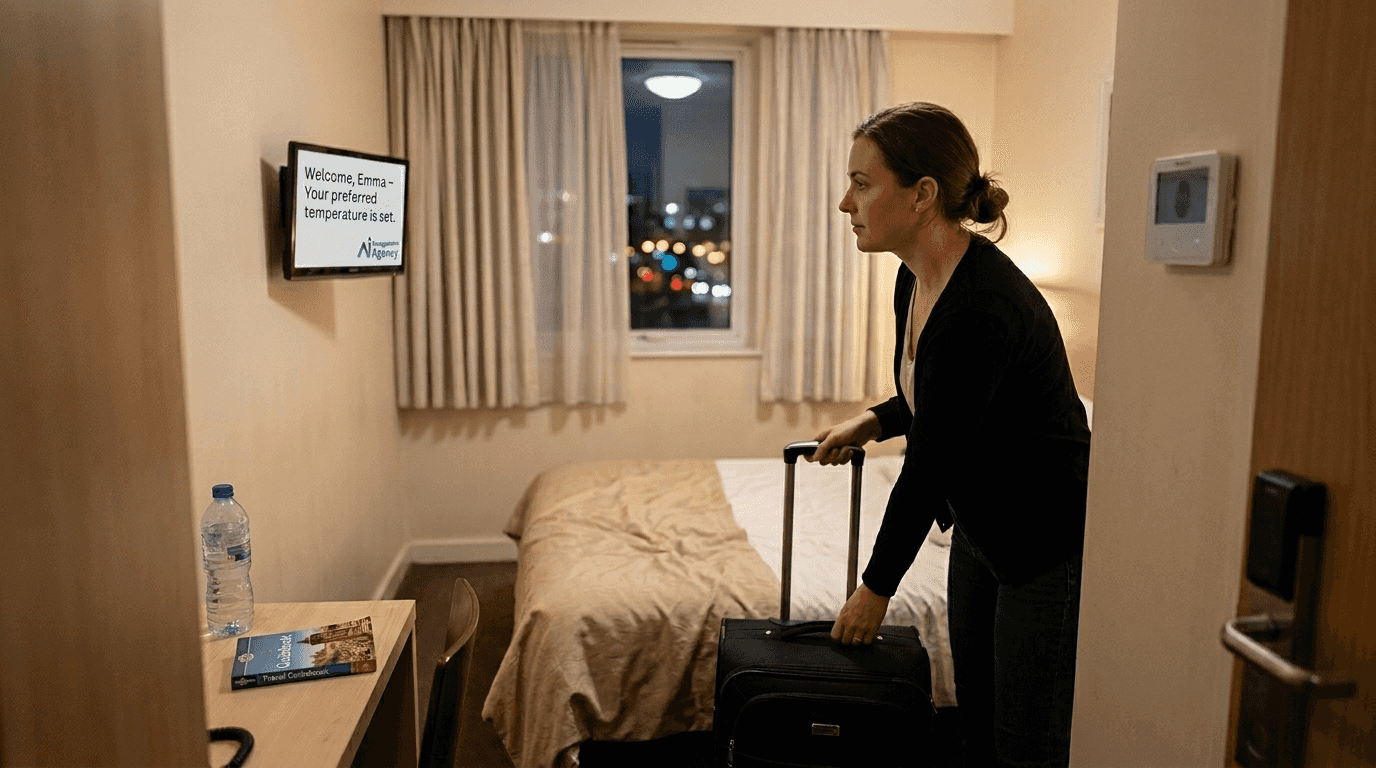
Smart room technology enables personalised welcome experiences that delight guests immediately upon arrival. AI systems can adjust room temperature, lighting, and entertainment options based on previous stays or stated preferences. Send customised welcome messages through in-room tablets or smart TVs, highlighting amenities matching each guest’s interests. Business travellers might receive information about workspace facilities and express checkout, whilst families see details about nearby attractions and child-friendly dining options.
Integrating data across your PMS, CRM, and IoT sensors creates a holistic guest profile that informs every interaction. When a returning guest books a room, your AI system automatically notes their preference for extra pillows, late checkout, or specific floor levels. Housekeeping receives these details before arrival, ensuring rooms are prepared exactly to specification without manual coordination.
Pro Tip: Start with one high-impact personalisation feature like automated welcome messages, measure guest response, then gradually expand to additional touchpoints based on feedback and results.
AI-driven upselling represents a significant revenue opportunity often missed by small hotels relying on generic promotions. Personalised upsell offers convert at 3-5x higher rates than standard marketing, generating a 23% increase in ancillary revenue per guest. Your AI system analyses booking data, identifies guests likely to appreciate specific upgrades, and delivers targeted offers at optimal moments.
For example, guests booking anniversary stays receive spa package promotions, whilst business travellers see meeting room availability and early breakfast options. Timing matters enormously. AI determines whether to present offers during booking, pre-arrival emails, or upon check-in based on conversion probability models. This strategic approach feels helpful rather than pushy, maintaining the personalised experience guests value.
The impact extends beyond immediate revenue. Guests experiencing personalised stays show 34% higher rebooking rates and 2.1x lifetime value compared to those receiving generic service. This loyalty compounds over time, reducing marketing costs and stabilising occupancy rates during slower periods.
Implement these personalisation strategies systematically:
- Deploy AI chatbots for instant pre-booking support and preference capture
- Configure smart room systems to adjust settings based on guest profiles
- Integrate PMS, CRM, and IoT data for comprehensive personalisation
- Launch targeted upsell campaigns using AI conversion optimisation
- Monitor guest feedback to refine personalisation algorithms continuously
Explore AI in hotel sales conversion techniques to maximise revenue from personalised offers. Additionally, review AI customer interaction tips for hotels to enhance communication quality across all touchpoints.
Streamlining operations with AI for small hotels
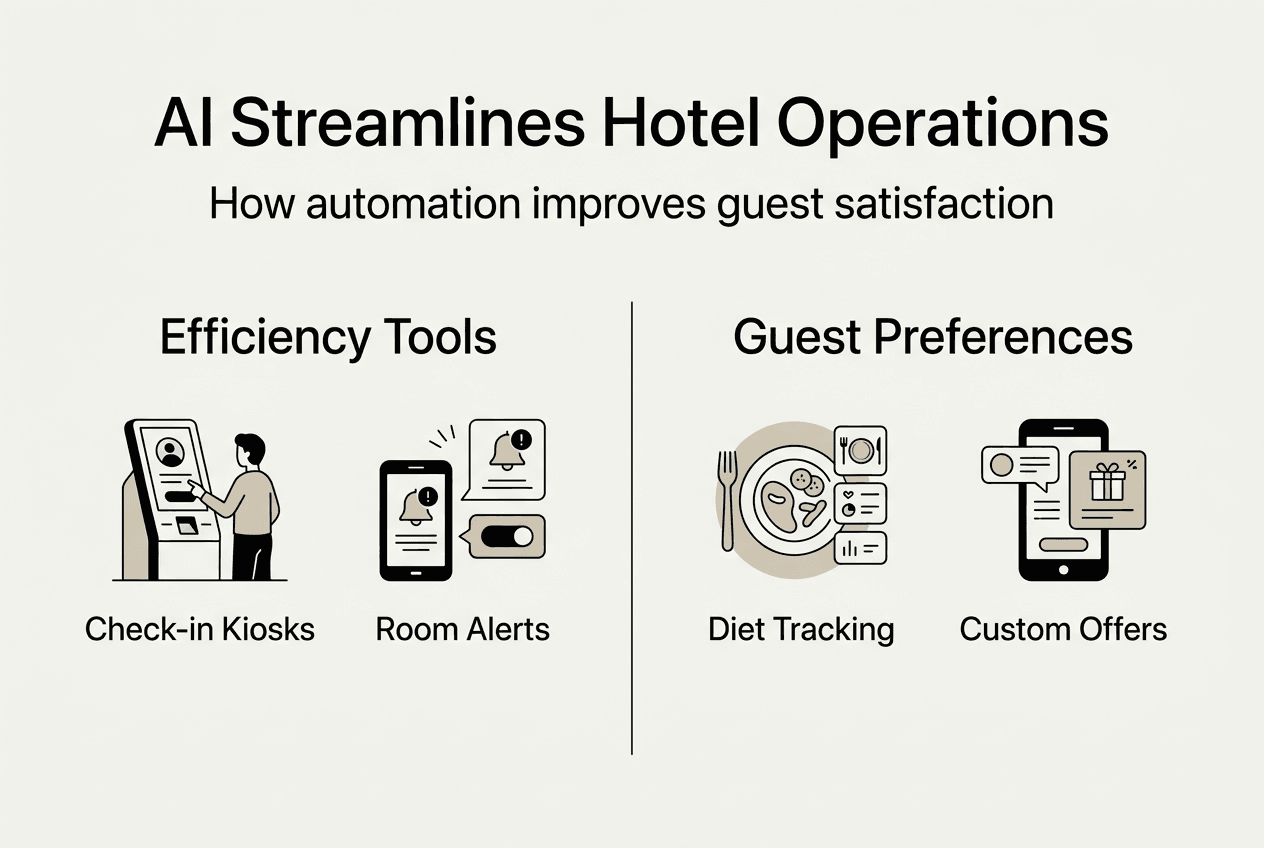
Operational efficiency directly impacts guest satisfaction, yet small hotels often struggle with manual processes that create delays and inconsistencies. AI automation eliminates repetitive tasks, reduces human error, and ensures consistent service delivery regardless of staffing levels. AI reduces front desk check-in time by 40% by eliminating manual preference lookups and automatically coordinating housekeeping for VIP arrivals.
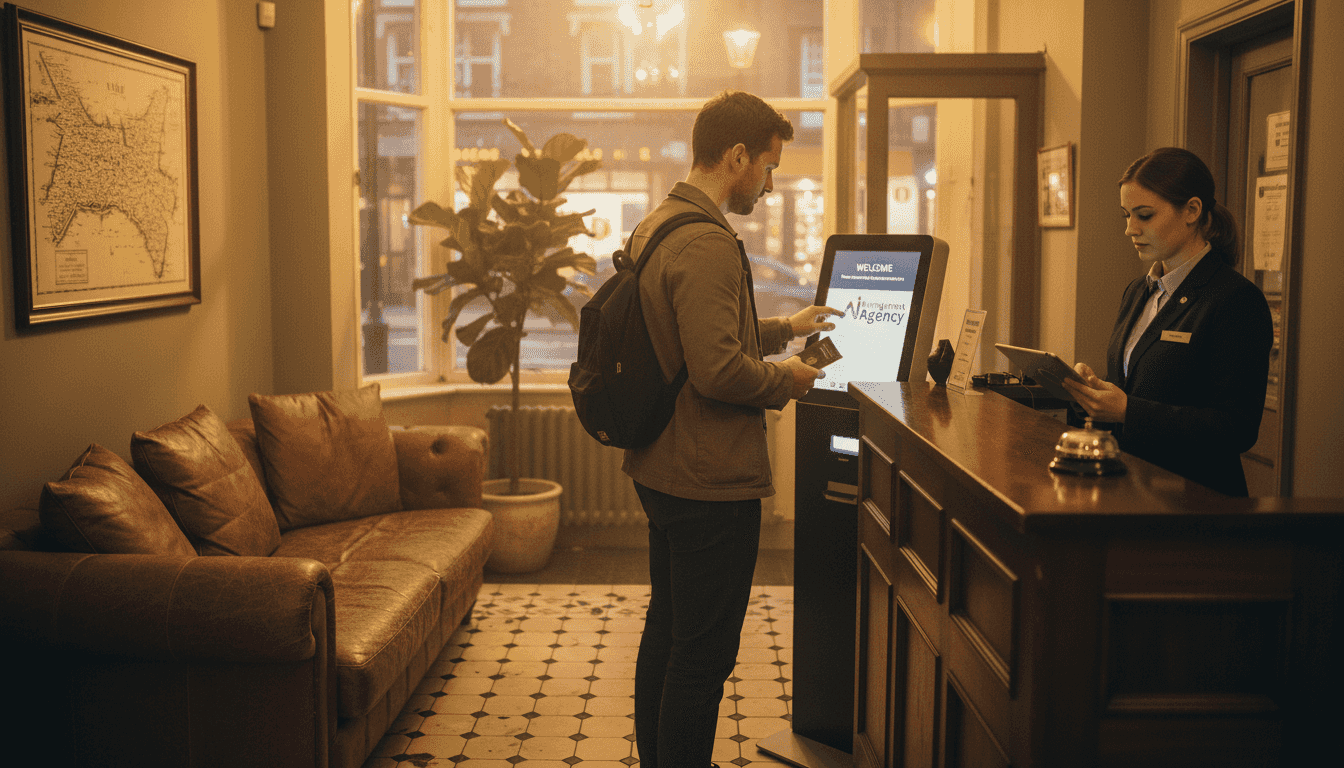
Automated check-in systems allow guests to bypass reception queues entirely. Mobile apps and self-service kiosks process identification, payment, and room assignment within minutes. Your AI platform verifies bookings, assigns optimal rooms based on preferences and availability, and sends digital keys directly to guest smartphones. This streamlined process particularly benefits business travellers and late arrivals who value speed and convenience.
Housekeeping coordination becomes seamless when AI manages room status updates and cleaning schedules. As guests check out, the system immediately notifies housekeeping teams and prioritises rooms needed for incoming arrivals. AI considers cleaning time estimates, staff availability, and guest preferences to create efficient schedules that minimise turnaround time. VIP guests receive priority preparation without manual intervention, ensuring rooms are perfectly ready upon arrival.
Pro Tip: Configure your AI system to send housekeeping alerts 30 minutes before expected checkout times, allowing staff to position themselves near those rooms for faster turnaround.
Guest preference management transforms from scattered notes into centralised, actionable intelligence. AI tracks dietary requirements, pillow preferences, newspaper choices, and special requests across all stays. When guests book again, these details automatically populate housekeeping and service orders. Reception staff access comprehensive preference summaries instantly, enabling personalised greetings and proactive service recovery if issues arise.
Compare traditional versus AI-enhanced operational workflows:
| Process | Manual Approach | AI-Automated Approach |
|---|---|---|
| Check-in | 8-12 minutes, paper forms, manual verification | 2-4 minutes, digital process, automatic room assignment |
| Housekeeping coordination | Phone calls, paper lists, delayed updates | Real-time notifications, priority scheduling, status tracking |
| Preference management | Scattered notes, memory-dependent, inconsistent | Centralised database, automatic application, reliable delivery |
| Upsell offers | Generic promotions, low conversion, staff-dependent | Targeted recommendations, high conversion, automated timing |
Implement operational AI tools following these steps:
- Install mobile check-in and digital key systems for guest convenience
- Connect housekeeping management software to your PMS for real-time updates
- Configure AI preference tracking across all guest touchpoint systems
- Train staff to use AI dashboards for enhanced service delivery
- Establish performance metrics to measure efficiency improvements
- Review and optimise AI workflows based on operational data monthly
Reliable IT support becomes essential as you depend more heavily on smart technology. Always-on IT support is crucial for hotels relying on AI systems to resolve urgent issues swiftly and maintain service quality. Consider managed IT services specialising in hospitality technology to ensure 24/7 availability. Learn more about AI for streamlining bookings to further enhance operational efficiency.
Maintaining reliable smart infrastructure to support AI
Your AI investment delivers value only when underlying infrastructure performs flawlessly. Guests notice immediately when smart systems fail, whether through slow Wi-Fi, unresponsive chatbots, or malfunctioning room controls. Building robust technical foundations prevents service disruptions and maintains the premium experience AI promises.
Dedicated, high-speed internet connectivity forms the backbone of AI operations. Guest Wi-Fi, staff systems, and smart devices all compete for bandwidth. Multiple guest Wi-Fi systems and dedicated fibre optic lines ensure continuous connectivity for AI-powered services without degrading performance during peak usage. Install separate networks for guest access, operational systems, and IoT devices to prevent congestion and enhance security.
Consider these infrastructure priorities:
- Deploy enterprise-grade Wi-Fi access points with sufficient coverage and capacity
- Install redundant internet connections from different providers for failover protection
- Segment networks to isolate guest, operational, and IoT traffic
- Implement quality of service rules prioritising critical AI applications
- Monitor network performance continuously to identify issues before guests notice
Smart room devices require regular maintenance and monitoring to function reliably. Thermostats, lighting controls, entertainment systems, and voice assistants must respond instantly to commands. Establish automated monitoring that alerts your IT team when devices go offline or exhibit performance issues. Schedule preventive maintenance during low occupancy periods to replace ageing components before failures occur.
24/7 IT support ensures rapid problem resolution when issues inevitably arise. Swift problem resolution via always-on IT support maintains quality guest experiences even during technical difficulties. Partner with managed service providers offering guaranteed response times and hospitality expertise. They understand the urgency of guest-facing technology failures and prioritise fixes accordingly.
Your infrastructure strategy should include disaster recovery planning. Back up guest data, preference information, and system configurations regularly. Test restoration procedures to ensure you can resume operations quickly after hardware failures or cyber incidents. Cloud-based AI platforms offer inherent redundancy, but verify your provider’s uptime guarantees and data protection measures.
Regular infrastructure audits identify potential weaknesses before they impact guests. Review network capacity quarterly as you add AI applications and smart devices. Update firmware and security patches promptly to protect against vulnerabilities. Document all systems, configurations, and vendor contacts so any IT professional can troubleshoot effectively during emergencies.
Explore comprehensive AI customer service infrastructure guidance to ensure your technology foundation supports exceptional guest experiences reliably.
Discover AI solutions tailored for UK small hotels
Implementing AI technology transforms guest experiences and operational efficiency, but choosing the right solutions requires specialist expertise. AI Management Agency helps UK small hotels deploy proven AI strategies that increase bookings, enhance satisfaction, and reduce manual workload. Our AI agents handle reception duties naturally, answering calls 24/7, responding to frequently asked questions, and booking qualified sales appointments without human intervention.
We specialise in creating high-quality AI receptionists that speak conversationally, understand guest needs, and deliver personalised service around the clock. Discover how AI agents work in our guide to AI agents for UK small businesses. Learn about the role of AI agents in UK hospitality and explore our specialised AI receptionist for hotels solutions designed specifically for properties like yours.
Frequently asked questions
How does AI personalise guest experiences in small hotels?
AI analyses data from reservations, loyalty programmes, past behaviours, and service requests to tailor offers and interactions for each guest. This creates memorable, satisfying stays that feel genuinely thoughtful rather than automated, encouraging repeat bookings and positive reviews.
What operational tasks can AI automate in a small hotel?
AI automates check-in processes, housekeeping scheduling, preference management, and personalised upselling based on guest profiles. This reduces wait times, eliminates manual coordination errors, and improves overall efficiency whilst freeing staff for high-value guest interactions.
How important is IT infrastructure for AI in guest experience?
Robust Wi-Fi networks, redundant internet connections, and prompt IT support prevent service disruptions that damage guest satisfaction. Reliable infrastructure ensures AI tools work seamlessly around the clock, maintaining the premium experience guests expect from smart hotel technology.
Can small hotels afford AI implementation in 2026?
AI solutions have become increasingly accessible for small properties through cloud-based platforms and subscription pricing models. The revenue increases from personalised upselling and efficiency gains from automation typically offset implementation costs within months, making AI financially viable for most UK small hotels.
Recommended
- Boost sales with AI: a 2026 guide for small UK hotels – AI Management Agency
- Role of AI agents explained: 30% more bookings UK 2026 – AI Management Agency
- Role of AI in Call Centres: Transforming UK Hotel Service – AI Management Agency
- AI Management Agency: Discover AI Success with Our Case Studies & Results