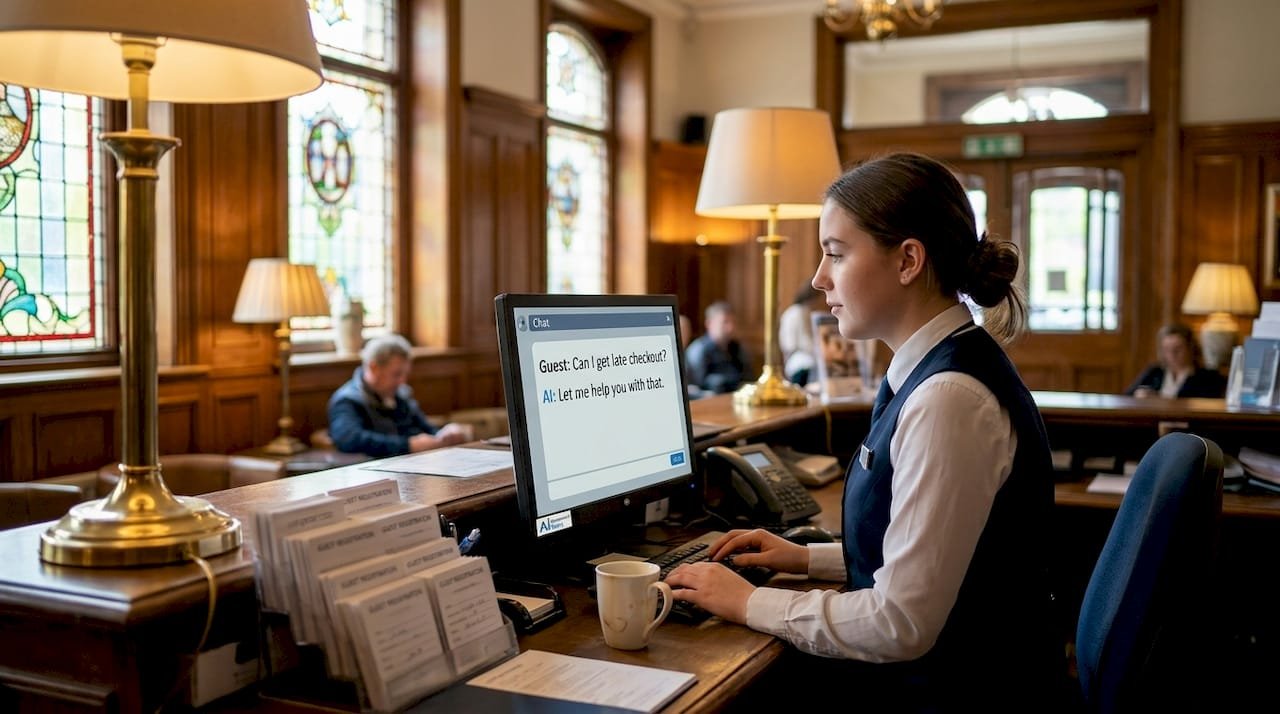
Many UK hospitality business owners dismiss conversational AI as too complex or expensive for small operations. Yet recent data reveals that small hotels and guest houses implementing simple AI tools saw admin workload reductions up to 90% within weeks. This guide cuts through misconceptions to explain what conversational AI actually is, how it works in practice, and why it’s becoming essential for UK hospitality SMBs seeking to improve bookings and guest satisfaction. You’ll discover the tangible benefits, realistic limitations, and practical steps to start using conversational AI effectively in your business.
Table of Contents
- What Is Conversational Ai And How Does It Work?
- Benefits Of Conversational Ai For Uk Hospitality Small Businesses
- Challenges, Limitations And Best Practices For Deployment
- How To Start Using Conversational Ai In Your Hospitality Business
- Discover Conversational Ai Solutions Tailored For Uk Small Hospitality Businesses
- Frequently Asked Questions
Key takeaways
| Point | Details |
|---|---|
| Conversational AI automates guest interactions | Natural language processing enables machines to handle bookings, FAQs, and common queries 24/7 without human intervention. |
| Proven cost savings and revenue gains | UK hospitality businesses report call deflection rates of 60-80% and cost savings up to 80% alongside increased direct bookings. |
| Hybrid human-AI models work best | AI handles routine tasks whilst humans manage complex emotional situations, ensuring quality guest experiences. |
| GDPR compliance is achievable | Proper consent mechanisms, data protection policies, and regular audits enable compliant conversational AI deployment. |
| Quick implementation yields fast ROI | Starting with WhatsApp or voice AI for simple queries delivers measurable admin time reductions within weeks. |
What is conversational AI and how does it work?
Conversational AI refers to technology enabling machines to understand, process, and respond to human language in natural, contextual ways. Unlike rigid chatbots following scripted decision trees, conversational AI uses natural language processing and machine learning to interpret intent, extract meaning, and generate relevant responses. For hospitality businesses, this means guests can ask about room availability, request booking changes, or enquire about amenities using everyday language rather than navigating menus.
The core technology relies on natural language processing to break down sentences into understandable components. Machine learning algorithms then analyse patterns from thousands of previous conversations to predict appropriate responses. When a guest messages asking “Do you have rooms available next Friday?”, the system identifies the intent as an availability check, extracts the date reference, queries your booking system, and formulates a natural reply. This happens in seconds without staff intervention.
Conversational AI excels at specific tasks within UK hospitality operations:
- Handling booking enquiries and availability checks around the clock
- Answering frequently asked questions about facilities, policies, and local attractions
- Processing simple requests like wake-up calls or extra towels
- Collecting guest preferences and dietary requirements before arrival
- Sending booking confirmations and pre-arrival information automatically
Pro Tip: Start by mapping your ten most common guest enquiries, then configure your conversational AI to handle these first for immediate impact.
However, current conversational AI faces genuine limitations. Frontier LLMs struggle with complex conversations due to context dilution and instruction retention issues, particularly in multi-turn dialogues where guests ask follow-up questions or change topics mid-conversation. The technology can misinterpret ambiguous requests or lose track of earlier conversation points. This is why AI in small business customer service works best when combined with human oversight.
A hybrid approach proves most effective for hospitality SMBs. Configure conversational AI to handle straightforward queries autonomously whilst seamlessly transferring complex situations to staff. For instance, routine “What time is breakfast?” questions get instant AI responses, but nuanced complaints or special occasion planning trigger human agent notifications. This balance maximises efficiency without compromising guest satisfaction.
Benefits of conversational AI for UK hospitality small businesses
The financial and operational advantages of conversational AI in hospitality are substantial and measurable. UK hotels and guest houses implementing these systems report transformative impacts on both cost structures and revenue generation. Understanding these benefits helps you evaluate whether conversational AI suits your business needs.
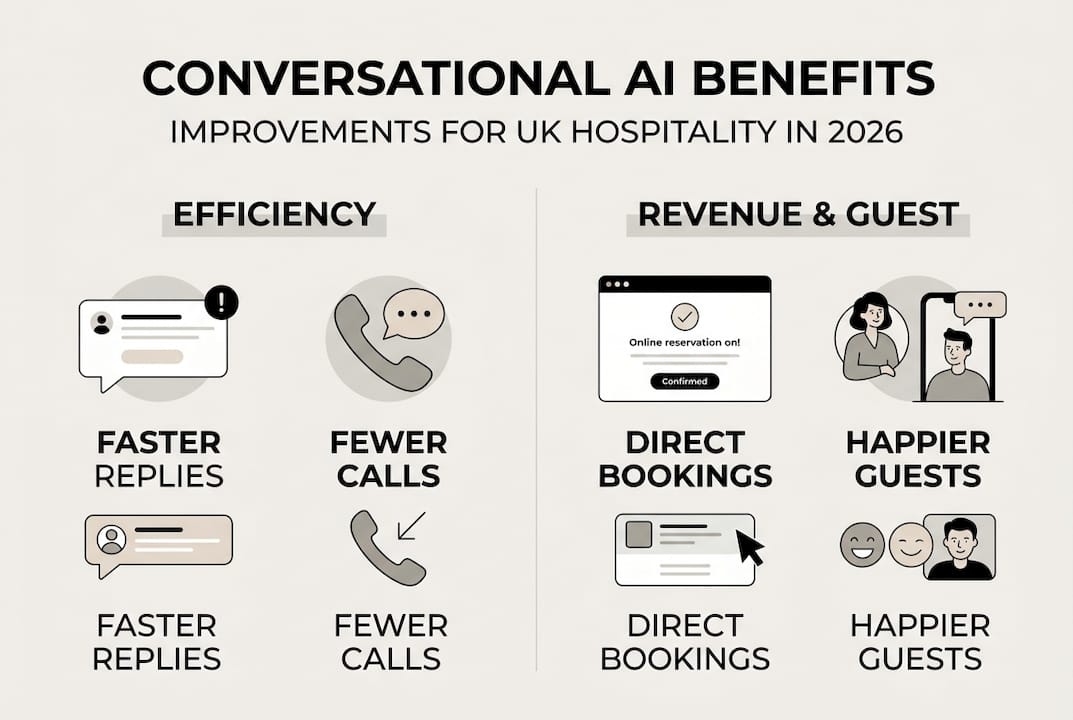
Administrative time savings represent the most immediate benefit. Staff typically spend hours daily answering phone calls and responding to emails asking identical questions about check-in times, parking, or breakfast options. Conversational AI handles these repetitive enquiries instantly, freeing your team for higher-value tasks like personalising guest experiences or managing on-site operations. Hotels achieved call deflection rates of 60-80% and cost savings up to 80% by automating routine communications.

Revenue impacts extend beyond cost reduction. The same hospitality sector data shows hotels boosted direct bookings and recurring guest revenue significantly after implementing conversational AI. When potential guests receive instant responses to availability queries at midnight or during busy periods, conversion rates improve dramatically. Delayed responses often mean lost bookings to competitors with faster communication.
| Metric | Before AI | After AI | Improvement |
|---|---|---|---|
| Average response time | 4-6 hours | Under 1 minute | 95% faster |
| Missed calls | 30-40% | 5-10% | 75% reduction |
| Booking conversion | 12-15% | 22-28% | Up to 87% increase |
| Staff time on FAQs | 15-20 hours/week | 2-3 hours/week | 85% reduction |
Guest satisfaction improves through consistent, immediate availability. Modern travellers expect instant responses regardless of time zones or business hours. Conversational AI delivers 24/7 availability without additional staffing costs, meeting these expectations whilst maintaining service quality. The technology never forgets to mention your spa facilities or fails to suggest room upgrades, creating consistent upselling opportunities.
Pro Tip: Configure your AI to recognise high-value booking opportunities and alert staff in real-time, combining automated efficiency with personalised human follow-up for premium guests.
The differentiation capability proves particularly valuable. Advanced conversational AI distinguishes between simple queries requiring factual responses and complex requests needing human empathy or creativity. A guest asking “What’s nearby?” gets instant AI-generated suggestions, whilst someone mentioning an anniversary celebration triggers staff notification for personalised planning. This intelligent routing optimises both efficiency and experience quality.
Starting small accelerates return on investment. Rather than implementing comprehensive systems immediately, begin with WhatsApp or voice AI handling basic booking questions. This focused approach delivers quick wins, builds internal confidence, and provides data for refining your broader AI strategy. Many UK hospitality SMBs see measurable admin reductions within their first month using this incremental method, as demonstrated in AI guest communication examples from similar businesses.
“The key isn’t replacing humans entirely but intelligently distributing tasks between AI efficiency and human creativity, particularly in hospitality where emotional connection drives loyalty.”
Challenges, limitations and best practices for deployment
Whilst conversational AI offers significant advantages, understanding its limitations prevents disappointment and guides effective implementation. UK hospitality businesses must navigate technical constraints, regulatory requirements, and operational considerations to deploy these systems successfully.
Context window limitations create the most common technical challenge. Frontier LLMs have under 50% success on complex conversations because context dilution causes 39% performance drops during extended dialogues. When guests ask multiple questions or change topics mid-conversation, AI systems sometimes lose track of earlier points or provide contradictory responses. A guest enquiring about pet-friendly rooms, then breakfast times, then local walks might receive confused replies if the AI fails to maintain conversational coherence.
Ambiguity resolution remains problematic. Human staff intuitively understand when “Is it close?” refers to distance from the station versus proximity to the beach based on conversation context. Conversational AI frequently struggles with these implicit references, potentially frustrating guests with requests for clarification. The technology also misinterprets colloquialisms, regional expressions, or sarcasm that UK guests commonly use.
Key technical and operational challenges include:
- Multi-turn dialogue tracking and instruction retention across complex conversations
- Emotional intelligence gaps when handling complaints or sensitive situations
- Bias risks in AI responses requiring regular audits and ethical oversight
- Integration complexities with existing booking systems and property management software
- Initial configuration time to train AI on your specific property, policies, and local context
Privacy and GDPR compliance demand careful attention for UK hospitality businesses. Conversational AI systems process personal data including names, contact details, booking preferences, and sometimes payment information. You must implement proper consent mechanisms, transparent data handling policies, and secure storage practices. Regular audits ensure ongoing compliance as conversational AI ethics and challenges evolve alongside regulatory expectations.
Bias represents a subtler but significant risk. AI systems trained on historical data may inadvertently perpetuate discriminatory patterns in pricing suggestions, room allocations, or service recommendations. Regular monitoring and diverse training data help mitigate these issues, but human oversight remains essential for catching problematic outputs before they reach guests.
Pro Tip: Schedule weekly reviews of AI conversation logs to identify recurring misunderstandings, unexpected guest questions, or response quality issues, then refine your system’s training accordingly.
Best practices centre on hybrid approaches combining AI efficiency with human judgement. Configure clear escalation protocols so conversational AI recognises when to transfer conversations to staff. Emotional language, complaint keywords, or requests outside standard parameters should trigger immediate human notification. This human-AI hybrid solution optimises both operational efficiency and guest satisfaction.
Context engineering techniques improve AI performance within current technical constraints. Provide conversational AI with structured information about your property, common guest profiles, and typical enquiry patterns. Use clarification prompts when ambiguity arises rather than guessing guest intent. These strategies help systems navigate limitations whilst delivering reliable service.
Monitoring and iteration prove crucial for long-term success. Conversational AI isn’t a set-and-forget solution but requires ongoing refinement based on actual guest interactions. Track metrics like escalation rates, guest satisfaction scores, and conversation completion rates to identify improvement opportunities. The AI efficiency tools for SMEs that succeed are those continuously adapted to evolving business needs.
How to start using conversational AI in your hospitality business
Implementing conversational AI successfully requires methodical planning rather than rushing into comprehensive systems. UK hospitality SMBs benefit most from stepwise approaches that build confidence whilst delivering measurable results quickly.
Begin by identifying your highest-impact use cases. Analyse which guest enquiries consume most staff time yet require minimal personalisation. Booking availability checks, check-in procedures, breakfast times, parking instructions, and WiFi passwords typically top this list. Prioritising these creates immediate admin relief whilst minimising risk from AI limitations. Starting with simple WhatsApp or voice AI tools can reduce admin workload by 90% and yield quick ROI.
Selecting appropriate platforms depends on your technical capabilities, budget, and integration requirements. Evaluate options based on:
- Ease of setup and configuration without requiring programming expertise
- Integration capabilities with your existing booking system and property management software
- Pricing models that align with your business size and call volumes
- GDPR compliance features including data encryption and consent management
- Escalation mechanisms for seamless transfer to human agents when needed
- Analytics and reporting to track performance and identify improvement areas
| Platform Type | Best For | Typical Cost | Setup Time |
|---|---|---|---|
| WhatsApp AI | Small properties, instant messaging focus | £50-200/month | 1-2 weeks |
| Voice AI receptionist | Phone-heavy businesses, 24/7 coverage | £150-400/month | 2-4 weeks |
| Website chatbot | Direct booking optimisation | £80-250/month | 1-3 weeks |
| Comprehensive platform | Multi-channel needs, larger operations | £300-800/month | 4-8 weeks |
Configuration requires gathering property-specific information your conversational AI needs. Compile details about room types, pricing, policies, amenities, local attractions, and common guest questions. The more comprehensive this initial knowledge base, the more accurately your AI responds. However, perfection isn’t necessary at launch because continuous refinement improves performance over time.
Establish clear monitoring and escalation protocols before going live. Define which conversation types require immediate human intervention versus AI-only handling. Configure alerts so staff receive notifications when guests express frustration, ask complex questions, or mention special occasions requiring personalisation. This safety net prevents poor experiences whilst your system learns.
Pro Tip: Create a simple feedback mechanism asking guests to rate AI interactions, then use this data to identify confusing responses or missing information in your knowledge base.
GDPR compliance must be embedded from day one. Implement transparent consent requests explaining how conversational AI uses guest data. Ensure secure data storage and establish retention policies deleting information after reasonable periods. Document your data handling procedures and conduct regular compliance audits as regulatory expectations evolve.
Scale gradually based on results and confidence. After successfully automating basic enquiries, expand to booking modifications, upselling suggestions, or pre-arrival communications. This incremental approach builds internal expertise whilst minimising disruption to existing operations. The small business AI setup guide provides detailed implementation frameworks for UK hospitality contexts.
Continuous improvement separates successful implementations from disappointing ones. Review conversation logs weekly to identify recurring issues, unexpected guest questions, or response quality problems. Use these insights to refine your AI’s training, update knowledge bases, and adjust escalation triggers. Guest interaction data also reveals broader business insights like frequently asked questions suggesting website content gaps or popular amenities worth highlighting in marketing.
Integration with broader operations maximises conversational AI value. Connect your system to booking platforms so availability responses reflect real-time data. Link with email marketing to trigger personalised follow-ups after AI conversations. Sync with property management systems to automate check-in communications and post-stay feedback requests. These connections transform conversational AI from isolated tool into central operational hub, as shown in hospitality AI communication examples.
Discover conversational AI solutions tailored for UK small hospitality businesses
AI Management Agency specialises in creating high-quality AI agents specifically designed for UK hospitality SMBs seeking to enhance customer service and streamline operations. Our AI receptionists speak naturally, answer calls 24/7, respond to FAQs, and book qualified sales appointments, delivering proven results like increased direct bookings and dramatically reduced missed calls.
We understand the unique challenges facing small UK hospitality businesses because we’ve helped dozens navigate conversational AI implementation successfully. Our tailored approach ensures your AI agent reflects your property’s personality whilst handling the repetitive tasks consuming your team’s time. Whether you’re exploring what AI agents can do for UK businesses or ready to understand the role AI agents play in hospitality bookings, we provide expert guidance matched to your specific needs. Discover how our small business AI setup solutions transform operations through practical, results-focused implementation.
Frequently asked questions
What types of queries can conversational AI handle effectively?
Conversational AI excels at routine enquiries with clear, factual answers like booking availability, check-in times, amenity information, and policy questions. It handles these consistently and instantly without staff involvement. Complex emotional situations, nuanced complaints, or unique special requests require human empathy and creativity, so hybrid systems with seamless escalation to staff deliver optimal results.
How quickly can a small hospitality business see benefits from conversational AI?
Many UK hospitality businesses observe significant admin time reductions within weeks of implementing conversational AI for simple enquiries. Small properties starting with voice or WhatsApp AI saw up to 90% reduction in admin within their first month. Booking increases and guest satisfaction improvements typically emerge within two to three months as systems refine through ongoing use and optimisation.
Is conversational AI compliant with UK data protection laws?
Conversational AI can fully comply with GDPR when businesses implement proper consent mechanisms, transparent data handling policies, and secure storage practices. GDPR compliance requires clear data handling policies, consent, and regular audits when using conversational AI in hospitality. Choosing platforms with built-in compliance features and conducting periodic reviews ensures ongoing regulatory adherence as requirements evolve.
Should conversational AI fully replace human customer service agents?
No, hybrid models combining AI efficiency with human empathy optimise guest satisfaction and operational effectiveness. Conversational AI handles repetitive, straightforward tasks brilliantly, freeing staff for complex situations requiring emotional intelligence, creativity, or nuanced judgement. Human-AI hybrid customer service approaches deliver better results than either technology or humans working alone, particularly in hospitality where personal connection drives loyalty and repeat bookings.
Recommended
- AI answering services explained: UK hospitality guide 2026 – AI Management Agency
- Examples of AI in guest communication for UK hotels 2026 – AI Management Agency
- Enhance guest experience with AI in UK hotels 2026 – AI Management Agency
- Role of AI agents explained: 30% more bookings UK 2026 – AI Management Agency