Managing sales appointments manually drains time your small team cannot afford to lose. Between fielding enquiries, checking calendars, and chasing unqualified leads, your staff spend hours on tasks that rarely convert. AI appointment booking systems automate qualification and scheduling, ensuring only genuine prospects reach your calendar. This guide walks you through preparing, implementing, and optimising AI to transform how your UK business books sales meetings, saving time whilst boosting conversion rates.
Table of Contents
- Key takeaways
- Understanding the problem: why manual sales appointment booking wastes time
- Preparing to implement AI for sales appointment booking
- Executing AI powered sales appointment booking: step by step guide
- Verifying results and optimising your AI appointment booking system
- Explore AI appointment booking solutions tailored for your business
- How to book sales appointments with AI FAQ
Key Takeaways
| Point | Details |
|---|---|
| Automation of scheduling | AI appointment booking eliminates routine scheduling tasks and frees staff to focus on revenue generating activities. |
| Lead qualification | Qualification filters ensure only genuine prospects reach the calendar, saving time and boosting conversion potential. |
| Seamless tool integration | Systems connect with calendars and CRMs to create seamless workflows without disrupting existing processes. |
| AI agent type choice | Deciding between reactive and proactive agents directly affects booking success and lead quality. |
Understanding the problem: why manual sales appointment booking wastes time
Your receptionist juggles phone calls whilst trying to check multiple calendars. Your sales team spends mornings sorting through enquiries that never convert. Manual appointment booking creates bottlenecks that slow your entire sales process.
Small teams face unique challenges. With five or fewer staff members, every hour counts. When one person spends half their day managing appointments, that is half a day lost to revenue generating activities. Unqualified meetings compound this problem. Your sales director blocks an hour for a prospect who lacks budget, authority, or genuine need. That hour could have closed a qualified deal instead.
The cost extends beyond time. Staff frustration builds when they prepare for meetings that cancel last minute or turn out to be poor fits. Morale drops. Productivity suffers. Your best people spend energy on administrative tasks rather than strategic work.
Qualification filters address this waste directly. Prioritise qualification to avoid unqualified meetings wasting team time, especially when budgets are tight. Systems that screen prospects before booking ensure only serious enquiries reach your calendar. This approach protects your team’s bandwidth whilst maintaining a professional response to all enquiries.
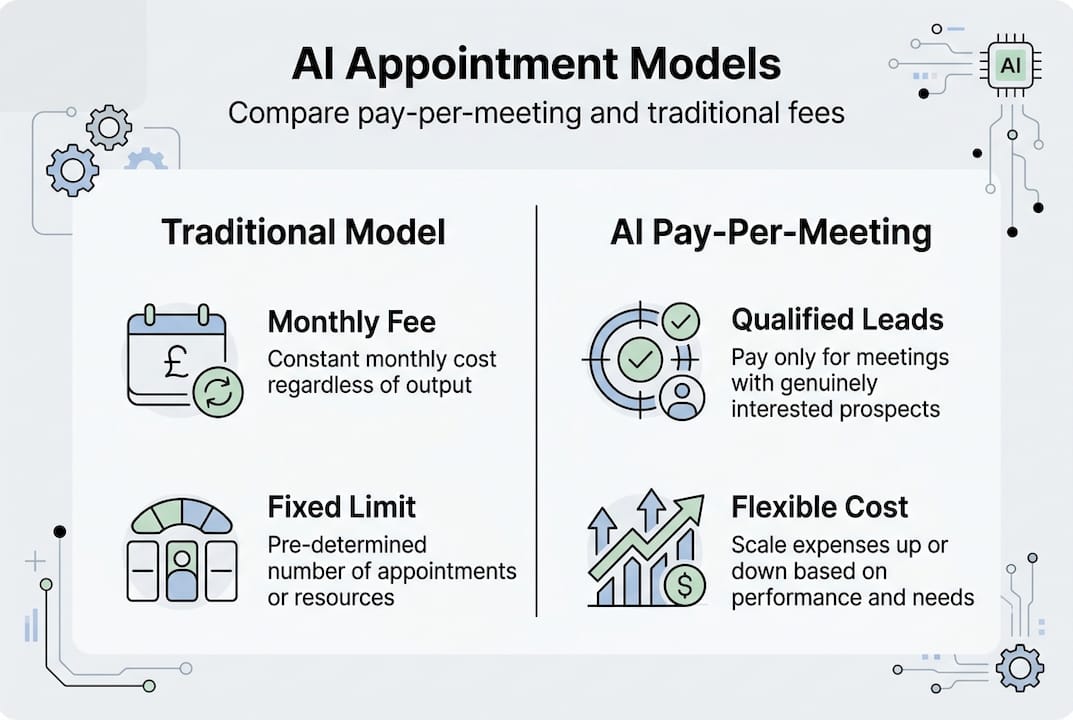
Pay per qualified meeting models suit businesses watching every pound. Traditional appointment systems charge monthly fees regardless of results. Qualified meeting models bill only when genuine prospects book. For small teams testing AI solutions, this removes financial risk whilst proving value quickly. You invest in outcomes, not software licences that may underdeliver.
Pro Tip: Calculate how many hours your team currently spends on appointment coordination weekly. Multiply by your average hourly cost. This figure represents your baseline waste that AI can eliminate.
Consider how AI lead generation complements appointment booking by identifying qualified prospects before they even enquire. This proactive approach fills your pipeline with better leads from the start.
Preparing to implement AI for sales appointment booking
Successful AI implementation starts with understanding your current sales process. Map every step from initial enquiry to booked meeting. Identify bottlenecks where prospects drop off or where staff time concentrates. This baseline reveals exactly where AI delivers maximum impact.

Your existing technology stack determines integration requirements. Most UK small businesses use tools like Google Calendar, Outlook, or lightweight CRMs such as HubSpot or Pipedrive. List every system that touches appointment data. Check whether these platforms offer API access or native integrations. Modern AI booking systems connect with major platforms, but legacy software may require workarounds.
Understanding AI agent types prevents costly mistakes. Reactive agents respond to inbound enquiries, answering questions and booking meetings when prospects initiate contact. Proactive agents reach out to leads in your database, nurturing relationships until booking becomes natural. Your business model dictates which type suits you best. Service businesses benefit from reactive agents handling incoming calls. B2B companies with longer sales cycles need proactive agents maintaining consistent touchpoints.
The distinction between agentic AI and AI automation matters here. Agentic systems make decisions based on context, adapting responses to individual prospects. Simple automation follows rigid scripts. For appointment booking, agentic AI handles objections and qualification questions naturally, whilst automation struggles with unexpected responses.
| Preparation step | Time required | Critical success factor |
|---|---|---|
| Process mapping | 2-3 hours | Identify all touchpoints |
| Integration audit | 1-2 hours | Confirm API availability |
| Qualification criteria | 3-4 hours | Define ideal prospect |
| Data preparation | 4-6 hours | Clean existing records |
| Budget allocation | 1 hour | Set realistic expectations |
Qualification criteria form the foundation of effective AI booking. Define your ideal prospect with specific, measurable attributes. Budget thresholds, company size, decision maker authority, and timeline all matter. Vague criteria like “serious buyers” leave AI guessing. Precise rules like “annual revenue above £500,000, director level contact, project start within 90 days” enable accurate filtering.
Data preparation often reveals surprises. Export your existing prospect and customer data. Review for completeness and accuracy. Missing phone numbers, outdated email addresses, and duplicate records all undermine AI performance. Clean data before implementation saves troubleshooting later.
Budget considerations extend beyond software costs. Pay per qualified meeting models typically charge £50 to £150 per booked appointment, depending on your industry and qualification complexity. Monthly subscription models range from £200 to £800. Factor in setup time, staff training, and potential integration costs. Realistic budgets prevent disappointment and ensure commitment through the learning curve.
Pro Tip: Start with one qualification criterion and add complexity gradually. Testing with simple rules like “company size over 10 employees” helps you understand AI behaviour before layering additional filters.
Explore how AI website agents integrate with CRM systems for seamless 24/7 lead generation alongside appointment booking.
Executing AI powered sales appointment booking: step by step guide
Implementation follows a logical sequence that minimises disruption whilst building capability. Rushing creates confusion. Following these steps systematically ensures smooth adoption.
-
Select your AI appointment system based on business needs. Evaluate platforms against your preparation checklist. Prioritise systems offering native integrations with your existing tools. Request demonstrations focused on your specific use case, not generic features. Ask about qualification customisation, reporting capabilities, and support responsiveness.
-
Configure qualification rules matching your ideal prospect. Translate the criteria you defined during preparation into system settings. Most platforms use decision trees or scoring models. Test rules with historical data to verify accuracy. Adjust thresholds until the system reliably identifies prospects matching your definition of qualified.
-
Integrate AI with calendar and CRM platforms. Connect your booking system to calendars first, ensuring availability displays accurately. Then link your CRM so prospect data flows bidirectionally. Test the integration thoroughly with dummy appointments before going live. Verify that bookings appear correctly in all systems and that cancellations sync properly.
-
Automate follow up sequences and meeting reminders. Configure confirmation emails sent immediately after booking. Schedule reminder messages 24 hours and 1 hour before meetings. Include calendar invites with video conferencing links or location details. Personalise templates with prospect names and specific meeting purposes to reduce no shows.
-
Launch with a soft rollout to friendly prospects. Start by enabling AI for a subset of enquiries rather than switching everything overnight. Monitor initial bookings closely. Gather feedback from both prospects and your sales team. Identify any confusion or friction points before expanding to full deployment.
-
Monitor AI performance through detailed analytics. Track metrics daily during the first month. Measure booking rates, qualification accuracy, and prospect satisfaction. Compare AI performance against your manual baseline. Document both successes and failures to inform optimisation.
Pro Tip: Record initial prospect interactions with AI for quality review. Listening to calls or reading chat transcripts reveals where AI excels and where human intervention remains necessary.
Discover AI sales automation hacks that complement appointment booking by eliminating manual outreach tasks entirely.
Consider how autonomous AI agents handle grunt work around the clock, booking qualified meetings whilst your team focuses on closing deals.
Qualification remains paramount throughout execution. Systems that prioritise filtering unqualified meetings protect your team’s limited bandwidth whilst maintaining professional responsiveness to all enquiries.
Verifying results and optimising your AI appointment booking system
Measurement separates successful AI implementation from expensive experiments. Establish clear metrics before launch so you recognise improvement when it occurs. Track both efficiency gains and quality outcomes.
Booked appointments versus qualified meetings reveals system accuracy. Your AI might book 50 appointments monthly, but if only 20 meet qualification criteria, something needs adjustment. This ratio indicates whether your rules are too loose or whether prospects game the system. Aim for 80% or higher qualification accuracy within three months.
Compare manual versus AI efficiency directly. Calculate time spent on appointment coordination before and after implementation. Include all related tasks: answering enquiries, checking availability, sending confirmations, and managing changes. Most small businesses see 60 to 70% time reduction within the first quarter. Document these savings to justify continued investment.
| Metric | Manual baseline | AI performance target | Measurement frequency |
|---|---|---|---|
| Hours spent booking | 15-20 weekly | 5-7 weekly | Weekly |
| Qualification accuracy | 40-50% | 80%+ | Monthly |
| No show rate | 25-30% | Under 15% | Monthly |
| Cost per booked meeting | £80-120 | £50-80 | Quarterly |
| Sales team satisfaction | Baseline survey | +40% improvement | Quarterly |
Identify qualification failures through systematic review. When unqualified prospects slip through, analyse what signals the AI missed. Did the prospect misrepresent their authority? Does your criteria need refinement? Each failure teaches you how to strengthen filters. Document patterns rather than treating each incident as isolated.
Refine qualification rules based on real outcomes. If prospects meeting all criteria still prove poor fits during sales calls, add stricter requirements. If qualified prospects complain about excessive screening, simplify your process. Balance thoroughness against prospect experience. The goal is efficiency, not interrogation.
Regular system reviews catch integration issues before they compound. Monthly audits verify that calendar syncing remains accurate, CRM data flows correctly, and automated messages deliver as scheduled. Software updates from your AI provider or your existing tools can break integrations silently. Proactive monitoring prevents embarrassing double bookings or lost prospects.
Troubleshoot common issues systematically. High no show rates suggest reminder timing or messaging needs adjustment. Low booking rates might indicate overly aggressive qualification or poor AI conversational quality. Prospect complaints about AI interactions require script refinement or escalation rule changes.
Pro Tip: Create a monthly optimisation session where your team reviews AI performance together. Collective input identifies issues individual users might miss and builds team investment in continuous improvement.
Explore comprehensive AI sales solutions that extend beyond appointment booking to transform your entire sales process through intelligent automation.
Qualification accuracy remains the ultimate measure. Systems that consistently filter unqualified meetings prove their value through protected team time and improved conversion rates, justifying investment regardless of pricing model.
Explore AI appointment booking solutions tailored for your business
AIM Agency specialises in AI agents designed specifically for UK small businesses facing the challenges you have just read about. Our solutions automate appointment booking whilst maintaining the natural, professional tone your prospects expect. We understand tight budgets and limited technical resources because we work exclusively with businesses like yours.
Our AI receptionist handles calls 24/7, responds to frequently asked questions, and books qualified sales appointments without human intervention. Unlike generic chatbots, our agents speak naturally and adapt to your specific qualification criteria. We integrate seamlessly with your existing calendar and CRM systems, eliminating the technical headaches that derail many AI projects. Setup takes days, not months, and our support team ensures smooth operation from day one.
Discover what AI agents can do for UK small businesses through our comprehensive guide. Learn about the role AI agents play in generating bookings with real examples from UK hospitality businesses achieving 30+ monthly bookings. Explore our AI receptionist solution designed specifically for small teams needing enterprise capability at small business prices.
How to book sales appointments with AI FAQ
What qualifications should I set for AI appointment booking?
Start with budget authority, decision maker role, and timeline criteria specific to your business. A consulting firm might require annual revenue above £500,000, director level contact, and project start within 90 days. Refine based on which booked appointments convert to sales. Add complexity gradually rather than overwhelming prospects with excessive screening upfront.
How do I integrate AI agents with my existing calendar system?
Most modern AI booking platforms connect to Google Calendar, Outlook, and Apple Calendar through native integrations or API connections. Setup typically involves granting calendar access permissions and configuring availability rules. Test thoroughly with dummy appointments before going live. Verify that bookings, cancellations, and reschedules sync correctly in both directions to prevent double bookings.
Can AI booking reduce no shows and cancellations?
Yes, through strategic automated reminders and better qualification. Send confirmations immediately after booking, then reminders 24 hours and 1 hour before meetings. Include clear value statements about what prospects will gain from attending. Well qualified prospects who genuinely need your solution show up more reliably than those who booked casually. Most businesses see no show rates drop from 25 to 30% down to under 15% within three months.
Is pay per qualified meeting model cost effective for small teams?
Absolutely, especially when testing AI booking initially. Traditional monthly subscriptions charge £200 to £800 regardless of results. Pay per qualified meeting models bill £50 to £150 only when genuine prospects book. For small teams with limited budgets, this eliminates financial risk whilst proving value quickly. You invest in outcomes rather than software that might underdeliver. Switch to subscription pricing once volume justifies it.
How quickly can I expect to see results after implementing AI booking?
Initial bookings typically appear within the first week of deployment. Meaningful efficiency gains emerge within 30 to 45 days as your team adjusts workflows around AI capabilities. Full optimisation takes three to six months as you refine qualification rules and integration settings based on real performance data. Most businesses recoup implementation costs within the first quarter through time savings and improved conversion rates from better qualified meetings.
Recommended
- Boost sales with AI: a 2026 guide for small UK hotels – AI Management Agency
- Understand AI voice bots to boost your UK small business – AI Management Agency
- Uses of AI in SMEs: boost efficiency with smart tools 2026 – AI Management Agency
- What is an AI answering service? UK small business guide 2026 – AI Management Agency