TL;DR:
- Small hospitality businesses in the UK can save time and boost revenue by automating repetitive admin tasks.
- Key automations include managing bookings, sending reminders, and collecting feedback using no-code AI tools.
- Regular testing, monitoring, and GDPR compliance are essential for effective and trustworthy automation.
Running a small hospitality business in the UK means wearing every hat at once. You’re managing bookings, answering the same questions over the phone, chasing unpaid deposits, and somehow still trying to deliver a great guest experience. Repetitive admin quietly swallows hours every week, and those hours represent missed bookings, slower responses, and staff stretched too thin. This guide gives you a practical, step-by-step process for automating your most draining office tasks using accessible AI tools, with no technical background required and real results you can measure from week one.
Table of Contents
- Why automate office tasks? Business benefits for hospitality
- Preparation: Choosing the right tasks and AI tools
- Step-by-step: Automating a typical guest booking flow
- Verifying and tuning your automations for ongoing success
- The uncomfortable truth about AI task automation in small businesses
- Need tailored automation? Get expert support
- Frequently asked questions
Key Takeaways
| Point | Details |
|---|---|
| Automate repetitive tasks | Focus on high-volume, rules-based admin tasks to quickly see time savings. |
| Use low-code tools | Platforms like Zapier or n8n let non-technical owners automate workflows easily. |
| Keep humans in the loop | Regularly review automations and keep staff involved in complex or sensitive situations. |
| Check GDPR compliance | Always evaluate how personal data is handled and follow ICO guidance for legal assurance. |
Why automate office tasks? Business benefits for hospitality
If you’ve ever spent a Tuesday morning answering the same twelve enquiries about parking, check-in times, and cancellation policies, you already understand the problem. Repetitive admin is a silent drain on small hospitality businesses. It occupies staff who could be making guests feel genuinely welcome, and it creates delays that frustrate customers before they even arrive.
The business case for automation is solid and growing. RevPAR uplifts of 5 to 15% alongside significant no-show reductions have been reported when hospitality operators implement structured task automation. Those aren’t marginal gains. For a small restaurant or boutique hotel operating on tight margins, a 10% improvement in revenue per available room or cover can be genuinely transformative.
What kinds of tasks are holding you back?
The most common hospitality admin bottlenecks include:
- Answering frequently asked questions via phone, email, or social media
- Sending booking confirmations and pre-arrival reminder messages
- Chasing outstanding deposits or unanswered enquiries
- Collecting post-stay reviews and feedback
- Manually updating spreadsheets with reservation data
- Processing cancellation requests during out-of-hours periods
Every one of these tasks follows a predictable pattern. That means every one of them is a strong candidate for automation.
| Task | Time cost per week (manual) | Automation potential |
|---|---|---|
| FAQ responses | 3 to 5 hours | High |
| Booking confirmations | 1 to 2 hours | Very high |
| Deposit reminders | 1 to 3 hours | Very high |
| Review requests | 1 hour | High |
| Data entry | 2 to 4 hours | High |
A common misconception is that automation is only viable for large hotel groups or chains with dedicated IT departments. This simply isn’t true. Today’s AI automation examples show that micro-enterprises with fewer than ten staff are implementing effective workflows at low cost and without writing a single line of code.
It’s also worth noting that automation in sales prospecting has proven equally effective for small teams, reinforcing the point that the technology scales down just as well as it scales up. Freeing your staff from repetitive tasks means they focus their energy where it genuinely matters: building rapport with guests, resolving complaints with empathy, and creating the kind of experience that earns five-star reviews.
Now that the importance of freeing time and reducing admin bottlenecks is established, let’s look at what you need to begin automating tasks confidently.
Preparation: Choosing the right tasks and AI tools
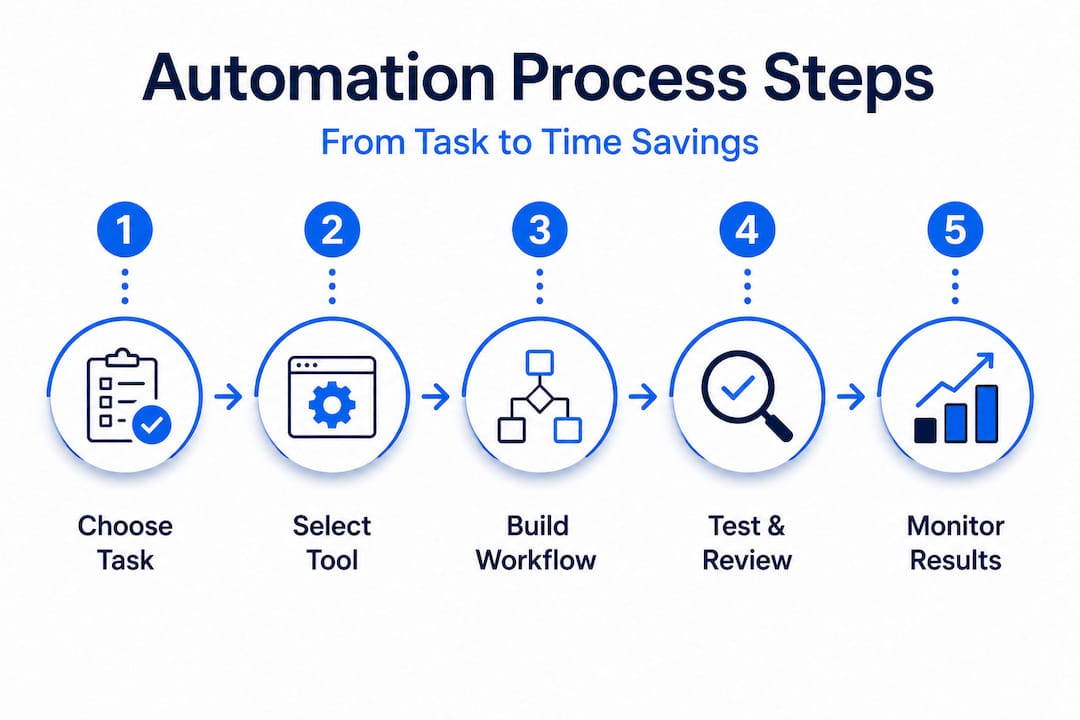
Before touching a single tool, spend time identifying the right tasks to automate. Not everything should be automated. The sweet spot is what practitioners call “high-frequency, low-judgement” tasks. These are actions that happen often, follow a consistent set of rules, and don’t require human empathy or discretion to complete well.
Good examples include:
- Sending a confirmation email when a booking is made
- Triggering a reminder SMS 48 hours before a reservation
- Routing a cancellation request to the correct team member
- Logging a new enquiry into your CRM
Poor candidates for full automation include:
- Resolving a guest complaint about their experience
- Handling a sensitive refund dispute
- Communicating with a VIP guest about special arrangements
Choosing the right tools
For non-technical owners, the priority should be tools that offer no-code or low-code interfaces. The ICO’s AI data protection guidance recommends a risk-based approach when selecting AI systems, particularly when they handle personal data. That means choosing platforms with strong data governance and clear GDPR (General Data Protection Regulation) compliance records.
| Tool | Best for | No-code? | Hospitality integrations |
|---|---|---|---|
| Zapier | Connecting apps and triggers | Yes | Mews, Booking.com, Mailchimp |
| n8n | Custom workflows, self-hosted | Low-code | Wide API support |
| Claude (Anthropic) | Intelligent message drafting | Yes | Via Zapier or API |
| Make (formerly Integromat) | Visual workflow builder | Yes | Strong ecosystem |
There are also several AI tools for small businesses that offer prebuilt hospitality templates, which dramatically cut your setup time.
Integration with your existing systems is critical. If you use a property management system (PMS) such as Mews, or a reservation platform like OpenTable or ResDiary, your automation tool needs to connect to it reliably. Most of the platforms above offer native integrations or webhook (a method for apps to communicate in real time) support to make this straightforward.
GDPR basics to keep in mind from the start:
- Only collect guest data that you genuinely need
- Store data securely and set clear retention periods
- Ensure guests know how their data is used in your privacy policy
- Avoid sending automated messages to contacts without lawful basis
Pro Tip: Start with one automation, run it for two weeks, and measure the outcome before adding more. A focused pilot gives you confidence and clean data rather than a tangle of half-working workflows.
Explore the full list of AI tasks small businesses automate to find the best starting point for your specific operation.
Once you’ve pinpointed tasks to automate and selected the right tools, you’re ready to dig into the automation process itself.
Step-by-step: Automating a typical guest booking flow
Let’s walk through a concrete example: automating the guest booking confirmation and follow-up sequence. This is the single most impactful automation most small hospitality businesses can implement, and it’s simpler than you might expect.
The workflow in plain English
- Guest makes a booking via your website, phone system, or third-party platform.
- PMS logs the booking and sends a trigger to your automation tool (Zapier, for example).
- Zapier fires an automated confirmation email to the guest within seconds, personalised with their name, date, and booking details.
- 48 hours before the reservation, a second trigger fires an SMS or email reminder, including directions, parking info, and your cancellation policy.
- 24 hours after the visit, a follow-up message is sent requesting a review or feedback.
- Any reply or exception (such as a guest asking to amend their booking) is flagged to a human team member for personal handling.
This six-step sequence replaces hours of manual effort every week. The guest experience improves because responses are instant and consistent. Your team’s time is freed for higher-value interactions.
Common mistakes to avoid
- Skipping GDPR steps: Under UK GDPR Article 22, you must maintain meaningful human oversight for significant automated decisions. Always ensure a human can intervene when needed, and conduct a DPIA (Data Protection Impact Assessment) if your automation involves high-risk processing.
- Forgetting the exception handler: Every workflow needs a clear path for messages that don’t fit the standard flow. Without it, confused guests fall through the cracks.
- Over-automating tone: Automated messages should sound warm and natural, not robotic. Use personalisation tokens and test every template with a real booking scenario before going live.
“Automation should make guests feel better looked after, not less cared for. The goal is to use technology to create space for your team to be more human, not less.” This is the principle that should guide every workflow you build.
The AI sales automation hacks approach applies directly here: treat automation as a tool for amplifying your team’s capacity, not replacing their judgement.
For a broader strategic view of deploying AI in your business, the AI management guide covers the end-to-end considerations for scaling responsibly.
Pro Tip: Before sending automated messages to real guests, run at least five test bookings through your workflow using dummy accounts. Check every message arrives correctly, on time, and with accurate personalised content.
After implementing automated flows, it’s crucial to make sure they’re running smoothly, legally, and providing real value in day-to-day operation.
Verifying and tuning your automations for ongoing success
Building an automation and walking away is one of the most common mistakes small business owners make. Automations drift. APIs change. Guest behaviour shifts. Without a regular review process, a workflow that worked brilliantly in January can be causing silent problems by April.
Your monthly automation health checklist
- Test every trigger manually by running a dummy booking through the system
- Check delivery rates for confirmation emails and SMS reminders
- Review opt-out and complaint rates for any message sequence
- Audit the exception log to see what the automation couldn’t handle
- Confirm personal data is being processed lawfully and stored correctly
The ICO’s risk-based guidance makes clear that when AI systems process personal data from guest bookings and emails, a documented risk assessment approach is essential, not optional. This means keeping records of what your automation does, what data it touches, and who has oversight.
Signs your automation needs attention:
- Guests are replying to automated messages with confusion or frustration
- Your no-show rate isn’t improving despite reminders being set up
- You’re receiving complaints about receiving too many messages
- Confirmation emails are landing in spam folders
- Your team is manually fixing the same issue repeatedly
The automation efficiency examples from similar-sized UK businesses show that operators who schedule quarterly reviews of their workflows consistently outperform those who set-and-forget. That regular review discipline is what separates automation that genuinely saves time from automation that creates new problems.
When to re-introduce human review:
Some scenarios should always route to a human. These include complaints, large-value bookings, accessibility requests, and any situation where the guest’s message suggests emotional distress or urgency. Building clear escalation paths into your workflow from the start protects both your guests and your business.
Pro Tip: Create a shared inbox folder or Slack channel specifically for escalations from your automation. This gives your team a single place to monitor exceptions without having to search through general inboxes.
Having established a working automation process, it’s worth reflecting on the broader lessons and overlooked factors that determine long-term success.
The uncomfortable truth about AI task automation in small businesses
Most articles on automation tell you to automate more, faster, and earlier. We’d encourage you to think differently.
In our experience working with UK hospitality micro-enterprises, the biggest problem isn’t that businesses haven’t automated enough. It’s that they’ve built too many half-finished automations, each running quietly in the background, duplicating messages, missing exceptions, and quietly eroding guest trust. One business we encountered was sending guests three separate confirmation emails because three different automations were all triggered by the same booking event and nobody had checked.
The discipline of automation matters more than the volume of it. A single, well-tested, properly monitored workflow for booking confirmations will deliver more value than five loosely connected automations with no oversight. Prioritise depth over breadth, especially when you’re starting out.
There’s also a seductive logic that says “if some automation is good, more automation must be better.” Resist it. Humans are irreplaceable in hospitality when the situation requires genuine empathy, creative problem-solving, or relationship-building. Understanding the distinction between what AI handles well and what humans do better is what the agentic AI vs automation debate is really about.
The businesses that get the most from automation are not the ones who automate the most tasks. They’re the ones who automate the right tasks, monitor them consistently, and keep their human team focused on interactions where empathy and judgement genuinely count.
Need tailored automation? Get expert support
If you’ve read this far and you’re thinking “this makes sense, but I need someone to actually build it for me,” you’re not alone. Most small hospitality business owners are brilliant at running their operation. Setting up workflows and integrating APIs is simply not where their time is best spent.
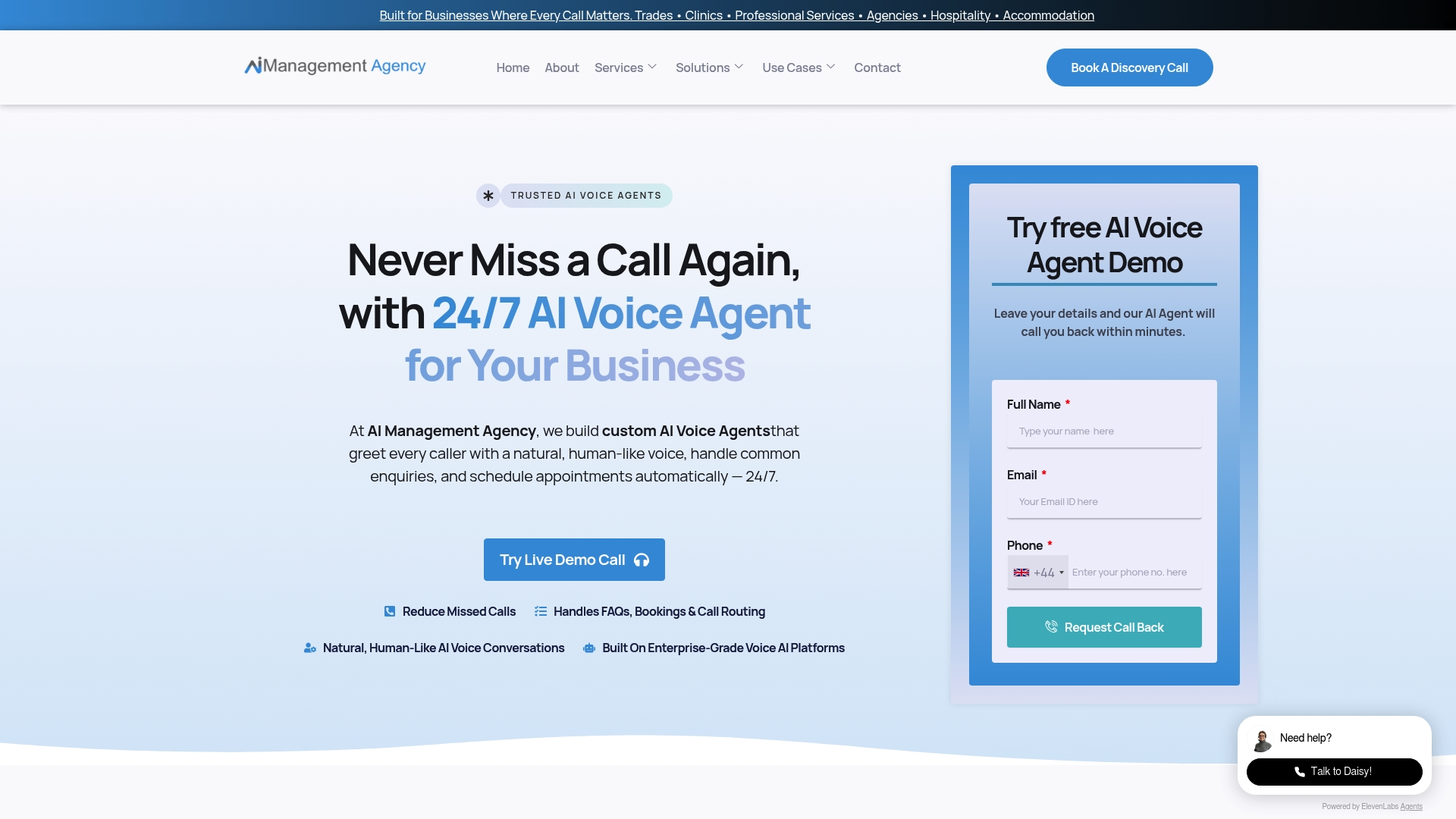
At AI Management Agency, we specialise in building AI automations and AI agents specifically for UK small businesses and hospitality micro-enterprises. From AI automation solutions that connect your booking system to intelligent follow-up sequences, to a fully configured AI receptionist for restaurants that answers calls 24/7 in a natural, conversational tone, we handle the technical setup so you don’t have to. If you’re ready to explore what’s possible for your business, our small business AI setup service is the ideal starting point. Book a call and let’s find the right solution for your operation.
Frequently asked questions
What is the easiest task to automate for hospitality businesses?
Guest booking confirmations and reminders are typically the simplest and most impactful first automations, as these are high-frequency, low-judgement tasks that follow a consistent pattern and require no human decision-making once set up.
Do I need technical skills to use AI automation tools?
No, most recommended platforms are no-code or low-code tools such as Zapier and Make, which use visual interfaces that any small business owner can navigate without programming knowledge.
How do I ensure my automations are GDPR-compliant?
Review all personal data flows within your automation, maintain documented human oversight for significant automated decisions under Article 22 of UK GDPR, and conduct a DPIA where high-risk processing is involved.
Can automation help reduce no-shows and increase bookings?
Yes, automated reminder sequences can deliver RevPAR uplifts of 5 to 15% alongside meaningful reductions in no-shows, based on benchmarks from UK hospitality operators who have implemented structured automation workflows.
Recommended
- AI automation examples boosting UK small business efficiency – AI Management Agency
- Common AI tasks small UK businesses can automate in 2026 – AI Management Agency
- Enhance customer service with AI: A guide for UK small businesses – AI Management Agency
- What is an AI agent? A guide for UK small businesses 2026 – AI Management Agency
- Step-by-step website optimisation: boost UK business visibility
- Master the role of time management for business growth