TL;DR:
- AI automates repetitive tasks, reducing staff workload and improving check-in speed.
- It enables personalized guest communication, enhancing satisfaction and loyalty.
- Focused, measured AI implementation delivers genuine value without technological overload.
5 clear advantages of AI in hospitality for UK hotels
UK hotel owners are under real pressure right now. Guests expect instant responses, seamless check-ins, and personalised service, yet staffing costs keep climbing and skilled hospitality workers are harder to retain. This is where AI stops being a buzzword and starts being a practical toolkit. Real-world hotel studies show measurable improvements in check-in speed and guest satisfaction following AI adoption. In this article, we cover five clear, actionable advantages of AI for small UK hotels, from streamlining operations and personalising the guest experience to comparing the right tools and making smart investment decisions.
Table of Contents
- How AI streamlines hotel operations
- Enhancing guest experience with AI personalisation
- Comparing AI solutions for UK small hotels
- Making the right AI decision for your hotel
- Why smart, focused AI adoption beats chasing every trend
- Next steps: upgrade your hotel with trusted AI solutions
- Frequently asked questions
Key Takeaways
| Point | Details |
|---|---|
| Efficiency boost | AI can reduce processing time and administrative burden, letting staff focus on guests. |
| Guest satisfaction | Smart AI use leads to more personalised stays and higher satisfaction scores. |
| Choose value, not hype | Prioritise AI solutions that deliver measurable improvements, not just buzzwords. |
| Staff adoption matters | Successful results depend on staff buy-in and clear implementation strategies. |
How AI streamlines hotel operations
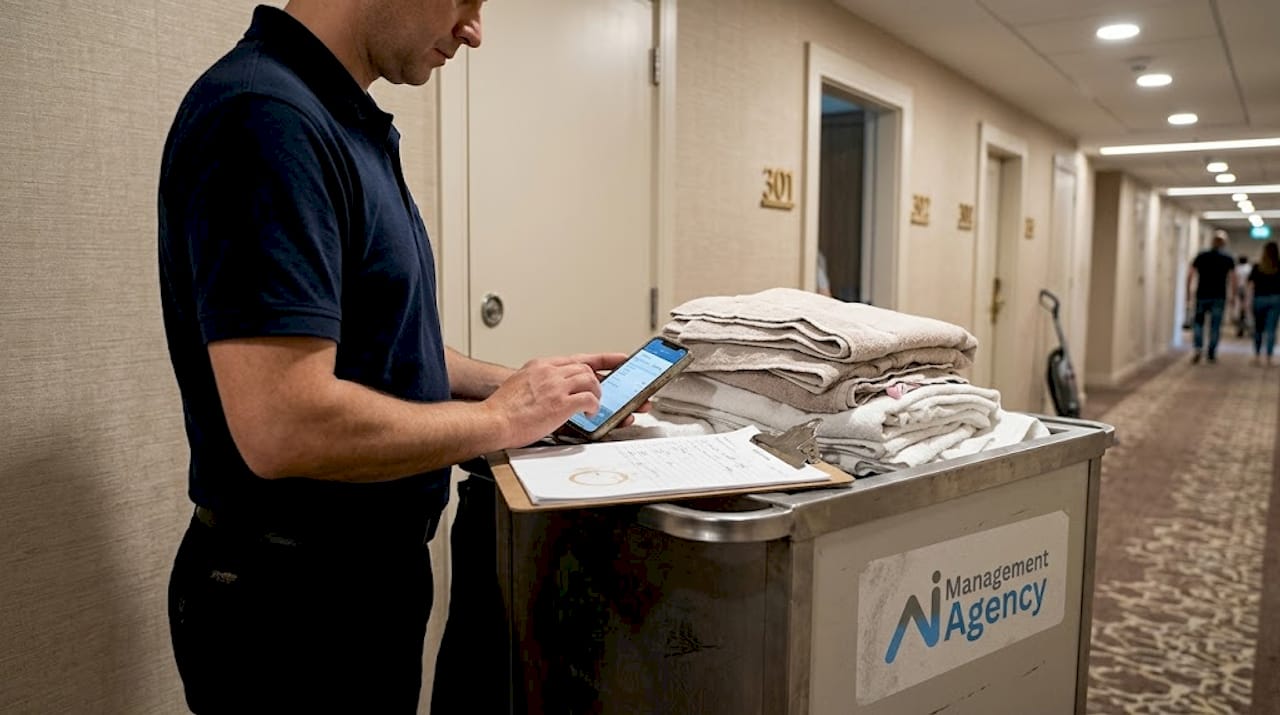
The single biggest operational pain point for most small UK hotels is time. Repetitive tasks, such as processing check-ins, answering the same guest questions, managing payment confirmations, and handling late checkout requests, consume hours of staff time every week. AI addresses this directly by automating predictable, rule-based workflows so your team can focus on moments that genuinely require a human touch.
The efficiency gains are not theoretical. Check-in processing time decreased from 3.3 to 2.7 minutes following AI system adoption, which rose from 82% to 93% in the same study. That might sound modest, but across a busy weekend with 40 arrivals, those saved minutes add up to meaningful reductions in queue length and guest frustration.
Here is a before and after snapshot of what AI can change at the operational level:
| Task | Before AI | After AI |
|---|---|---|
| Check-in processing | 3.3 minutes | 2.7 minutes |
| Routine guest enquiry response | 8 to 12 minutes | Under 1 minute |
| Payment confirmation follow-up | Manual, 10 to 15 minutes | Automated, instant |
| Late checkout request handling | Requires staff decision | AI flags and routes automatically |
The efficiency improvements extend well beyond check-in. AI-powered virtual agents can handle common guest enquiries around the clock, something no front desk team can realistically match without significant staffing cost. Learning more about AI in hotels service boost shows how hotels are cutting call volumes by up to 90% through intelligent automation.
Key operational tasks AI can automate for small hotels:
- Automated check-in and check-out flows via SMS or app-based pre-arrival messages
- 24/7 FAQ responses covering room facilities, parking, breakfast times, and local attractions
- Payment processing confirmations sent instantly after bookings or deposits
- Maintenance and housekeeping request routing logged and assigned without staff intervention
- Upsell prompts for room upgrades or dining packages sent at the right moment pre-arrival
A common pitfall is trying to automate everything at once. Hotels that launch five or six AI tools simultaneously often find that neither the technology nor the team has time to bed in properly, and the result is patchy service rather than improved service. The more effective approach is to start focused.
Pro Tip: Choose one repetitive process that currently eats the most staff time, such as answering pre-arrival phone enquiries, and automate that first. Measure the time saved and guest response before expanding to other workflows. Reviewing AI use cases for hotels can help you identify the highest-impact starting point for your property.
Enhancing guest experience with AI personalisation
Once your operations run more smoothly, AI offers a second powerful advantage: personalisation at scale. This is where smaller hotels can genuinely compete with larger chains, because AI allows you to deliver tailored guest communications that feel attentive rather than generic, without needing a dedicated concierge team.
AI systems analyse guest data, previous stays, stated preferences, booking details, and even the time of year, to generate personalised touchpoints throughout the guest journey. A returning guest who always requests a quiet room and books for business travel might receive a welcome message that acknowledges their preference, alongside a curated list of nearby co-working spaces or quiet restaurants. That kind of relevance creates genuine loyalty.
Guest satisfaction metrics improved meaningfully in hotels that deployed AI systems thoughtfully, which confirms that the personalisation benefit is real and measurable, not just a nice idea in a product brochure.
The top three personalised guest touches achievable with AI right now:
- Pre-arrival welcome messages that reference the guest’s name, booking type, and any special requests, creating a warm first impression before they even arrive
- Local recommendations tailored to guest profile, such as family-friendly attractions for guests travelling with children, or fine dining suggestions for anniversary bookers
- Post-stay thank-you messages with a personalised review invitation and a loyalty incentive based on the guest’s actual stay, rather than a generic template
For more inspiration on how AI communication can be applied at each stage of the guest journey, the guide on examples of AI guest communication is worth exploring in detail.
There is, however, a genuine risk here that experienced operators take seriously.
“The danger with AI personalisation is not that it fails to impress, but that it becomes a substitute for genuine hospitality. Guests notice when the warmth feels automated. The technology must enable your team, not replace the moments only humans can create.”
This is a critical balance for any small UK hotel. AI handles the predictable touchpoints with efficiency and consistency. Your staff handle the moments that require empathy, creativity, and real human judgement. When those two things work in tandem, the result is enhancing guest experience with AI in ways that are both scalable and genuinely impressive to guests.
Comparing AI solutions for UK small hotels
With so many potential AI solutions available, it is crucial to understand how they compare and which features genuinely deliver a return for small hotels with limited budgets and lean teams.
| AI solution type | Best for | Key benefit | Typical limitation |
|---|---|---|---|
| AI chatbot (website) | Handling pre-booking enquiries 24/7 | Instant response, reduces staff interruptions | Can feel rigid if not well configured |
| AI Voice Agent | Answering incoming calls, taking bookings | Natural conversation, no missed calls | Requires quality setup and voice training |
| Smart booking tools | Upselling, dynamic pricing, availability | Revenue optimisation without manual effort | May need integration with existing PMS |
| AI guest messaging platforms | Pre and post stay communication | Automated yet personalised touchpoints | Needs clean guest data to work well |
Before committing to any solution, every small hotel manager should work through a checklist of essential questions:
- Does it integrate with your existing property management system?
- What does the setup and onboarding process look like, and who supports it?
- Can you customise the tone of voice so it matches your hotel’s brand?
- What data does it collect, and is it compliant with UK GDPR regulations?
- What does the pricing model look like as your usage scales?
The steps for successful AI adoption in a hotel setting follow a clear sequence:
- Audit your current pain points by listing every repetitive task that currently requires staff time and guest touchpoints that feel inconsistent
- Define your priority outcome, whether that is faster check-in, fewer missed calls, better review scores, or reduced staff workload
- Select one solution that directly addresses your priority outcome and has a clear integration path with your existing systems
- Run a structured pilot over 60 to 90 days with defined success metrics before expanding
- Gather staff and guest feedback throughout the pilot, because results depend on implementation and staff adoption as much as the technology itself
- Review, adjust, and scale only once the pilot demonstrates clear, measurable value
Staff buy-in is often underestimated as a factor. A well-chosen AI tool that your team understands and trusts will outperform a sophisticated system that staff work around or undermine. Exploring AI-driven guest support and understanding the AI agent roles in hotels helps both managers and front-line staff see AI as a practical ally rather than a threat.
Making the right AI decision for your hotel
The final advantage of AI is only realised when you make the right decision for your specific property, not just adopt whatever is currently being marketed loudest. This requires clarity about your guests, your team’s capacity, and your actual operational gaps.
The criteria that matter most for small UK hotels evaluating AI investment:
- Guest profile alignment: Does the solution suit the way your guests actually communicate? A rural boutique hotel with older leisure guests has different needs to an urban business property with corporate travellers.
- Staff capability and confidence: Will your team be able to use and maintain this tool without significant ongoing technical support?
- Integration simplicity: The fewer manual workarounds required, the more likely the tool is to deliver its promised value.
- Measurable outcome: Every AI investment should come with a clear, quantifiable goal so you can evaluate whether it is working.
Warning signs that you might be buying AI hype rather than genuine value:
- The vendor cannot clearly explain what problem it solves for your specific type of hotel
- The pricing is opaque or scales in ways that penalise small operators
- The tool requires extensive customisation before it does anything useful out of the box
- There are no case studies or references from comparable UK hotel properties
- The expected results are described in vague terms like “improved efficiency” rather than specific, measurable outcomes
Pro Tip: Run a 60-day pilot project on a single function, such as automating after-hours phone enquiries, before committing to a full deployment. Track the number of enquiries handled, time saved, and any guest complaints related to the new system. That data is what justifies scaling. Resources on training hotel staff on AI can also help you prepare your team before go-live, which significantly increases adoption rates.
The risk of getting this wrong is real. As research in hospitality AI notes, overly broad AI deployments risk becoming a distraction if they do not deliver tangible value for service quality and team productivity. The solution is not to avoid AI; it is to make focused, evidence-led decisions rather than chasing novelty.
Why smart, focused AI adoption beats chasing every trend
There is a pattern visible across early hotel AI adopters that is worth naming clearly: the properties seeing the strongest results are not the ones with the most tools. They are the ones that identified a specific operational problem, selected a focused solution, measured the outcome, and then scaled carefully.
The hospitality sector does not need more AI for its own sake. As one leading commentary on the subject puts it, hospitality needs better decisions on when and why to use AI, not simply more of it. That distinction matters enormously for small UK hotels with limited budgets and no margin for tech experiments that do not deliver.
What successful hoteliers get right is measurement before scaling. They run a pilot, track a specific metric, and only expand once the data supports it. That discipline keeps AI from becoming what some in the industry call “innovation theatre”: the appearance of progress without the substance. Our AI case studies for hotels illustrate exactly this pattern, showing real outcomes from focused implementations rather than sweeping technology overhauls.
The practical framework is simple. Define the problem. Select the solution. Measure the result. Then decide whether to scale. Every additional AI tool should clear that same bar.
Next steps: upgrade your hotel with trusted AI solutions
If this article has confirmed that AI can deliver real, measurable value for your hotel, the logical next step is to explore solutions built specifically for hospitality. Not generic automation tools, but AI designed around the way hotels actually operate and the way guests actually communicate.
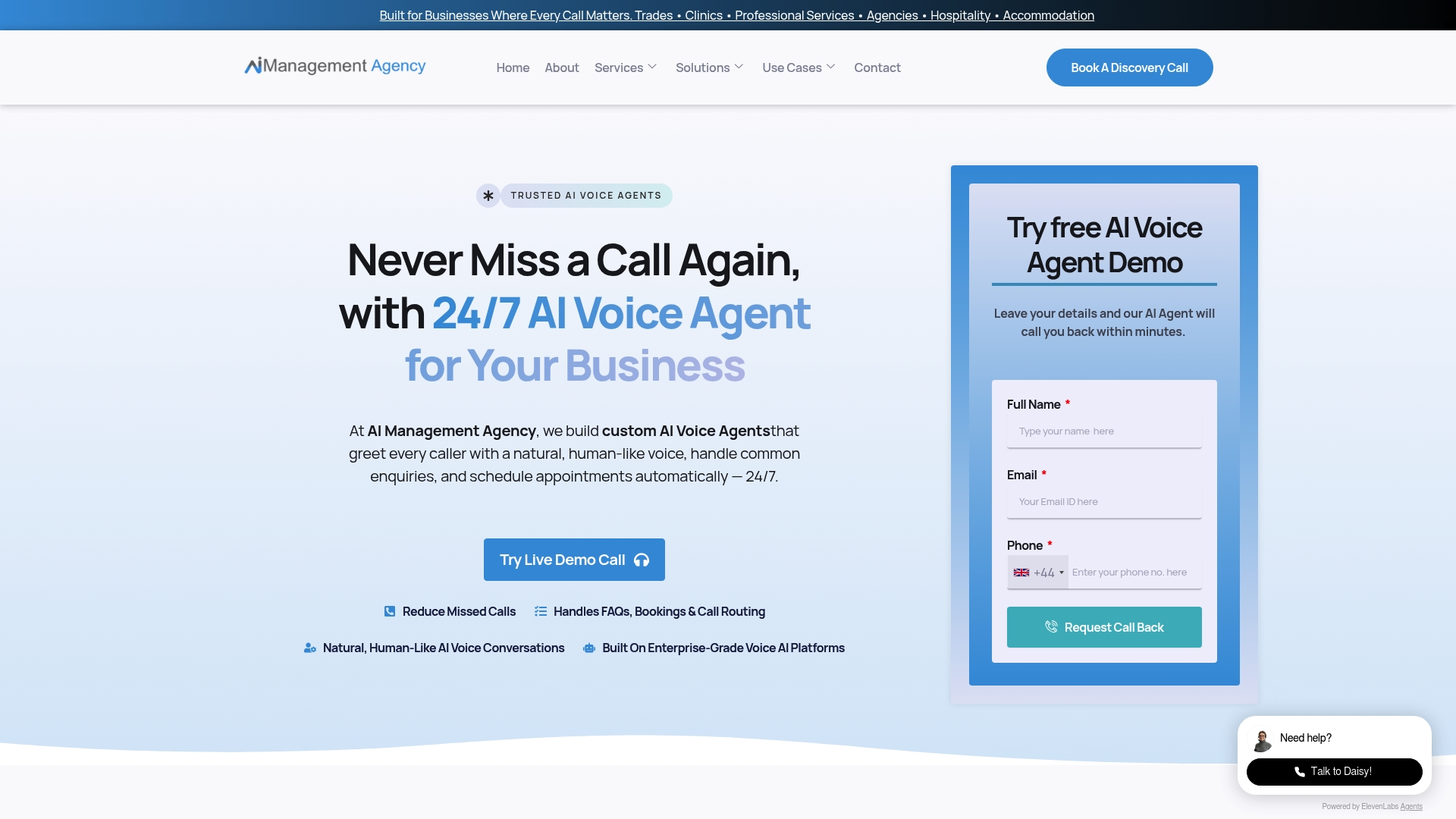
Our AI Voice Agent ‘Daisy’ answers calls 24/7, responds to guest enquiries in a natural tone, and books qualified appointments, without missing a single call. You can also explore the full role of AI agents in hotels to understand where the biggest wins are for UK properties. When you are ready to see what focused, well-implemented AI looks like in practice, visit aimagency.co.uk to explore solutions and speak with our team.
Frequently asked questions
What is the biggest advantage of using AI in small hotels?
The biggest advantage is freeing up staff time by automating repetitive tasks. Check-in time dropped and guest satisfaction improved after AI adoption in documented hotel studies, leading to faster service with fewer staffing pressures.
Does AI really improve guest satisfaction, or is it just more technology?
When implemented thoughtfully, AI genuinely lifts guest satisfaction scores. AI system adoption raised satisfaction metrics in real-world hotel examples, particularly for routine enquiries and check-in speed where consistency matters most.
Are there risks to automating too much in hospitality?
Yes, introducing AI without a clear purpose can harm service quality and distract staff. Overly broad deployments risk becoming a distraction without delivering tangible value, which is why starting focused is always the stronger approach.
How can small hotels make the most of AI without a big budget?
Start by automating a single process that currently consumes significant staff time, prove its value through measurable results over 60 to 90 days, and scale gradually based on what the data shows rather than vendor promises.
Recommended
- Enhance guest experience with AI in UK hotels 2026 – AI Management Agency
- AI in hotels: boost service and cut calls by 90% – AI Management Agency
- Boost sales with AI: a 2026 guide for small UK hotels – AI Management Agency
- Top AI use cases in hotels to boost service efficiency – AI Management Agency