Many UK small business owners believe AI answering services are complex tools reserved for large corporations with extensive technical teams. Yet by 2026, over 64% of independent hotels already use AI chatbots, proving these systems are accessible and practical for smaller operations. This guide explains what AI answering services are, how they work, and why they’re becoming essential for UK businesses seeking efficient customer service without expanding headcount.
Table of Contents
- What Is An AI Answering Service And How Does It Work?
- Why Small UK Businesses And Hotels Are Adopting AI Answering Services In 2026
- Advanced Features That Set AI Answering Services Apart
- Implementing An AI Answering Service In Your Small UK Business Or Hotel
- Discover AI Answering Solutions For Your Business
- Frequently Asked Questions
Key takeaways
| Point | Details |
|---|---|
| AI answering services automate customer interactions | These systems use artificial intelligence to handle calls, chats, and messages across multiple channels without human intervention. |
| Adoption is accelerating in UK hospitality | Over 64% of independent UK hotels now use AI answering services to manage guest communications and bookings efficiently. |
| Natural language processing powers understanding | Advanced AI interprets customer intent and emotions, not just keywords, enabling contextual and helpful responses. |
| Implementation is straightforward for small businesses | A five step process from needs assessment to ongoing optimisation makes adoption practical for teams without technical expertise. |
| 24/7 availability transforms customer experience | AI answering services provide instant responses outside business hours, reducing missed opportunities and improving satisfaction. |
What is an AI answering service and how does it work?
An AI answering service is an automated system that uses artificial intelligence and natural language processing to handle customer calls, chats, or messages without human involvement. Unlike traditional voicemail or basic autoresponders, these systems understand context, interpret intent, and provide accurate answers in real time.
The technology combines several components working together. Natural language processing enables the AI to parse what customers actually mean, not just match keywords. Multi-channel capability allows the same AI to operate across phone lines, website chat windows, and messaging apps like WhatsApp. Machine learning helps the system improve over time by learning from interactions and refining responses based on outcomes.
For small UK businesses and hotels, this technology solves a persistent challenge: providing immediate responses when staff are busy or unavailable. An AI answering service can handle routine queries about opening hours, pricing, availability, and booking procedures whilst escalating complex issues to human team members. This division of labour means your staff focus on tasks requiring judgement and empathy whilst the AI manages repetitive questions efficiently.
Core features that define modern AI answering services include:
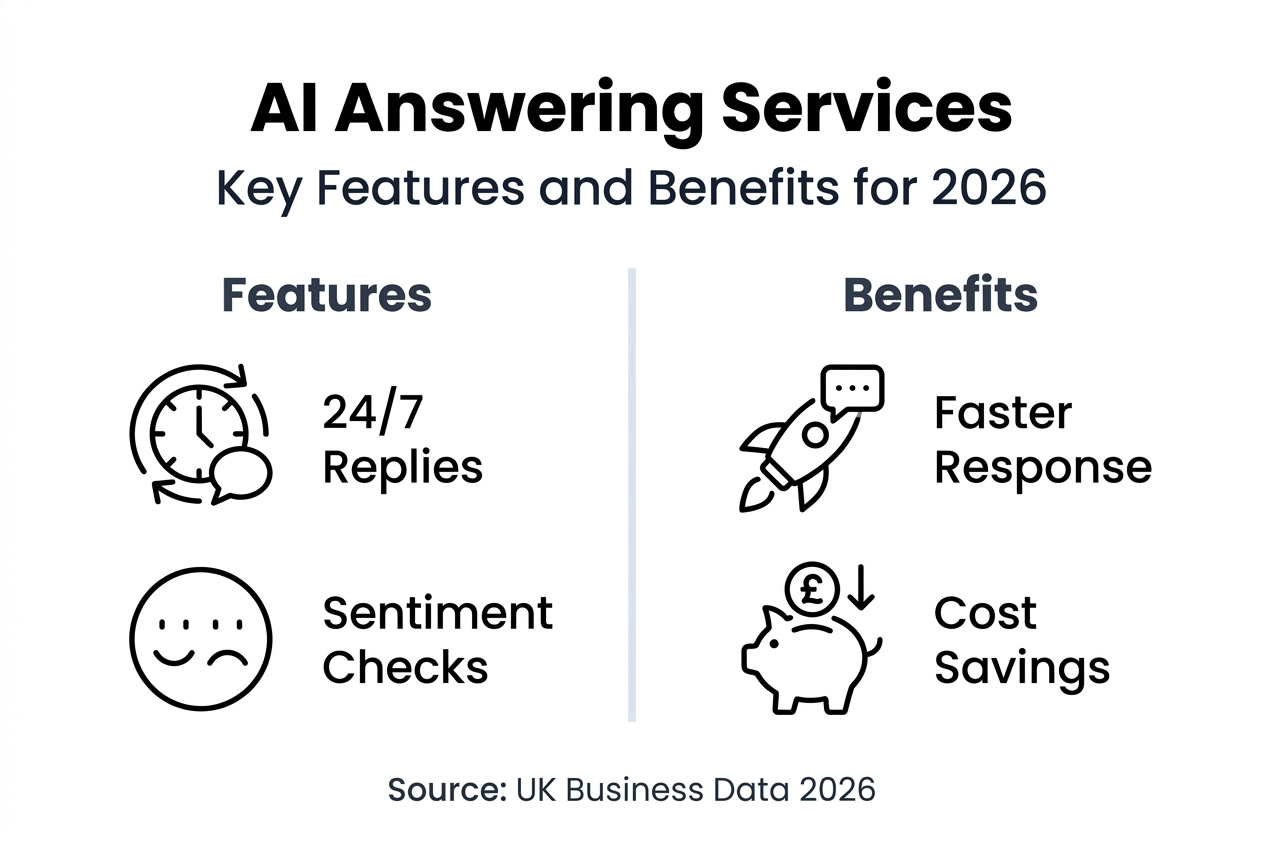
- 24/7 availability without additional staffing costs or shift patterns
- Contextual understanding that remembers previous conversation points
- Multi-channel support across phone, chat, email, and messaging platforms
- Learning capability that improves accuracy through ongoing interactions
- Instant response times that eliminate customer waiting queues
- Seamless escalation to human staff when situations require personal attention
Understanding the role of AI in small business operations helps clarify why these systems represent a practical investment rather than futuristic technology. They’re tools designed to handle today’s customer service demands without requiring you to hire additional reception staff or expand operating hours manually.
Why small UK businesses and hotels are adopting AI answering services in 2026
The adoption curve tells a compelling story. Over 64% of independent hotels in the UK now use AI answering services, a dramatic increase from just 30% three years ago. This rapid uptake reflects both technological maturity and business necessity as customer expectations evolve.
Consumer familiarity removes a significant barrier. Research shows 88% of consumers have already interacted with chatbots in some form, whether booking travel, checking order status, or seeking product information. This widespread exposure means customers arrive at your business expecting instant responses, not tolerance for delayed replies during busy periods or outside office hours.
Small businesses gain competitive advantages previously available only to larger operations with extensive support teams. An independent hotel with five staff members can now provide the same 24/7 availability as a chain property with round the clock reception coverage. This levels the playing field whilst controlling costs, since AI systems scale without proportional expense increases.
Adoption drivers transforming UK small business operations:
- Cost reduction by handling routine queries without additional staff wages or national insurance contributions
- Improved customer experience through instant responses and consistent service quality
- 24/7 service capability that captures enquiries and bookings outside traditional business hours
- High volume handling during peak periods without overwhelmed staff or abandoned calls
- Staff liberation from repetitive questions, allowing focus on complex guest needs and relationship building
The technology particularly benefits hospitality businesses where timing matters. A potential guest researching accommodation at 10pm expects immediate answers about availability and pricing. Without an AI answering service, that enquiry waits until morning, by which time the customer has likely booked elsewhere. AI voice technology for hotels transforms these lost opportunities into confirmed bookings by maintaining engagement when human staff are unavailable.
Small UK businesses adopting these systems report reduced pressure on existing teams and improved customer satisfaction scores. The role of AI agents explained shows how properly implemented systems generate measurable results, with some hospitality businesses seeing booking increases of 30% within months of deployment.
Advanced features that set AI answering services apart
Modern AI answering services excel because they grasp context and emotions behind customer questions, not just surface-level keywords. This distinction separates effective systems from frustrating ones that misunderstand intent and provide irrelevant responses.
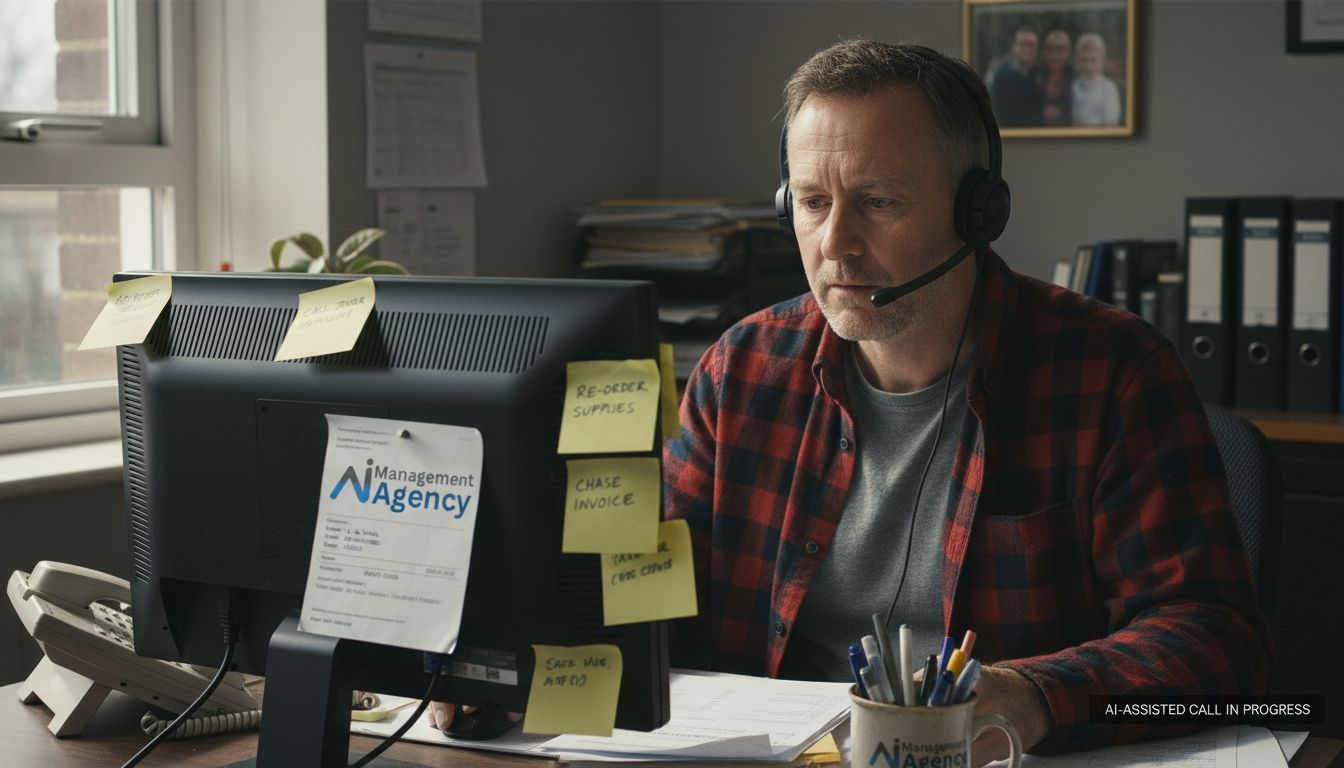
Natural language processing analyses sentence structure, implied meaning, and conversational flow. When a guest asks “Do you have anything available next weekend?”, advanced AI understands this requires checking room availability for specific dates, not simply confirming the business is open. The system interprets “next weekend” relative to today’s date and knows “anything” refers to accommodation options, not restaurant bookings or spa treatments.
Sentiment analysis adds emotional intelligence to interactions. The AI detects frustration in phrasing like “I’ve been waiting ages for a response” and adjusts its tone accordingly, prioritising the query and perhaps offering an apology. This emotional awareness prevents situations where cheerful automated responses irritate already frustrated customers.
| Feature | Basic Chatbot | Advanced AI Answering Service |
|---|---|---|
| Input processing | Keyword matching | Contextual natural language understanding |
| Response capability | Pre-scripted answers | Dynamic, personalised responses |
| Emotion detection | None | Sentiment analysis and tone adjustment |
| Channel support | Single platform | Multi-channel consistency across phone, chat, messaging |
| Learning ability | Static rules | Continuous improvement through interaction analysis |
| Escalation | Manual triggers | Intelligent detection of complex queries requiring human intervention |
Pro tip: Configure your AI answering service to flag emotional keywords like “urgent”, “disappointed”, or “frustrated” for immediate human review. This ensures genuinely distressed customers receive personal attention whilst the AI handles routine matters, maximising both efficiency and guest satisfaction.
Practical applications demonstrate these capabilities. A hotel guest messaging at midnight about a booking error receives an empathetic response acknowledging the inconvenience, confirmation of the issue, and either immediate resolution or assurance a team member will address it first thing with specific timing. The AI recognises urgency, accesses booking systems to verify details, and provides reassurance without waking staff for something manageable in the morning.
These advanced features explain why businesses using sophisticated systems achieve better results than those with basic automation. Learning to optimise AI responses in hospitality contexts ensures your system delivers the nuanced, helpful interactions customers expect rather than robotic, frustrating exchanges that damage your reputation.
Implementing an AI answering service in your small UK business or hotel
Adopting an AI answering service follows a straightforward process that doesn’t require technical expertise from your team. Success comes from thorough preparation and ongoing refinement rather than complex technical implementation.
Implementation roadmap for UK small businesses:
- Assess your needs and prioritise channels where customers most frequently contact you, whether phone calls, website chat, or messaging apps.
- Select a provider offering AI receptionist capabilities suited to your industry, with particular attention to UK business hours, language conventions, and regulatory requirements.
- Set up the AI system by integrating it with existing tools like booking software, customer databases, and communication platforms your team already uses.
- Train the AI with relevant data including common questions, your service offerings, pricing structures, policies, and examples of excellent customer interactions.
- Monitor performance through ongoing analysis of conversations, customer feedback, resolution rates, and escalation patterns to identify improvement opportunities.
The training phase determines system effectiveness. Gather questions your team answers repeatedly, noting variations in how customers phrase the same query. A guest might ask “What time is breakfast?”, “When do you serve breakfast?”, or “Are you doing breakfast tomorrow?” – all requiring the same information delivered appropriately to context. Your AI needs examples of these variations to recognise intent regardless of exact wording.
Pro tip: Involve your entire team in the first month of implementation by asking them to flag any customer questions the AI handles poorly or misunderstands. This frontline feedback accelerates system accuracy far faster than relying solely on technical metrics, and staff buy-in increases when they see their input directly improving the tool they work alongside.
Cost considerations for small UK businesses remain manageable. Most AI answering services operate on subscription models scaling with usage volume, making them accessible without significant upfront investment. A small hotel handling 200 enquiries monthly might spend £150-£300 per month, substantially less than employing additional reception staff or paying overtime for extended coverage.
Scalability provides long-term value. As your business grows and enquiry volume increases, the AI handles additional load without proportional cost increases or performance degradation. This contrasts with human staffing where growth necessitates recruitment, training, and ongoing employment costs. Resources focused on training AI agents for UK SMEs demonstrate how businesses achieve 30% error reduction within 12 weeks through systematic optimisation, proving these systems mature quickly with proper attention.
Integration with existing systems ensures the AI accesses information needed for helpful responses. Connecting to your booking system allows real-time availability checks. Integration with customer relationship management software enables personalised responses referencing previous interactions. These connections transform the AI from a simple question-answering tool into a comprehensive customer service solution.
Discover AI answering solutions for your business
Small UK businesses and hotels seeking to improve customer service whilst controlling costs find AI answering services deliver measurable results when properly implemented. AIM Agency specialises in creating high-quality AI agents tailored for hospitality and small business operations, including AI receptionists that handle calls naturally, respond to FAQs, and book qualified appointments 24/7.
Our clients in the hospitality sector report significant improvements in guest communication and booking conversion, with many seeing results within the first month of deployment. The role of AI agents in UK hospitality demonstrates proven approaches that generate tangible outcomes for businesses like yours.
Whether you’re exploring AI receptionist solutions for hotels or seeking comprehensive AI answering services for your small business, AIM Agency provides expert guidance and tailored implementation. Visit AI Management Agency to discover how our solutions can transform your customer service operations whilst freeing your team to focus on what they do best.
Frequently asked questions
What exactly does an AI answering service do for small businesses?
An AI answering service handles customer calls, chats, and messages automatically using artificial intelligence to understand questions and provide accurate responses. It operates 24/7 without human involvement, managing routine enquiries whilst escalating complex issues to your team.
How quickly can a small UK business implement an AI answering service?
Most small businesses complete implementation within 2-4 weeks from initial setup to full operation. This timeline includes system configuration, training the AI with your business information, testing across channels, and team familiarisation with monitoring and escalation processes.
Do customers prefer speaking with AI or human staff?
Research shows 88% of consumers have used chatbots and accept them for routine queries requiring quick answers. Customers value immediate responses over waiting for human staff, particularly outside business hours, but prefer human interaction for complex problems or emotional situations. Effective systems balance both appropriately.
What costs should small UK businesses expect for AI answering services?
Subscription pricing typically ranges from £150-£500 monthly depending on enquiry volume and features required. This proves significantly more cost effective than hiring additional staff, with no national insurance contributions, holiday pay, or training costs. Many providers offer scalable plans that grow with your business.
Can AI answering services integrate with existing booking systems?
Yes, modern AI answering services connect with most booking platforms, customer databases, and communication tools through APIs or direct integrations. This connectivity enables the AI to check real-time availability, access customer history, and provide personalised responses. Understanding the role of AI in small business operations clarifies integration possibilities for your specific systems.
Recommended
- Understand AI voice bots to boost your UK small business – AI Management Agency
- Uses of AI in SMEs: boost efficiency with smart tools 2026 – AI Management Agency
- Role of AI in Small Business Customer Service – AI Management Agency
- Boost sales with AI: a 2026 guide for small UK hotels – AI Management Agency