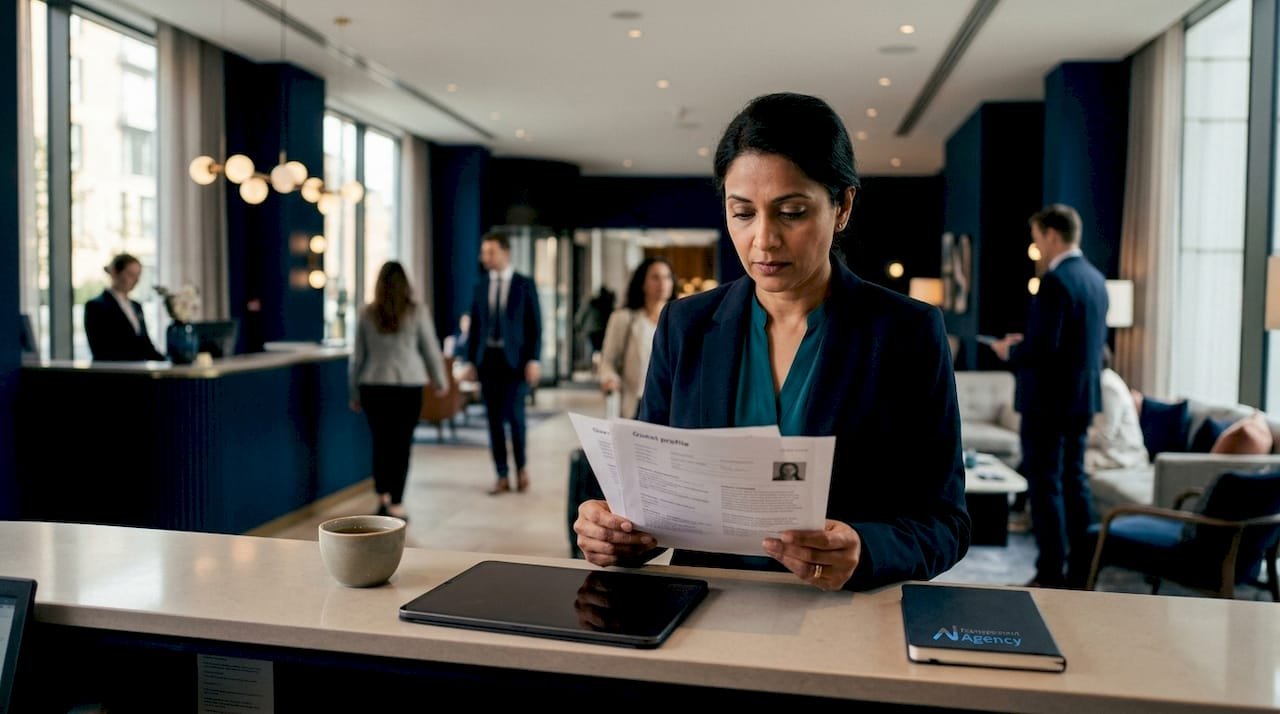
Every week, UK hospitality SMEs lose hours chasing leads that were never going to convert. Manual qualification, the process of deciding which enquiries are worth pursuing, drains time that small teams simply cannot spare. The good news? UK SMEs save over 5 hours weekly by adopting AI tools. This article breaks down exactly how AI qualification works for hospitality businesses, what results you can realistically expect, and how to get started without a large budget or a technical team.
Table of Contents
- Understanding sales qualification in UK hospitality
- How AI transforms sales qualification
- Traditional scoring vs AI: What most miss
- Practical steps: Integrating AI into your sales process
- Maximising results: Best practices and pitfalls
- Unlock more bookings with hospitality-focused AI solutions
- Frequently asked questions
Key Takeaways
| Point | Details |
|---|---|
| AI saves time | UK hospitality SMEs save over five hours weekly by using AI to qualify sales leads. |
| Higher conversion rates | AI lead scoring can improve pipeline conversions by up to 28% compared to manual efforts. |
| Easy integration | Low-cost AI tools work seamlessly with free CRMs, making adoption simple for small businesses. |
| Keep human touch | Combining AI with regular human review ensures nuanced lead assessment and prevents performance drift. |
Understanding sales qualification in UK hospitality
Sales qualification means assessing the quality of an enquiry before you invest time in following it up. For a boutique hotel or independent restaurant, this is the difference between spending an hour on a guest who books a table for two and one who books a corporate event for 200.
Hospitality presents unique qualification challenges that other sectors simply do not face:
- Fluctuating demand: Seasonal peaks mean lead volume surges unpredictably.
- Varied guest needs: A wedding enquiry and a business travel booking require completely different follow-up approaches.
- Lean teams: Most small hospitality businesses operate with minimal front-of-house and sales staff.
- Skills gaps: 30% of non-adopters cite skills gaps as the primary barrier to AI adoption.
The stakes are high. Prompt qualification directly affects booking conversion. A slow response to a hot lead often means losing it to a competitor. Yet 97.7% of hospitality businesses are SMEs, meaning most operators are working without the resources of large chains.
“Speed and accuracy in qualification are not luxuries for hospitality businesses. They are the difference between a full diary and an empty one.”
AI is now transforming UK hospitality by making fast, accurate qualification accessible to businesses of every size. You no longer need an enterprise budget to compete.
How AI transforms sales qualification
With the basics of sales qualification in hospitality covered, let’s explore how AI streamlines and improves this process compared to manual methods.
AI qualification tools assess leads using two key inputs: firmographics (who the lead is, their company size, sector, and location) and behavioural signals (what pages they visited, how long they spent on your site, what they enquired about). The system scores each lead automatically and routes the highest-priority ones for immediate follow-up.
Critically, AI operates 24/7. An enquiry submitted at 11pm on a Friday gets assessed and responded to instantly, not on Monday morning when the opportunity may have passed.
Integration with hospitality technology
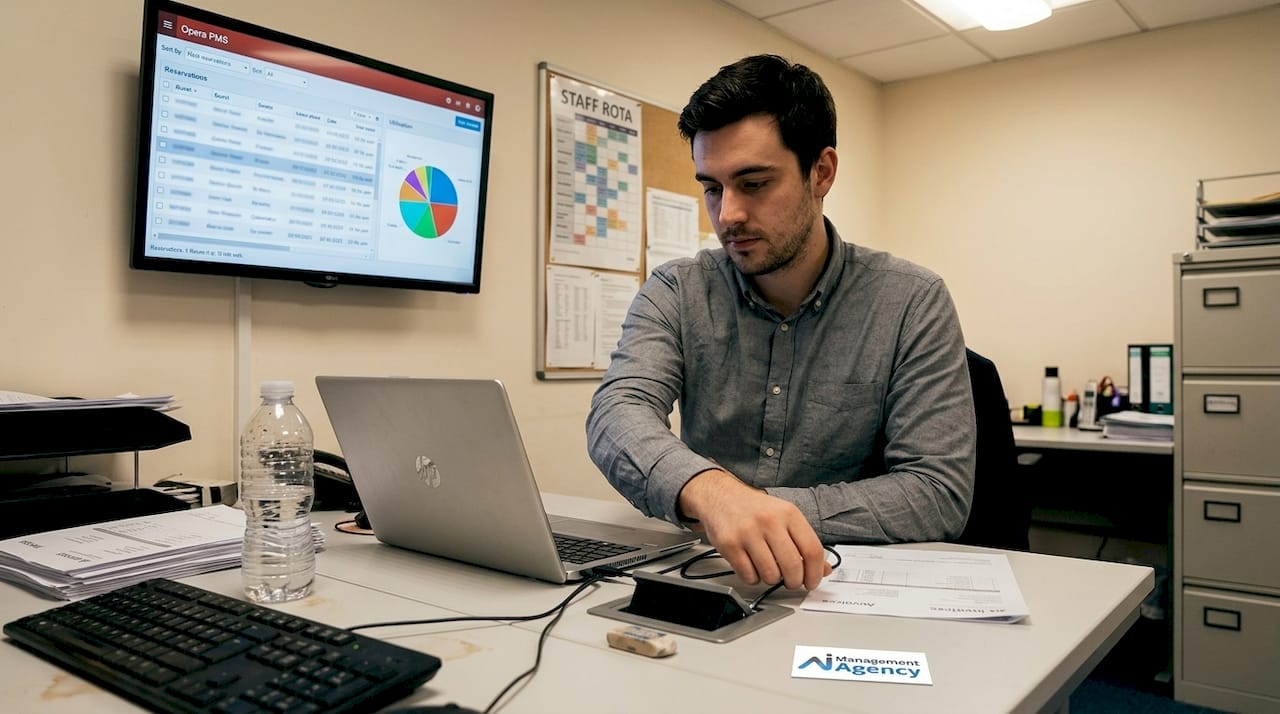
Modern AI qualification tools integrate directly with property management systems (PMS) such as Opera and Cloudbeds. This means lead data, booking history, and guest preferences feed directly into the scoring model, making assessments far more accurate than a generic CRM alone.
| Feature | Manual qualification | AI qualification |
|---|---|---|
| Speed | Hours to days | Seconds |
| Availability | Business hours only | 24/7 |
| Consistency | Variable | Consistent |
| Scalability | Limited by headcount | Scales instantly |
| Data use | Relies on memory | Uses full data history |
The results speak clearly. AI qualification improves pipeline by 27%, boosts win rates by 11%, and shortens sales cycles by 26%. Separately, AI lead scoring raises conversions by 28% and improves sales productivity by 30%.
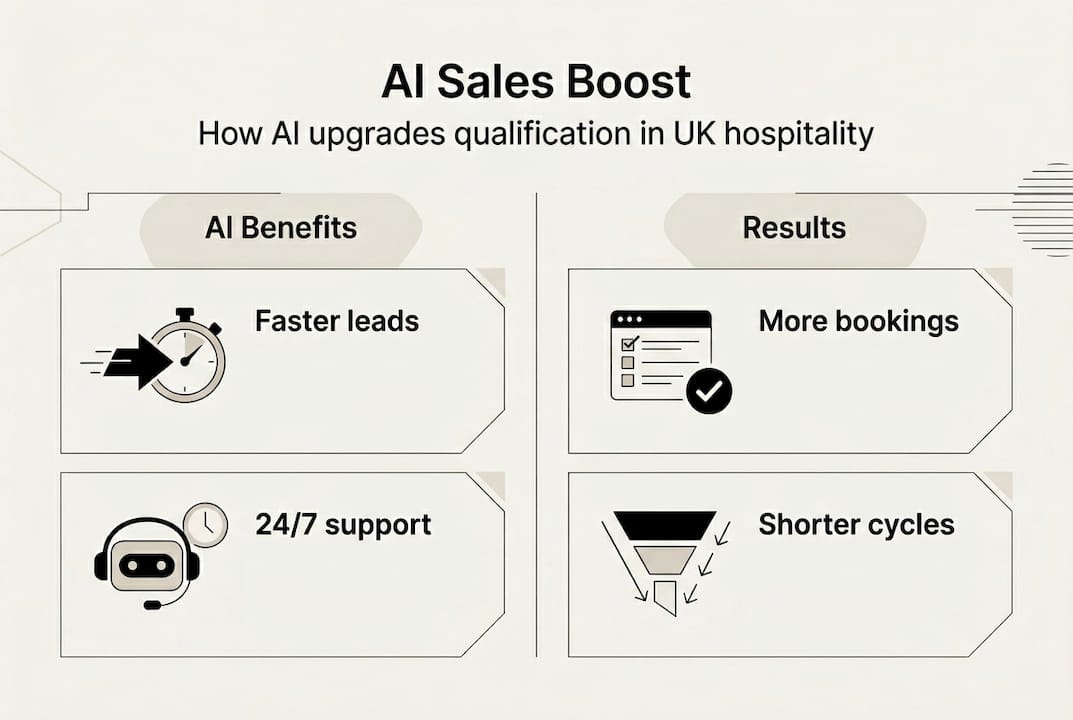
For a small hotel or venue, those numbers translate directly into more confirmed bookings and less time wasted on dead-end enquiries. Explore how AI in hotel sales conversion is reshaping revenue strategies, and see the practical case for boosting hotel sales with AI in 2026.
Traditional scoring vs AI: What most miss
While AI promises strong gains, most owners overlook the difference between static and dynamic scoring. This distinction matters more than most people realise.
Traditional static scoring assigns fixed points to lead attributes. A job title like “Events Manager” scores ten points regardless of context. But an Events Manager at a small community group and one at a FTSE 250 company are very different prospects. Static scoring often fails on context; AI adapts dynamically, factoring in seasonal signals, booking history, and real-time behaviour.
| Scoring type | Adapts to context | Uses seasonal data | Learns over time | Setup complexity |
|---|---|---|---|---|
| Static scoring | No | No | No | Low |
| Rule-based AI | Partially | Sometimes | No | Medium |
| Machine learning AI | Yes | Yes | Yes | Medium to high |
However, AI is only as good as the data it receives. Poor data quality, incomplete guest records, or inconsistent CRM entries will limit performance significantly. This is a common pitfall for hospitality SMEs who have not yet standardised their data entry processes.
It is also worth noting that hospitality AI adoption sits at 70% compared to 95% in the tech sector. There is real competitive advantage available to those who act now.
Pro Tip: Before deploying AI scoring, run it against 100 or more historical leads and compare its assessments to actual outcomes. This validates accuracy and highlights data gaps before they affect live performance.
For a deeper look at AI cost savings in hospitality and guidance on optimising AI responses for your specific context, both resources offer practical frameworks.
Practical steps: Integrating AI into your sales process
Now that the differences are clear, here is how to practically get started and begin seeing measurable gains from AI qualification.
- Choose the right CRM foundation. Free CRMs like HubSpot or Pipedrive include built-in AI features or support low-cost plugins. Start here before investing in specialist tools.
- Define your ideal customer profile (ICP). Your ICP should reflect seasonal context. A corporate booker in January looks different from a wedding planner in March. Build separate profiles for your key booking types.
- Feed in historical data. Import at least 100 past leads with known outcomes. This gives your AI model a baseline to learn from and lets you validate accuracy before going live.
- Set up automated routing. Configure your system so that leads scoring above a defined threshold trigger an immediate notification or automated booking invitation. Hot leads should never wait.
- Track weekly. Monitor AI-qualified conversion rates against manually qualified ones. UK SMEs gain 5 or more hours weekly through AI adoption, and with 74,000 hospitality vacancies across the UK, that time saving is not trivial.
Pro Tip: Use a hybrid model from the start. Let AI handle initial scoring and routing, but keep a human in the loop for high-value or complex enquiries. This preserves the personal touch that hospitality guests expect while capturing the efficiency gains AI delivers.
For step-by-step guidance on booking appointments with AI, or to see real-world AI efficiency examples from UK small businesses, both are worth reviewing. You can also explore how AI agents drive more bookings specifically within the hospitality sector.
Maximising results: Best practices and pitfalls
With initial setup covered, here is how to keep your AI qualification effective and avoid common traps as you scale.
Best practices to follow consistently:
- Review your scoring model monthly. Guest behaviour and booking patterns shift with seasons, local events, and market trends. Your AI model needs to reflect current reality, not last year’s data.
- Scale without adding headcount. One of AI’s clearest advantages is that it handles volume increases without requiring additional staff. This is particularly valuable given ongoing hospitality labour shortages.
- Maintain data discipline. Assign one person responsibility for CRM data quality. Incomplete or inconsistent records are the single biggest limiter of AI performance.
- Involve your team. Managers with positive attitudes towards AI drive significantly higher adoption rates. Brief your team on what the AI does and why it helps them, not just the business.
Common pitfalls to avoid:
- AI drift: Over time, a model trained on old data will become less accurate. Schedule quarterly retraining sessions.
- Poor integration: An AI tool that does not connect to your PMS or booking system creates more admin, not less.
- Removing humans too early: AI excels at volume and speed, but hospitality requires human judgement for relational and nuanced guest assessments, particularly for high-value events.
“The businesses seeing the strongest results are not replacing their teams with AI. They are freeing their teams to focus on the conversations that actually need a human.”
For a full guide to AI answering services in hospitality, including how to handle inbound calls and FAQs automatically, that resource covers the operational side in detail.
Unlock more bookings with hospitality-focused AI solutions
The insights in this article point to one clear conclusion: AI qualification is no longer a nice-to-have for UK hospitality SMEs. It is a practical, accessible tool that delivers measurable results from day one.
At AIM Agency, we specialise in building AI agents designed specifically for hospitality businesses like yours. Our high-performing AI voice agent answers calls 24/7, qualifies leads in natural conversation, and books confirmed sales appointments directly into your diary. Whether you want to understand how AI agents increase bookings or you are ready to explore AI for sales appointments, we can help you take the next step with confidence.
Frequently asked questions
How quickly can AI qualify sales leads for UK hospitality SMEs?
AI routes hot leads within seconds, compared to manual qualification which typically takes several hours. For hospitality businesses, that speed advantage directly affects booking conversion rates.
What ROI can small businesses expect from adopting AI for sales qualification?
Most UK SMEs see pipeline improvements of 27% and save more than five hours per week, which is particularly significant given the sector’s ongoing staffing pressures.
Do hospitality managers need technical skills to use AI tools?
Most AI systems integrate with common CRMs and PMS platforms with minimal setup. Low-cost LLM tools connect to free CRMs like HubSpot, making day-to-day use straightforward for non-technical teams.
Is AI suitable for boutique hotels and small guest houses?
Absolutely. AI lead scoring works at any scale and is best validated by testing on 100 or more historical leads before going live, making it a low-risk starting point for smaller properties.
How do I avoid AI drift in my sales qualification?
Schedule regular monthly or quarterly reviews and keep humans involved for complex cases. Continual review and positive manager attitudes are the two most reliable factors in keeping AI systems accurate and well-adopted over time.
Recommended
- Boost sales with AI: a 2026 guide for small UK hotels – AI Management Agency
- AI answering services explained: UK hospitality guide 2026 – AI Management Agency
- Understanding AI Automation: Cut Costs by 25% in UK Hospitality – AI Management Agency
- AI for Business Owners: Transforming UK Hospitality – AI Management Agency
- Why use online reservation systems to boost efficiency
- Streamline hospitality coffee delivery for fresher guests