TL;DR:
- AI reduces small hotel workloads by up to 70% and lowers staff costs significantly.
- Implementing AI in guest communication and check-in is quick, accessible, and delivers measurable benefits.
- Small hotels’ agility allows faster AI adoption, blending machine efficiency with human hospitality for better guest experiences.
AI is quietly reshaping small hotels across the UK, and the numbers are striking. Operational workload reductions of 35 to 70% are no longer the preserve of large chains with deep pockets. Independent hotels, B&Bs, and boutique properties are discovering that AI tools are accessible, practical, and genuinely transformative. If you’ve assumed that digital transformation means expensive IT projects and months of disruption, this guide will change your thinking. We’ll show you exactly what AI adoption looks like in real UK hotel operations, and how you can start benefiting quickly.
Table of Contents
- What digital transformation means for small hotels
- Operational efficiency: AI’s impact on staff, costs and time
- Enhancing guest experience with smart personalisation
- Getting started: Practical steps and common barriers for UK hotel owners
- Why UK small hotels are uniquely positioned for AI-driven success
- How to take the next step with AI for your hotel
- Frequently asked questions
Key Takeaways
| Point | Details |
|---|---|
| Rapid efficiency gains | AI reduces costs, admin workload, and speeds up guest-facing services in weeks for small hotels. |
| Personalisation remains vital | Combine automated guest services with meaningful human touch for the best experience. |
| Start with phased adoption | Begin with simple automations before scaling up—this reduces risks and matches most hotels’ resources. |
| Barriers are surmountable | Integration challenges and skills gaps can be managed with training and gradual rollout. |
What digital transformation means for small hotels
Digital transformation sounds like a corporate buzzword. For a small hotel owner managing everything from front desk to breakfast rotas, it can feel completely detached from daily reality. But it isn’t. At its core, digital transformation simply means using technology to do things faster, more accurately, and with less manual effort.
For hotels specifically, this translates into practical changes: automating guest communication, streamlining check-in and check-out, managing housekeeping schedules intelligently, and personalising the guest experience at scale. None of these require a dedicated IT department or enterprise-level budgets.
The biggest myth worth dispelling is that AI is only viable for large chains. The reality is very different:
- 41% of independent European hotels now use AI tools in some capacity
- 91% of hospitality leaders report measurable cost savings or efficiency gains from AI
- Cloud-based AI solutions require no major infrastructure investment
- Many tools integrate directly with existing property management systems
- Smaller teams can implement and adapt AI tools far more quickly than large organisations
This last point is crucial. Agility is a genuine competitive advantage for independent hotels. You don’t need committee sign-off or a six-month procurement process. You can trial a solution, see results, and scale it within weeks.
“The hotels seeing the biggest early gains from AI aren’t the large chains with legacy systems. They’re the independents who can move fast, test quickly, and personalise their approach from day one.”
Exploring AI automation examples from UK small businesses shows just how varied and accessible these tools have become. The question is no longer whether AI is relevant to small hotels. It’s which area to tackle first.
Understanding AI in SMEs more broadly also helps frame what’s achievable, particularly for owner-operated businesses with lean teams and limited administrative capacity.
Operational efficiency: AI’s impact on staff, costs and time
Let’s look at the numbers that matter most to a hotel owner: time saved, costs reduced, and staff workload cut.
AI is already delivering measurable operational gains across hotels of all sizes. According to recent data, AI-driven automation produces:
| Area | Result with AI |
|---|---|
| Operational workload | 35 to 70% reduction |
| Wage bill | Up to 35% savings |
| Check-in processing time | 40% faster |
| Guest messaging response | Near-instant, 24/7 |
These aren’t projections. They’re outcomes reported by hotels that have already integrated AI into their daily workflows. The tasks being automated include guest enquiry responses, booking confirmations, housekeeping scheduling, and upsell messaging.
Here are the biggest efficiency wins small hotels are seeing right now:
- Automated guest messaging: AI handles pre-arrival communication, FAQs, and post-stay follow-ups without staff involvement
- Intelligent check-in: Digital and AI-assisted check-in reduces queues and frees front-desk staff for meaningful interactions
- Housekeeping optimisation: AI schedules room turnovers based on occupancy data, reducing idle time
- Revenue management: Automated dynamic pricing tools adjust rates in real time based on demand signals
- Review monitoring: AI flags and summarises guest feedback, enabling faster responses
Pro Tip: Start with the process that costs you the most time each week. Automating guest messaging alone can reclaim several hours of staff time daily. That’s a low-risk, high-reward entry point.
It’s worth noting that not every process should be automated. Guest complaints, special requests, and emotionally sensitive situations still benefit from a human response. The goal is freeing your team to focus on those moments, by offloading the repetitive volume to AI. You can explore specific AI tasks small businesses automate to identify your best starting points.
For hotels worried about admin overload, reviewing AI admin efficiency gains in comparable businesses helps benchmark what’s realistic.
Enhancing guest experience with smart personalisation
Operational gains are only part of the story. Where AI really becomes a game changer is in delivering a personalised guest experience at a level that previously required a large, highly trained team.
AI tools can now draw on guest history, booking preferences, and real-time behaviour to personalise a stay in ways that feel genuinely attentive rather than automated. Here’s what that looks like in practice:
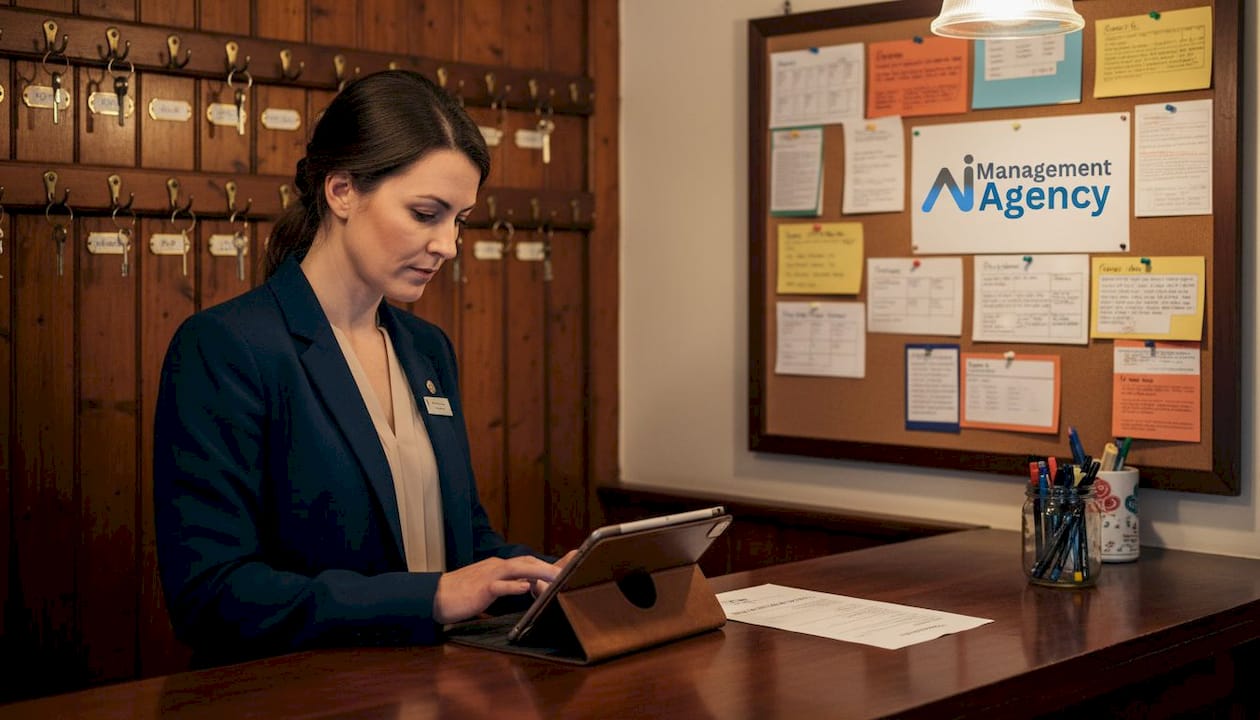
Before vs after AI personalisation
| Guest touchpoint | Before AI | After AI |
|---|---|---|
| Room preferences | Manually noted, often lost | Automatically saved and applied |
| Local recommendations | Staff-dependent, inconsistent | Instant, tailored suggestions via messaging |
| Upsell offers | Generic, poorly timed | Targeted by stay type and timing |
| Post-stay follow-up | Irregular or absent | Automated, personalised review requests |
| Response to queries | Hours or days | Seconds, at any time of day |
Here’s a practical sequence for integrating personalisation without overwhelming guests:
- Set up pre-arrival messaging using AI to confirm bookings and ask for preferences
- Create a preferences profile that your property management system retains for repeat guests
- Use AI-powered recommendations to suggest local experiences based on guest profile data
- Automate in-stay messaging for things like dining reservations or late check-out requests
- Follow up post-stay with a personalised thank-you and feedback request
Critically, balancing AI with human touch is where most hotels either succeed or stumble. Personalisation must feel warm, not clinical. Staff training is essential: your team needs to understand what the AI is doing and how to complement it.
Pro Tip: Use AI data insights to inform your staff briefings, not to replace human conversations. When your receptionist already knows a returning guest prefers a quiet room and a vegan breakfast, that’s AI making human hospitality better.
Improving AI business communication is a natural complement to personalisation efforts, particularly around guest messaging workflows.
Getting started: Practical steps and common barriers for UK hotel owners
Knowing what’s possible is one thing. Taking the first practical step is another. Here’s a clear roadmap designed specifically for small UK hotel owners.
Step-by-step AI adoption roadmap:
- Conduct a tech audit: Identify your current systems, data quality, and integration capability
- Prioritise high-volume, low-complexity tasks: Guest messaging and booking confirmation are ideal first pilots
- Select a cloud-based AI tool: Cloud solutions integrate with PMS and CRM systems without requiring new hardware
- Run a phased pilot: Test on one workflow for four to six weeks before expanding
- Train your team: Upskill staff on how AI supports rather than replaces their roles
- Scale progressively: Add personalisation and revenue management tools once the foundation is stable
The barriers are real but manageable. According to recent research, 85% of hotels face integration challenges with legacy systems, and a 64% skills gap persists across the industry. Data privacy is also a persistent concern, particularly under UK GDPR.
Here’s how to address each:
- Integration issues: Use middleware or API-enabled tools designed to bridge older PMS systems
- Skills gaps: Many AI providers offer onboarding support and training as part of their service
- Data privacy: Work with providers that are UK GDPR compliant and transparent about data handling
- Budget concerns: Start with a free trial or entry-level tier before committing to a full licence
An AI answering service guide is a useful starting point for hotels exploring voice and call automation specifically. For a broader strategic view, the ultimate AI management guide covers implementation frameworks that apply directly to hospitality businesses.
Why UK small hotels are uniquely positioned for AI-driven success
Here’s a perspective that doesn’t get aired enough: small, independent UK hotels may actually have an advantage over large chains when it comes to AI adoption.
Large hotel groups face enormous inertia. Changing workflows across hundreds of properties requires lengthy approval chains, retraining thousands of staff, and managing legacy IT contracts. You don’t have those constraints. You can implement a new AI tool this week, see results next week, and refine it the week after.
Small hotels are more agile with AI adoption precisely because decisions are made by people who are also closest to the guest experience. That combination of speed and insight is genuinely rare. A boutique hotel owner who implements an AI receptionist knows immediately whether it’s working because they’re on the floor seeing guest reactions firsthand.
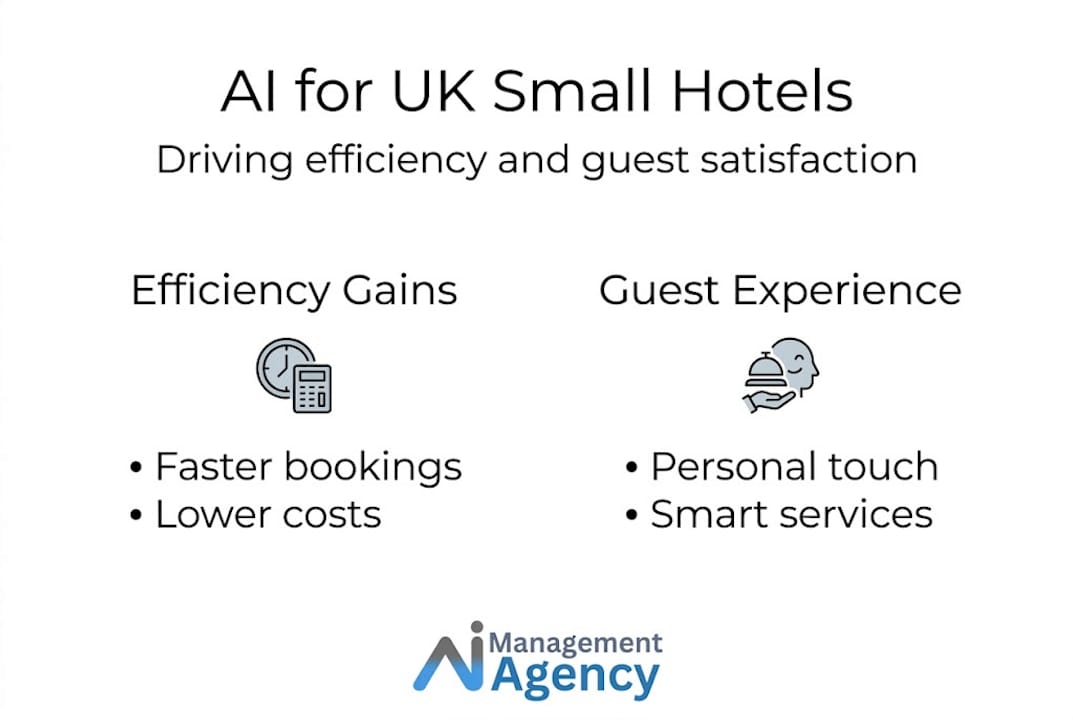
Our view is that the best outcomes come from treating AI as a capable colleague rather than a replacement. Explore AI automation solutions that free your team to do what machines genuinely cannot: build rapport, read a room, and make a guest feel truly welcome. The hotels that will win are those that blend machine speed with human intuition, and as a smaller operator, you’re better placed to get that balance right.
How to take the next step with AI for your hotel
If this article has clarified what’s possible, the next step is finding the right solution for your specific property. AI tools for hotels aren’t one-size-fits-all, and the best results come from matching the right technology to your actual guest journey.
At AI Management Agency, we specialise in building AI agents that work naturally within hospitality workflows. Our AI voice agent for hotels answers calls 24/7, handles FAQs in a natural tone, and books qualified appointments without missing a beat. Not sure whether an AI agent or a chatbot is right for you? Our guide to AI agents vs chatbots breaks it down clearly. You can also explore our dedicated resource on using AI for hotel bookings to see how automation fits into your reservations process.
Frequently asked questions
Can small hotels really afford to implement AI solutions?
Yes. Cloud-based AI tools are now available at entry-level price points, and phased rollouts mean you can start small and scale only when you see results.
How quickly can a small hotel see results from AI?
Many hotels see measurable gains within weeks. Check-in times drop 40% and staff workload can reduce by up to 70% within the first few months of implementation.
What are the main risks of over-automating the guest experience?
Over-automation erodes personalisation and can make guests feel like a number rather than a valued visitor. Keeping human touchpoints in place and training staff to complement AI is essential.
How do I know if my hotel is ready for AI integration?
Begin with a simple tech audit of your current systems. If 85% of hotels face integration hurdles, you are not alone, and a phased approach with expert guidance will help you navigate the process safely.
Recommended
- Boost sales with AI: a 2026 guide for small UK hotels – AI Management Agency
- Enhance guest experience with AI in UK hotels 2026 – AI Management Agency
- AI in hotels: boost service and cut calls by 90% – AI Management Agency
- Top AI use cases in hotels to boost service efficiency – AI Management Agency