Imagine it’s midnight and a guest message pings through asking about check-in times, whilst another customer chases a booking query you meant to answer hours ago. For small business owners and hotel managers juggling everything with a tiny team, these moments pile up fast. AI-driven tools promise to resolve 90% of inquiries automatically, freeing you for strategic work and even generating extra revenue through intelligent upselling. Yet many hesitate, worried about losing the personal touch or whether the technology truly delivers. This guide walks you through exactly how to enhance customer service with AI in the UK, covering preparation, implementation, common pitfalls, and measurable results that matter.
Table of Contents
- Why customer service matters for small businesses
- What you need before starting: AI essentials for the UK
- How to enhance customer service step by step with AI
- Troubleshooting and mistakes to avoid
- Measuring success and next steps
- Unlock the next level: Expert AI solutions for your business
- Frequently asked questions
Key Takeaways
| Point | Details |
|---|---|
| AI handles routine tasks | AI chatbots and agents now automate up to 90% of common enquiries for small businesses and hotels. |
| Quick measurable ROI | Firms see revenue gains of 30% or more in just a few months by streamlining customer service with AI. |
| Preparation is critical | UK compliance, data security, and a phased rollout plan are essential for success and customer trust. |
| Balance automation and empathy | Deploy humans for complex or emotional cases to ensure guests and customers feel valued and heard. |
| Regular monitoring boosts results | Evaluating automation outcomes and making tweaks is key for ongoing improvement and profitability. |
Why customer service matters for small businesses
Now that we’ve set the scene, let’s clarify why raising your customer service game makes such a difference. Excellent service directly impacts repeat bookings, online reviews, and word-of-mouth referrals. For small operators, three challenges loom largest: providing 24/7 support without burning out, maintaining consistent quality across every interaction, and doing it all with limited staff and budget.
Poor service leads to brutal consequences. A single negative review can deter dozens of potential customers, whilst a missed enquiry means lost revenue you’ll never recover. The good news? AI agents resolve most routine questions for small hotels and businesses, resulting in repeat bookings and extra revenue without hiring additional staff. This isn’t just about hotels, either. Any small business handling high enquiry volumes benefits from intelligent automation that works around the clock.
Consider these core challenges:
- 24/7 availability: Customers expect instant responses, even outside business hours
- Consistency: Every interaction must reflect your brand standards, regardless of who’s on duty
- Resource constraints: Small teams can’t scale human support without spiralling costs
Understanding the role of AI in small business transforms these obstacles into opportunities. When AI handles routine queries, your team focuses on complex issues requiring human judgement and empathy. The result? Happier customers, less stressed staff, and measurable revenue growth.
“AI messaging agents don’t just answer questions—they create space for owners to focus on what truly drives business forward.”
What you need before starting: AI essentials for the UK
With the stakes set, here’s how to ensure your AI foundation is solid before the first rollout. Preparation prevents costly mistakes and ensures compliance with UK regulations from day one.
Start with this essential checklist:
- Hardware: Reliable devices for monitoring and managing AI systems
- Software integration: Compatible property management system (PMS) or customer relationship management (CRM) platform
- Internet reliability: Stable broadband connection to support real-time AI responses
- Data infrastructure: Secure storage meeting UK data residency requirements
Compliance matters enormously in the UK. UK-specific needs include GDPR compliance, data residency, and affordable pricing (£29-£99/month typical entry level). Choose platforms guaranteeing UK data storage, explicit privacy controls, and transparent processing agreements. This protects both your business and your customers’ sensitive information.
| Requirement | Why it matters | Typical cost |
|---|---|---|
| GDPR compliance | Legal obligation, customer trust | Included in platform |
| UK data residency | Regulatory preference, faster performance | Included in platform |
| PMS/CRM integration | Seamless workflow, no duplicate data entry | £0-£50/month |
| Reliable broadband | Consistent AI performance | £30-£60/month |
Exploring 24/7 AI customer service solutions reveals options scaled perfectly for small operations. You don’t need enterprise budgets to access powerful automation. Entry-level platforms deliver impressive results whilst keeping monthly costs manageable.
Pro Tip: Start with pilot projects testing AI on a subset of enquiries before full deployment. This approach proves returns and identifies integration issues without risking your entire customer experience upfront.
Understanding AI tools for SMEs helps you select solutions matching your specific needs, whether that’s booking automation, FAQ handling, or intelligent upselling.
How to enhance customer service step by step with AI
After preparation, here’s how to execute AI transformation wisely. This structured approach minimises risk whilst maximising impact.
- Audit current processes: Document every customer touchpoint, noting response times, common queries, and pain points
- Choose appropriate tools: Match AI capabilities to your specific needs (messaging, voice, revenue management)
- Integrate with existing systems: Connect AI platforms to your PMS, CRM, and booking systems for seamless data flow
- Launch pilot programme: Test AI on limited enquiry types or customer segments
- Scale gradually: Expand AI coverage based on pilot results and customer feedback
- Monitor and optimise: Track performance metrics and refine AI responses continuously
Implementation starts with audit, integrates with PMS/CRM, uses phased rollout (chatbots first), and ensures GDPR compliance with RAG framework. This methodical approach prevents the chaos of rushed deployments whilst building team confidence in the technology.

Different AI tools serve distinct purposes. Understanding these differences helps you prioritise investments:
| Tool type | Best for | Typical impact |
|---|---|---|
| AI chatbot | Text-based enquiries, FAQs, booking confirmations | 70-80% query resolution |
| AI voice agent | Phone calls, complex bookings, personalised service | 85-90% call handling |
| Revenue management AI | Pricing optimisation, demand forecasting | 30-35% RevPAR increase |
The numbers tell a compelling story. AI revenue management tools boost RevPAR by 30-35% for small hotels, showing tangible ROI that justifies the investment. Voice agents handle nuanced conversations with natural language processing, whilst chatbots excel at instant text responses for straightforward queries.
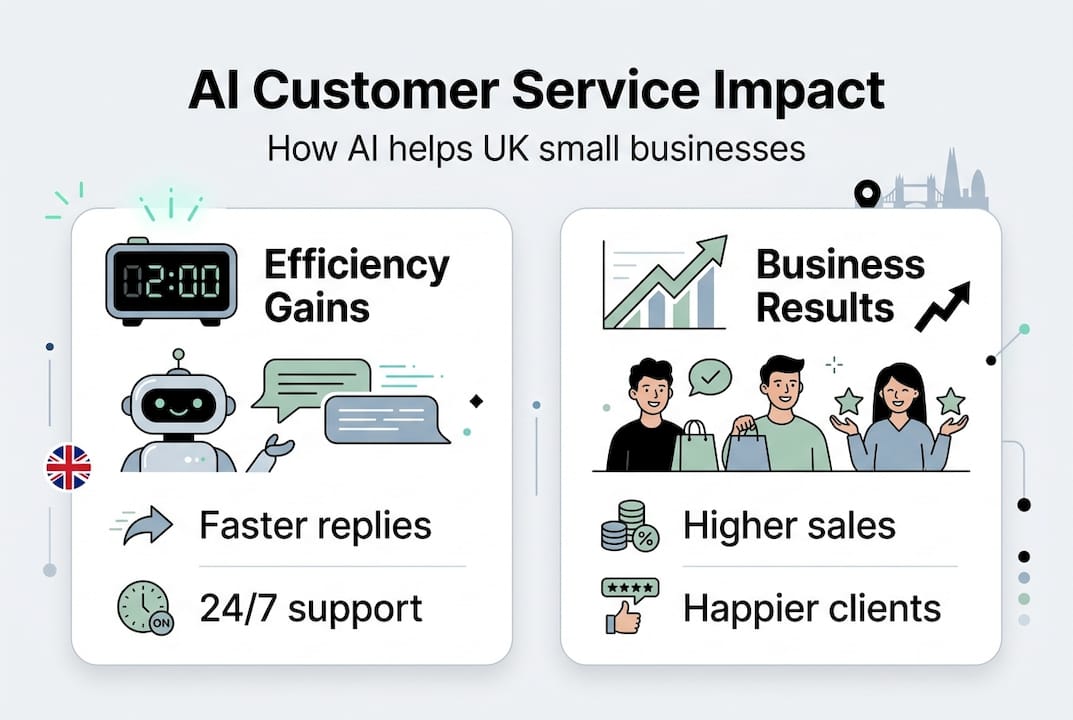
Exploring ways to use AI in customer service reveals creative applications beyond basic automation. Consider intelligent upselling that suggests room upgrades based on guest preferences, or proactive messaging that anticipates common questions before customers even ask.
Pro Tip: Use live monitoring dashboards tracking real-time AI performance. This visibility lets you spot issues immediately and intervene when necessary, maintaining service quality throughout the transition.
Learning from AI sales automation hacks provides additional strategies for maximising AI impact across your entire customer journey. The principles apply whether you’re managing hotel bookings or retail enquiries.
For deeper technical guidance, review AI software for small hotels to understand platform capabilities and integration requirements specific to hospitality operations.
Troubleshooting and mistakes to avoid
Even the smartest systems can misfire—here’s what to watch out for and how to keep service human where it matters. Learning from others’ mistakes saves you time, money, and customer goodwill.
Common implementation errors include:
- No escalation path: AI gets stuck on complex queries with no human backup
- Over-automation: Customers feel frustrated by robotic interactions lacking empathy
- Under-training staff: Team members don’t understand how to work alongside AI effectively
- Ignoring edge cases: Unusual situations expose gaps in AI training data
- Poor integration: Disconnected systems create duplicate work instead of efficiency
The empathy gap represents AI’s biggest limitation. AI struggles with complex or emotional issues and requires human escalation; 83% of customers prefer interacting with humans for sensitive matters. Recognise when automation helps and when it hinders.
“If you automate too much, you can erode trust fast. The goal isn’t replacing humans—it’s empowering them to focus on interactions that truly need a personal touch.”
Balance matters enormously. Use AI for routine queries, booking confirmations, and FAQ responses. Reserve human interaction for complaints, complex requests, and situations requiring judgement or emotional intelligence. This hybrid approach delivers efficiency without sacrificing the warmth that builds customer loyalty.
Understanding AI in business communication helps you design systems that enhance rather than replace human connection. The best implementations feel seamless, with customers barely noticing when they’re interacting with AI versus a person.
Monitor customer feedback religiously during rollout. If satisfaction scores drop or complaints increase, investigate immediately. Often, simple adjustments to AI responses or escalation triggers resolve issues quickly.
Measuring success and next steps
Once your AI is running, tracking results and refining approach guarantee real and lasting gains. Measurement transforms gut feeling into data-driven decisions.
Focus on these critical metrics:
- Resolution speed: Time from enquiry to complete answer
- Customer satisfaction: Post-interaction surveys and review sentiment
- Upsell conversion: Percentage of AI-suggested upgrades accepted
- Cost per enquiry: Total support costs divided by enquiries handled
- Staff satisfaction: Team feedback on workload and job quality
Monitor resolution rates, upsell conversion, and revenue increase to judge ROI and fine-tune strategy. These metrics reveal whether AI delivers promised benefits or needs adjustment.
| Metric | Target | Measurement frequency |
|---|---|---|
| Query resolution rate | 85-90% | Weekly |
| Average response time | Under 2 minutes | Daily |
| Customer satisfaction | 4.5+ stars | Monthly |
| Revenue per booking | 15-20% increase | Monthly |
Example KPIs from successful implementations show 90% automation rates and 30%+ revenue increases. These aren’t theoretical—they’re real results from small UK businesses that implemented AI thoughtfully.
Next steps for optimisation:
- Review performance data: Analyse metrics monthly to identify trends and opportunities
- Gather customer feedback: Survey users about their AI interaction experience
- Refine AI training: Update responses based on new queries and edge cases
- Expand coverage: Gradually automate additional enquiry types as confidence grows
- Train staff continuously: Ensure team members maximise AI capabilities
Pro Tip: Schedule quarterly reviews examining AI performance against business goals. Iterate slowly, testing changes on small segments before full rollout. Patience prevents disruption whilst ensuring improvements stick.
Exploring AI automation examples provides inspiration for expanding AI use beyond customer service into operations, marketing, and administration.
For founders seeking comprehensive solutions, review AI solutions for founders to understand how AI transforms multiple business functions simultaneously.
Real results come from Operto One implementations showing consistent performance across diverse small business contexts. Study these case studies to set realistic expectations and identify best practices.
Unlock the next level: Expert AI solutions for your business
With the roadmap complete, partnering with AI experts is the fastest way to sustainable transformation. Whilst DIY implementation works for some, professional guidance accelerates results and prevents costly mistakes.
Expert setup ensures maximum benefit from day one. Specialists understand integration nuances, compliance requirements, and optimisation strategies that take months to learn independently. They’ve seen what works and what doesn’t across hundreds of implementations.
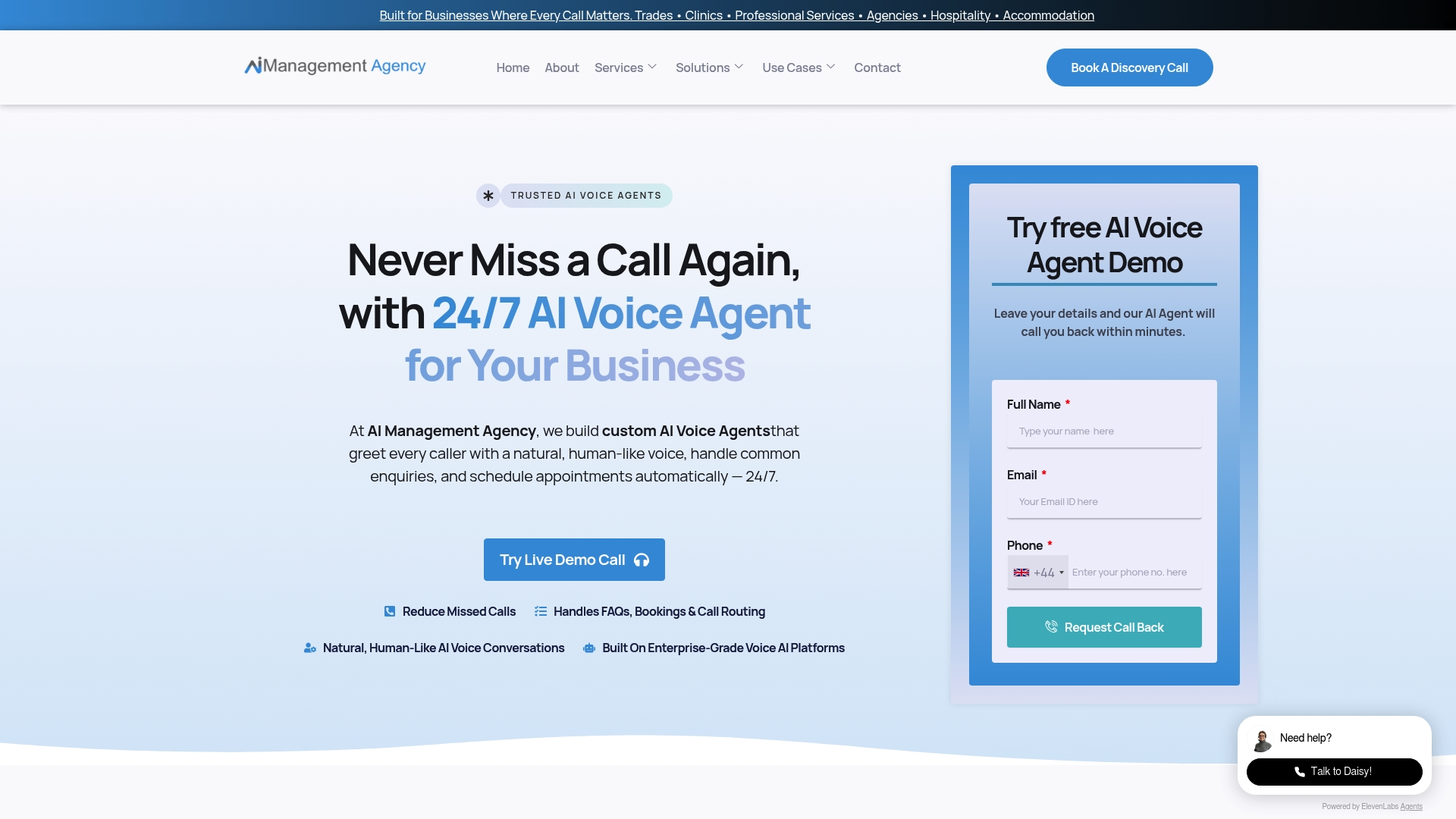
AIM Agency delivers proven AI solutions tailored for UK small businesses and hotels. Our Daisy AI Voice Agent handles calls naturally, answering questions 24/7 and booking qualified appointments whilst you focus on running your business. The AI receptionist solution integrates seamlessly with existing systems, maintaining your brand voice across every interaction.
Understanding what makes AI agents effective helps you evaluate solutions critically. Not all AI is created equal—the difference lies in natural language processing quality, integration capabilities, and ongoing support.
Discover what makes Daisy different through detailed technical breakdowns showing how high-performing AI voice agents deliver superior results. The architecture matters as much as the features.
Ready to transform your customer service? Book a consultation to explore tailored AI solutions matching your specific needs, budget, and growth goals. Expert guidance turns AI potential into measurable business results.
Frequently asked questions
How quickly can I see ROI after implementing AI in customer service?
Businesses often see positive returns within a few months, especially with high enquiry volumes. Revenue management tools boost RevPAR by 30-35% for small hotels, whilst messaging automation reduces support costs immediately.
Is AI customer service suitable for very small businesses?
Yes, scalable options exist with entry pricing suitable for firms with just a handful of employees. Costs range £29-£99/month for starter packages, making AI accessible regardless of business size.
How do I make sure my AI tools are GDPR compliant in the UK?
Choose platforms guaranteeing UK data residency, explicit privacy controls, and proven track records with UK users. Focus on GDPR-compliance and sovereign data residency platforms that transparently document their data handling practices.
Will my customers mind interacting with AI?
Most routine queries are well received, but 83% of customers prefer speaking to humans for complex problems. Balance automation with human escalation for sensitive or complicated issues.
What processes should I automate first?
Start with messaging, bookings, and FAQs, then layer in more advanced revenue management systems. Begin with audit and chatbots before advancing to further automation, ensuring each phase delivers value before expanding scope.
Recommended
- AI automation examples boosting UK small business efficiency – AI Management Agency
- Understand AI voice bots to boost your UK small business – AI Management Agency
- Boost sales with AI: a 2026 guide for small UK hotels – AI Management Agency
- AI in business communication: boost efficiency and response – AI Management Agency
- Role of AI in B2B Sales – Driving Efficiency and Growth